Best Water Power Pressure Washer Options for Home Cleaning
Ready to tackle tough outdoor grime with trusted power and control? This guide highlights five water-powered and electric pressure washers that suit a range of tasks from car washing to patio cleaning. Each product targets different buyer needs—from compact portability to higher PSI for heavy-duty cleaning. Use the quick-reference table below to compare core specs at a glance.
| Product | Max PSI | GPM | Best For |
|---|---|---|---|
| Westinghouse ePX3500 | 2500 (2000 rated) | 1.2-1.76 | Light to moderate outdoor cleaning, portable storage |
| Westinghouse WPX3000e | 3000 (2600 rated) | 1.1-1.76 | Deeper outdoor cleaning, decks and fences |
| Westinghouse ePX3050 | 2100 (1800 rated) | 1.2-1.76 | Smaller patios and cars with foam application |
| 1080PSI DECOKTOOL | 1080 | Not Specified | Light gardening and quick garden hose use |
| LWQ Portable Power Washer | Up To 2.5 GPM | Not Specified | Multi-surface cleaning on a budget |
Westinghouse ePX3500 Electric Pressure Washer
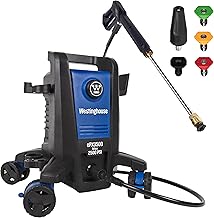
The Westinghouse ePX3500 delivers up to 2500 max PSI and 1.76 max GPM at the lowest setting, with 2000 rated PSI and 1.2 GPM for steady cleaning. The pro-style steel wand features quick-connect nozzles (0°, 15°, 25°, turbo, and soap). It is compact, weighs about 19 pounds, and stores easily with four quick-lock wheels and anti-tipping design. The onboard 20-ounce soap tank supports detergent use for tough cleaning tasks on decks, driveways, and vehicles. This model is best for buyers who want portability, a straightforward setup, and versatile nozzle options for cars and home surfaces. A potential limitation is the smaller water flow when operating at lower PSI levels, which may require extra passes for very dirty surfaces.
Westinghouse WPX3000e Electric Pressure Washer
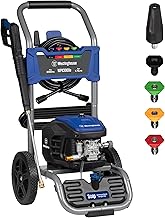
This model pushes higher cleaning capability with 3000 max PSI and 1.76 max GPM (2600 PSI rated, 1.1 GPM). It includes a 0°, 15°, 25°, soap, and turbo nozzle set, plus a 0.45-gallon soap tank and a 25-foot hose. The heavy-duty axial pump and induction motor provide consistent performance for decks, sidewalks, and exterior walls. It’s best for users needing more power for tougher grime and larger outdoor areas. Consider this if you frequently tackle sturdy stains; however, it is less portable than smaller electric units due to higher power requirements.
Westinghouse ePX3050 Electric Pressure Washer

The ePX3050 provides 2100 max PSI and 1.76 max GPM (1800 rated PSI, 1.2 GPM). It includes a foam cannon and a turbo nozzle, targeting cars, fences, decks, and siding. The pump is maintenance-free with auto-stop to conserve water, and the unit has a compact 26-inch profile with 5-inch never-flat wheels for mobility. Best for buyers seeking foam-assisted cleaning on mid-sized tasks with a compact footprint. A limitation is the modest PSI that may be less effective on very heavy-duty grime.
1080PSI CordlessPowerWasher Jet Nozzle

Designed for light cleaning tasks, this cordless option provides a jet nozzle and foam cannon accessory for garden and patio use. It’s a compact, budget-friendly choice suitable for quick garden hose-based cleaning or small patio spots. Best for casual users who want a lightweight, ready-to-go solution. A drawback is lower PSI and limited water flow, which may require more time on tough grime compared with higher-powered washers.
LWQ Portable Power Washer

This portable unit features 4 quick-connect nozzles (0°, 15°, 25°, 40°) and a soap option. It claims up to 2.5 GPM flow, aiming to balance cleaning power with water efficiency. It’s best for budget-minded buyers who need a versatile, all-around cleaner for driveways, patios, cars, and furniture. A limitation is the lack of explicit PSI figures, which makes it harder to compare directly with higher-powered models.
Buying Guide
- Power needs: Higher PSI and GPM translate to faster cleaning on tough surfaces. For large driveways or heavy grime, prioritize models in the 2500–3000 max PSI range with at least 1.1–1.76 GPM.
- Portability: If storage space is a concern or you need to move frequently, look for compact dimensions, wheels, and lighter weights.
- Water source compatibility: Some units include onboard soap tanks or foam cannons. Consider whether you primarily need detergent-assisted cleaning.
- Nozzle variety: Quick-connect sets with 0°, 15°, 25°, and turbo nozzles offer versatility for cars, decks, and fences. A foam cannon expands cleaning options for porous surfaces.
- Warranties and maintenance: Look for units with maintenance-free pumps or durable materials. Aluminum or steel wands can improve longevity for frequent use.
- Electric vs cordless: Corded electric washers provide consistent power; cordless models offer portability but limited run time and generally lower PSI.
When choosing, align capabilities with typical tasks: cars and patios benefit from at least 2100–3000 PSI with a foam option; light cleaning on decks or furniture can be enough with around 1000–1500 PSI. For larger yards, select models with longer hoses and robust nozzles to reduce reloading time.
FAQ
- What PSI is enough for cleaning a dirty driveway? – A unit with at least 2000–3000 PSI is typically recommended for concrete driveways, depending on stain intensity.
- Is a foam cannon essential for deck cleaning? – A foam cannon helps apply detergents evenly and can improve cleaning results on wooden or composite decks, but is not strictly necessary for every task.
- Do I need a high-GPM washer for patios? – Higher GPM (water flow) improves scrubbing efficiency, especially on large surfaces; aim for at least 1.5 GPM if possible.
- Are cordless washers as powerful as corded ones? – Cordless models usually have lower PSI and shorter run times, suitable for small jobs, while corded units offer steadier performance for bigger tasks.
- What maintenance does a pressure washer require? – Regularly check hoses, inspect nozzles for clogs, flush the system after use, and store in a dry area to maximize longevity.
- Can pressure washers damage surfaces? – Yes, high PSI can etch or damage soft surfaces like wood, vinyl siding, or delicate plants. Always test on a hidden area and start with the widest spray.