Best Torpedo Level With Light for Accurate, Low-Light Projects
Looking for a torpedo level with built-in illumination to check level and plumb in dim spaces? This guide compares five top-rated lighted models to help DIYers and professionals pick the right tool. The selection emphasizes readability, magnetic stability, and versatility for common tasks like hanging shelves, framing, and pipe work. Each option is best for a specific use case, from compact night-job checks to heavy-duty metal surface work. The table below summarizes the highlighted products and their key strengths.
| Product | Best For | Key Benefit |
|---|---|---|
| Klein Tools 935RBLT | General leveling in low light | Bright LED vials, secure magnet track |
| Swanson TLL049M Savage Lightning | Strong magnets and visibility | V-Grooved magnets, illuminated vials |
| Franklin Sensors Light Level | Night use and RV/camper leveling | Color-changing display, wide visibility |
| Johnson 1411-0900LED | Professional magnetic devices | EZ-Read LEDs, strong GripTight magnets |
| Jorgensen 12″ Magnetic LED Box Level | Framing and mounting on metal work | High accuracy, 90°/180° LEDs, powerful magnet |
Klein Tools 935RBLT Torpedo Level, 9-Inch Lighted Level with Magnet

The Klein Tools 935RBLT combines large LED vials with a secure magnet track for hands-free use on metal surfaces. The 9-inch torpedo body fits tight spaces while providing three-read angles (level, 90°, 45°) for quick, accurate readings. Best for general construction tasks where readability matters in dim environments. A potential limitation is the need to replace or check the magnet track if used heavily on ferrous metals.
Swanson Tool Co TLL049M Savage Lightning Aluminum Torpedo

The Swanson Savage Lightning 9″ torpedo level emphasizes strong neodymium magnets and an illuminated vial system for clear reading in challenging lighting. The V-Grooved magnets help stabilize measurements on pipes or flat metal surfaces. It’s a solid choice for plumbing, ductwork, and framing projects where secure attachment and visibility are essential. Limitation: fewer angle-specific readouts beyond the standard three vials may require careful alignment in tight spots.
Franklin Sensors Light Level

This digital torpedo level from Franklin Sensors changes color and turns green when level or plumb is achieved, with lights visible from many angles. It excels for RV or camper leveling and late-evening work where quick, unambiguous readings reduce guesswork. Best for users who value a tactile, color-based cue over multiple LED readouts. Limitation: relies on digital feedback rather than only physical bubble alignment, which may require getting used to the color cue.
Johnson Level & Tool 1411-0900LED 9″ Magnetic LED Billet

The Johnson 1411-0900LED leverages powerful GripTight rare-earth magnets and an easy-to-read LED vials system for dim environments. The V-groove edge accommodates pipes and conduits, making it a practical choice for electricians and installers. Choose this if you frequently work with rounded metal surfaces and need secure, stable placement. Caution: heavier magnet weight may feel more cumbersome in tight spaces.
Jorgensen 12″ Magnetic LED Box Level
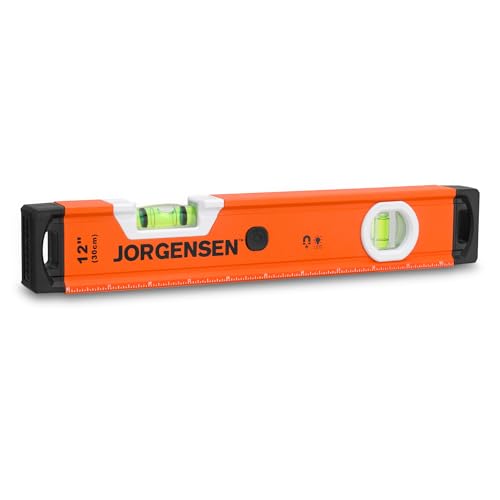
The Jorgensen 12″ Magnetic LED Box Level provides high-accuracy readings, with 90° and 180° LED vials for easy visibility in low light. Its strong magnetic bottom supports hands-free operation during framing, mounting, and installation tasks. Best for professional applications where precise alignment on metal surfaces is critical. Limitation: longer length may be less practical for very tight spaces or small carpentry tasks.
Buying Guide: Key Considerations For Choosing A Lighted Torpedo Level
- Readability in low light: Look for bright, high-visibility vials and evenly distributed LEDs. Consider color cues or green indicators for quick recognition.
- Magnet strength and surface compatibility: Strong magnets improve hands-free operation on steel surfaces but can be heavy. Check for V-groove edges for pipes and irregular shapes.
- Measurement angles and readability: Ensure the model provides level, 90°, and 45° readouts or clear complementary angles that match your typical tasks.
- Build quality and material: Aluminum or billet frames offer durability for daily use in workshops or construction sites.
- Power and battery life: Examine battery type and indicators for LED longevity, especially for extended jobs in dim environments.
- Size and reach: 9″ torpedoes are compact for tight spaces; 12″ or longer levels offer more leverage for larger framing tasks.
- Special features: Some models add color-changing indicators, beacons, or multiple LEDs for extended viewing angles. Consider which features align with your workflow.
- Safety notes: Some laser-based models are Class I and safe for eyes; verify class and usage guidelines if you choose diagonal or laser-enabled tools.
Practical tips for choosing
- For daily indoor hanging and shelving, aim for a compact 9″ model with strong magnets and bright LEDs.
- For metal-working or plumbing on pipes, prioritize a V-groove edge and a robust magnet system.
- When working in RVs or campers at night, a digital or green-light indicator can speed up alignment without extended thinking.
Frequently Asked Questions
- What is a torpedo level with light best used for?
It is ideal for leveling and plum checks in dim environments, including cabinetry, framing, and automotive or RV work. - Do all lighted torpedo levels require batteries?
Most use replaceable batteries; check the model’s battery type and estimated life for planning. - What does a V-groove magnet help with?
It stabilizes the level on round or irregular metal surfaces, improving accuracy when working on pipes or conduits. - Is a longer level always better?
Longer levels provide more coverage for large surfaces, but may be less practical in tight spaces; choose by your typical tasks. - Are digital LED levels more reliable than bubble vials?
Digital indicators offer quick cues, but traditional bubble readings remain highly reliable with practice. - Can I use a lighted torpedo level on non-metal surfaces?
Most models include strong magnets that work best on ferrous metals; non-metal surfaces may require temporary supports.