Best Hand Saws and Tools for Cutting Wood
The best thing to cut wood with depends on the job: choose a 14-inch hand saw for general cuts, a Japanese pull saw for controlled woodworking, or an interchangeable-blade saw for mixed materials. The compact ValueMax mini hacksaw is better suited to tight spaces and harder materials than large wood cuts. The products below cover everyday trimming, detailed joinery, and versatile DIY work.
| Product | Best For | Key Feature |
|---|---|---|
| 14-Inch Pro Hand Saw | General wood cutting | 11 TPI, 14-inch blade |
| SUIZAN Ryoba Double Edge Saw | Woodworking and joinery | Japanese pull-saw design |
| 6-Inch Japanese Pull Saw | Small, controlled cuts | Double-edge 14/17 TPI blade |
| 8-In-1 Multi-Blade Hand Saw | Mixed DIY materials | Eight interchangeable blades |
| ValueMax Mini Hack Saw | Tight spaces and small objects | Compact aluminum frame |
14-Inch Pro Hand Saw

Best for: General-purpose wood cutting, trimming, and DIY projects where a longer manual saw is useful.
This 14-inch hand saw has an 11 TPI fine-cut blade made from heat-treated 65Mn steel. The listing describes it for cutting wood, plywood, wallboard, and plastic pipe. Its non-slip TPR handle is designed for a comfortable grip, and the tool is also aimed at framers, contractors, and woodworkers.
Why it was selected: Its blade length and stated range of materials make it the most broadly useful option here for routine cutting tasks. The listing does not specify an adjustable or replaceable blade, so consider that if blade changes are important.
SUIZAN Ryoba Double Edge Saw

Best for: Woodworkers who want a Japanese-style pull saw for furniture making, carpentry, joinery, and DIY projects.
This 7-inch Ryoba saw cuts on the pull stroke. The product description says Japanese pull saws require less power than push saws and can produce a cleaner edge. It is made with Japanese steel, and the listing identifies the blade as replaceable. Its double-edge design is intended for rip and crosscut work.
Why it was selected: It offers a woodworking-focused format and two cutting edges, making it a useful alternative to a general-purpose hand saw. Choose it if you prefer pull-stroke cutting and need a saw for more controlled woodworking tasks. Its 7-inch size may be less suitable than a longer saw for large, deep cuts.
6-Inch Japanese Pull Saw

Best for: Small woodworking projects, trimming, and detail cuts where blade control matters.
The compact SK5 steel blade has two edges with different tooth densities: 14 TPI and 17 TPI. The listing describes the pull-cut design as easier to guide along a cutting line and requiring less force to start and control. Select the edge based on whether the job calls for faster material removal or finer detail work.
Why it was selected: Its shorter blade and two tooth options provide flexibility for small-scale cutting. It is a better fit for detail work than for quickly cutting large pieces of lumber. The listing does not state that the blade is replaceable.
8-In-1 Multi-Blade Hand Saw

Best for: DIY users who cut several materials and want multiple blade options in one hand tool.
This adjustable saw includes eight high-speed-steel blades for tasks involving wood, drywall, metal, plastic, and plywood. Its quick-change design supports large and small blades, while a lockback mechanism secures the blade in place. The TPR handle has a non-slip design intended to reduce hand fatigue.
Why it was selected: It is the most versatile option in this group based on the included blade selection and stated material range. Choose it if you value having different blades for different jobs. Because the tool depends on selecting and securing the appropriate blade, check the lockback before cutting.
ValueMax Mini Hack Saw
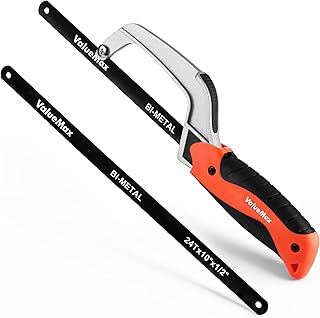
Best for: Small objects and confined spaces where a compact saw is easier to handle.
The aluminum-alloy frame measures 11 by 2.3 by 0.8 inches and weighs approximately 245 grams. It includes two 10-inch bi-metal blades, one installed and one spare. The fine-tooth blades are specified as 24 TPI and are described for hard materials such as metal. The ABS and TPR handle has an ergonomic, anti-slip design.
Why it was selected: The product listing includes wood among its intended materials, and the compact frame suits tight-space work. However, the fine-tooth blade is described as excelling at hard materials, so this is not the best choice for fast cuts through larger pieces of wood.
Buying Guide: How To Choose A Saw For Wood
What kind of wood cut do you need to make?
For general trimming and everyday cuts, a longer hand saw such as the 14-inch model is a straightforward choice. For joinery, small woodworking projects, or cuts that need careful guidance, consider a pull saw. A compact blade can be easier to manage on small parts, while a longer blade is more practical for larger stock.
Should you choose a pull saw or a standard hand saw?
A standard hand saw cuts on the push stroke. Japanese pull saws cut as you draw the blade toward you. The listed pull saws are designed for controlled cutting with less starting force, while the 14-inch hand saw is a conventional option for broader general use. Choose the stroke style you can control comfortably.
Do you need one blade or several?
A fixed-purpose saw keeps the choice simple. The 8-in-1 model offers blades for multiple materials, which can be useful for varied DIY tasks. Before each cut, select the blade intended for the material and confirm it is secured. A fine-tooth hacksaw can handle small tasks but is not the most efficient option for substantial wood cutting.
What should you check before cutting?
Match the saw’s size and blade style to the workpiece. Secure the wood so it cannot shift, mark the cut line, and keep hands clear of the blade path. Use the saw according to its included instructions and avoid forcing the blade if it binds.
Frequently Asked Questions
What is the best hand saw for cutting wood?
A general-purpose hand saw is a practical choice for routine cuts. In this selection, the 14-inch Pro Hand Saw is listed for wood, plywood, wallboard, and other materials.
Are Japanese pull saws good for woodworking?
They can suit woodworking tasks that benefit from controlled pull-stroke cutting. The listed models are intended for trimming, joinery, and small woodworking projects.
Can a mini hacksaw cut wood?
The ValueMax listing includes wood among its intended materials, but its fine-tooth blade is highlighted for hard materials such as metal. It is better suited to small cuts and tight spaces than large wood pieces.
Which saw is best for cutting different materials?
The 8-in-1 hand saw is designed for multiple materials and comes with eight blades. Choose and secure the blade suited to each job.
Does a higher TPI always mean a better wood saw?
No. Tooth density is one factor in choosing a blade, and the right option depends on the cut and material. The 6-inch pull saw offers two tooth densities so users can choose between faster removal and finer detail work.