Best Table Saw L-Fence Systems for Precision and Safety
For precise rip cuts, edge guiding, and safe featherboard setups, a high-quality L-fence system can transform a basic table saw. This guide highlights five top options, explaining who each is best for, how they integrate with existing fences, and where to watch for trade-offs. Ideal buyers include hobbyists upgrading a standard fence, remodelers seeking quick setup, and shop owners needing safer, repeatable cuts.
Summary overview of selected products:
| Product | Best For | Key Feature | Limitations |
|---|---|---|---|
| BOW XT L-Fence System XT4 | Users with Bow XTender Fence System | Acrylic guide plate for clear line of sight | Exclusively compatible with Bow XTender Fence |
| BOW Ultimate Table Saw XTENDER & Safety Kit | Saw owners wanting a complete safety and extension upgrade | 46” XTENDER Fence with multiple featherboards and clamps | Higher setup footprint and cost |
| O’SKOOL Table Saw Rip Fence System | Long doors, edge jointing, and versatile 3-in-1 work | 3-in-1 High/Low/L-Fence modes | May require additional tooling for full setup |
| Uni Style Table Saw Fence with Sacrificial UHMW Face | Delta Uni-fence upgraders and jig makers | UHMW sacrificial face for clean rabbet cuts | Limited to compatible Delta Uni-fence style |
| Milescraft 4009 Fence Clamps | Anyone needing reliable clamps for fences, jigs | Universal 3/8″ rod clamps with broad compatibility | Clamps are auxiliary, not a full fence system |
BOW XT L-Fence System XT4

The XT L-Fence is designed to work exclusively with the Bow XTender Fence System. It attaches with two included L-brackets, creating a stable, inline guiding surface. The acrylic plate provides a transparent sightline, which helps with pattern cuts and tapering. Best for Bow XTENDER users who want a dedicated L-guide that maintains visibility during operation. A potential limitation is its exclusive compatibility with the Bow XTender setup, so it may not fit other fence brands without adapters.
BOW Ultimate Table Saw XTENDER & Safety Kit
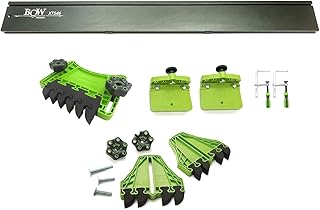
This complete kit expands a small or contractor saw into more capable cutting equipment. The XTENDER Fence System with Support Feeds and Clamps adds workspace length, while featherboards enhance safety and cut precision. It includes two FP4 FencePRO featherboards, an FP1 featherboard, two XT1 feed supports, and two XT2 T-track clamps. Best for shops upgrading to a cabinet-style workflow or needing robust, repeatable setups. A caution: setup and integration require following the included components carefully to ensure smooth operation across all rails.
O’SKOOL Table Saw Rip Fence System

Designed to upgrade a table saw with precision, the O’SKOOL kit uses 46″ of extended support and offers three distinct modes: High Fence, Low Fence (for thin ripping), and L-Fence mode for edge jointing and template work. It doubles as a thin-rip jig and table saw jig, increasing workshop flexibility. Best for users who need a versatile, multi-mode fence system that can adapt to various cut types. Limitation: the system may require time to learn each mode’s setup for consistent results.
Uni Style Table Saw Fence with Sacrificial UHMW Face

The Uni Style Fence is a heavy-duty aluminum upgrade intended for Delta Uni-fence systems. It includes a UHMW sacrificial fence face that enables clean rabbet cuts and allows for additional jigs and fixtures. Best for Delta Uni-fence owners who want to add flexible, custom-jig compatibility while protecting blades and workpieces. Caution: the fence is most effective when matched to the Delta Uni-fence family; non-compatible systems may require adapters or different fasteners.
Milescraft 4009 Fence Clamps

These universal clamps fit into a 3/8″ hole on auxiliary fences. They offer a practical range of travel from 1/2″ to 5-3/4″, and can serve as stop blocks, sacrificial fences, or resaw fences. Best for builders needing flexible clamping options across multiple tools beyond table saws. Limitation: they are clamps, not a full fence system, so they work best when paired with a separate, robust fence.
Buying Guide
What to consider when choosing an L-fence system:
- Compatibility: Ensure the fence integrates with your current saw brand and fence model. Some options are exclusive to specific systems (for example, Bow XTender).
- Material and visibility: Acrylic or clear polycarbonate guides improve sightlines for patterning and tapping. UHMW sacrificial faces protect blades during rabbet cuts.
- Modularity vs. completeness: Full kits with featherboards, clamps, and extension rails provide ready-to-use capability. Clamps alone require additional components to function as a fence.
- Extended capacity: Longer fences support longer workpieces; consider 46″ or similar lengths for sheet goods and cabinet work.
- Setup and adjustment: Look for fences that install quickly and offer repeatable accuracy. Some systems claim quick detach or fast set-up times.
- Safety features: Featherboards, followers, and guard components add protection during cutting tasks. Prioritize systems that minimize blade exposure during setup.
- Budget and space: Consider total cost and how much shop footprint the system requires. Higher-end kits deliver more features but require more space.
FAQ
- What is an L-fence and why should I use one?
An L-fence provides a guide surface perpendicular to the main fence, improving edge jointing, template routing, and precise short-rip work. It helps maintain repeatable alignment for smaller pieces.
- Do I need featherboards with an L-fence system?
Featherboards improve grip and safety during cuts, especially when feeding long boards or thin materials. They are often bundled with complete XTENDER-style kits.
- Can I use an L-fence with any table saw?
Not every L-fence will fit all saws. Check compatibility with your saw model and fence system. Some products are designed for specific fence brands and series.
- Is an acrylic guide plate better than metal?
Acrylic plates offer better visibility of blade alignment and cut paths, aiding precision. Durability and visibility should be weighed against blade exposure and material hardness.
- What’s the main advantage of a complete safety kit versus a basic fence?
Safety kits add featherboards, clamps, and supports that stabilize workpieces and reduce kickback, offering more reliable, repeatable results for demanding tasks.
- Are these fences suitable for edge jointing and rabbet cuts?
Some fences specialize in edge jointing (L-fence modes) and rabbet work (UHMW sacrificial faces). Verify the product’s intended use before purchasing for such tasks.