Best Styrofoam Concrete Wall Forms and Related Wall-Making Options
For poured concrete walls, look for forms specifically designed to contain and shape concrete; the listed products do not include insulated concrete form (ICF) blocks made from expanded polystyrene. The Wall!Supply panels are lightweight EPS wall décor, while the BETONEX molds cast separate plaster or concrete wall tiles. The other three products are flexible forms for outdoor flatwork, not vertical walls. This guide clarifies what each product is suited for so you can choose based on whether you need wall appearance, cast wall pieces, or concrete edging.
| Product | Best suited for | Type |
|---|---|---|
| Wall!Supply 3D Wall Panels | Interior concrete-look décor | EPS panels |
| BETONEX ABS Wall Molds | Casting individual wall stones | Tile molds |
| AUTUMN Flex Forms | Curved concrete edging and flatwork | Reusable forms |
| 13-Foot PE Plastic Forms | Long garden paths and edges | Flexible forms |
| U0U Plastic Forms | Small garden paths and edging | Flexible forms |
Wall!Supply 3D EPS Concrete-Look Panels

Best for: Homeowners who want an industrial concrete appearance on an interior wall without pouring or casting concrete. These panels are made from lightweight expanded polystyrene and use high-definition printing to create a concrete look. The listed set contains four panels and covers 25.84 square feet.
The panels are described as suitable for solid interior surfaces in rooms such as living rooms, bedrooms, kitchens, and foyers. A protective acrylic coating is listed as a durability feature. This product is included because it is the closest match for buyers searching for a styrofoam concrete wall finish, but it is decorative cladding rather than a concrete form.
Limitation: Do not choose these panels to contain wet concrete or build a structural wall. The listing describes them as a wallpaper alternative, not concrete-pouring forms.
BETONEX ABS Molds For Wall Stone
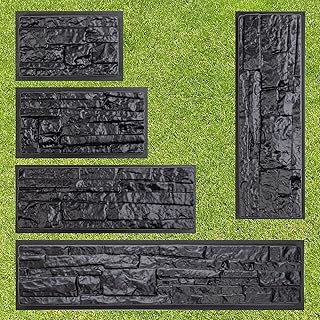
Best for: DIY projects that need separate decorative wall stones made from concrete or plaster. This set includes five ABS plastic molds intended for casting flagstone- or limestone-style pieces. The listing says the molds can produce more than 50 tiles and includes simple instructions.
Choose this product if you want to make individual veneer-style pieces rather than pour a complete wall. Its reusable mold format gives the buyer control over making pieces in batches. It is the most directly relevant listed option for casting concrete items intended for a wall surface.
Limitation: These molds shape individual tiles; they are not full-height forms for pouring a solid concrete wall. The finished pieces and installation method are separate considerations.
AUTUMN Flexible Forms For Concrete Flatwork
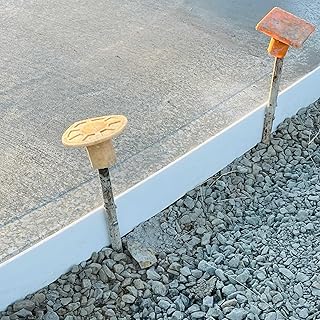
Best for: Buyers shaping curved concrete edges, walkways, or curbs. The four plastic panels measure 4 inches by 8 feet each, for 32 feet of total form length. Their flexibility is intended for curves and radii, and the listing also describes the forms as reusable, weather-resistant, and easy to strip and clean.
This is a better fit than rigid straight boards when the project needs a curved outline. It is included as a concrete-form alternative, but its stated uses are flatwork and curbs rather than vertical walls.
Limitation: The 4-inch panel height and flatwork-focused description do not make this a wall-form system for a poured concrete wall.
13-Foot PE Plastic Forms For Walkways

Best for: Outdoor projects that need longer flexible runs, such as garden paths, flower-bed edges, and rounded walkway features. The set includes three forms, each listed as 13 feet long, 5 inches wide, and 1/4 inch thick. The PE plastic is described as waterproof, UV-resistant, and weather-resistant.
Choose this set when the priority is making curved landscape edging or combining sections for a larger layout. The listing says the forms can be assembled and reused, with easy removal and cleaning.
Limitation: These are presented as edging and flatwork forms. Their listed dimensions and uses do not support treating them as forms for tall concrete walls.
U0U Plastic Forms For Garden Paths

Best for: Small garden paths or edging projects where a pair of shorter flexible forms is sufficient. Each polyethylene form measures approximately 4 by 78.7 inches and is about 0.24 inch thick. The listing says sections can be combined and recommends securing them with wooden stakes or nails before pouring.
The flexible material is intended to help shape garden edges, and the forms are described as reusable, easy to remove, and easy to clean. This is a practical choice for buyers who need a basic layout for outdoor concrete paths rather than indoor wall panels or cast wall stones.
Limitation: The listing focuses on garden paths and edging. It does not describe a system for supporting a vertical concrete wall pour.
Buying Guide: How To Choose The Right Product
Do you need a structural concrete wall or a concrete-look finish?
Start by separating these two goals. For an actual poured wall, use a form system designed and rated for the wall’s dimensions and concrete loads; none of the listed products is identified as a complete ICF or structural wall-form system. For a concrete appearance indoors, the Wall!Supply EPS panels are decorative. For separate cast wall stones, the BETONEX molds are the relevant option.
Are the forms intended for vertical walls?
Check the product’s stated use, shape, and dimensions before purchasing. The AUTUMN, 13-foot PE, and U0U products are described for curbs, flatwork, walkways, and garden edging. Their flexibility helps create curves, but that does not establish that they can safely contain a vertical concrete pour.
How much coverage or length do you need?
Compare the project area with the listed quantities. Wall!Supply states 25.84 square feet of panel coverage; BETONEX provides five molds; AUTUMN totals 32 feet of form length; the PE set provides three 13-foot forms; and U0U includes two forms about 78.7 inches long each. Plan for layout, joints, and any cutting or assembly requirements.
What should you confirm before buying?
Verify whether the product is a finish, a casting mold, or a form that holds wet concrete. Also check the intended material, dimensions, reuse instructions, and installation or staking needs. For structural construction, follow project plans and applicable building requirements rather than substituting a decorative panel or landscape form.
Frequently Asked Questions
Are EPS wall panels the same as insulated concrete forms?
No. The listed Wall!Supply panels are lightweight interior décor with a concrete-look print. The product information does not describe them as forms for pouring concrete.
Which listed product casts concrete pieces for a wall?
The BETONEX ABS molds are described for casting individual concrete or plaster wall stones and tiles.
Can flexible walkway forms be used for a poured concrete wall?
The listed flexible forms are intended for flatwork, curbs, walkways, or garden edging. Their product descriptions do not identify them as wall-form systems.
What should I search for when I need styrofoam concrete wall forms?
For a concrete wall that uses foam insulation, search for insulated concrete forms, often called ICF blocks, and confirm that the specific system is designed for the intended project. None of the five listed products is identified as an ICF system.