Best Stand Up Screw Guns for Decking
Answering the question which stand-up auto-feed screw gun is best for decking, this guide highlights top options for standing or kneeling installers, subfloor applications, and long deck runs. Ideal buyers include professional deck installers, DIYers tackling large decking projects, and contractors who need speed and reduced back strain. The following picks cover cordless and electric models, stand-up extensions, and subfloor compatibility to fit different deck building needs. A quick comparison table helps you choose at a glance.
| Product | Best For | Key Advantage |
|---|---|---|
| Simpson Strong-Tie PRO300SG2DC2K | Cordless, standing deck work | Cordless auto-feed with G3 stand-up extension |
| SENCO DuraSpin 2500 RPM 3 in. Stand Up Auto-Feed | Fast, consistent feeds | Feed On Return for faster operation |
| SENCO DuraSpin DS425-AC | Versatility for decking, drywall, flooring | Auto feed, versatile attachments |
| Simpson Strong-Tie PRO250G2 Subfloor Driver | Subfloor installation | Auto-feed with compatible PRO250 G2 system |
| Simpson Strong-Tie PRO300SD25K | Extended stand-up decking setup | Decking extension kit with organization tools |
Simpson Strong-Tie PRO300SG2DC2K Quik Drive System

The PRO300SG2DC2K combines a cordless DeWalt brushless 20V motor with a stand-up deck extension for standing fastener installation. It accepts a range of collated screws, enabling long runs without frequent reloads. This setup is best for professional deck installers who value mobility and speed on large projects.
Who it’s best for: Professionals or serious DIYers needing stand-up operation and a cordless solution for deck and dock installations.
Why selected: It pairs a robust motor with a stand-up extension for comfortable, repetitive screw driving along long deck spans.
Limitations: Collated screws are sold separately; ensure you have compatible fasteners on hand for your specific deck materials.
SENCO DuraSpin 2500 RPM Stand Up Auto-Feed (10X0003N)
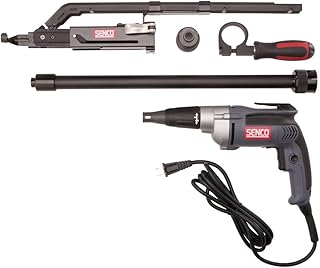
This stand-up auto-feed screwdriver is designed for decking, subfloor, cement board, and sheathing, driving 1 to 3-inch collated screws. It features feed-on-return for faster operation, a sliding screw guide to prevent binding, and a corner-fit feed system for better sightlines and access.
Who it’s best for: Installers prioritizing efficient feeds and precise alignment in tight corners or along long runs.
Why selected: The combination of return-feed and guided feeding minimizes jams and improves line-of-sight tasks.
Limitations: Check compatibility with your preferred screw types and extensions before purchasing.
SENCO DuraSpin DS425-AC Electric Screw Gun

The DS425-AC offers powerful performance with auto-feed capabilities suitable for decking, drywall, and flooring. It supports a range of screw sizes and is designed for reliable, continuous operation in professional settings.
Who it’s best for: Pros needing a versatile, corded stand-alone screw gun for multiple applications beyond decking.
Why selected: Its auto-feed and versatility make it a strong all-around choice for crews handling mixed projects.
Limitations: Being corded may limit mobility on very large outdoor jobs without access to power outlets or extension cords.
Simpson Strong-Tie PRO250G2 Subfloor Auto-Feed Driver

Designed specifically for subfloor fastening, this auto-feed tool works with the PRO250 G2 system and supports 1-1/2 to 2-1/2 inch collated strip screws. It is compatible with a stand-up extension and helps crews cover larger subfloor areas quickly.
Who it’s best for: Subfloor installers needing steady, repeatable drives with quick reloads.
Why selected: The system’s design emphasizes uniform toenailing and countersinking on varied substrates.
Limitations: Requires compatible PRO250 G2 motors and extension accessories to maximize performance.
Simpson Strong-Tie PRO300SD25K Decking System
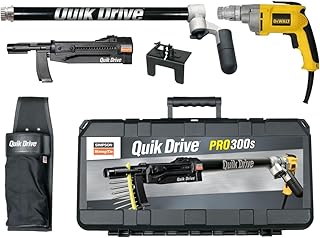
This decking extension kit adds stand-up driving capabilities to the PRO300SG2 system, offering a lightweight, portable solution for standing installations. It includes a quiver for screws, a tool case, and a decking nose clip to improve organization and workflow.
Who it’s best for: Teams needing enhanced reach and back-friendly operation on extended decking runs.
Why selected: The extension and organizational tools help maintain efficiency and reduce downtime during long projects.
Limitations: It complements the PRO300SG2 system; ensure compatibility with your existing setup before pairing with other tools.
Buying Guide: Stand-Up Screw Guns For Decking
What to consider when choosing a stand-up screw gun for decking:
- Power source: Cordless versus corded. Cordless offers mobility for outdoor work, while corded models provide consistent performance without worrying about battery life.
- Stand-up extension compatibility: A good extension helps you reach long runs and reduces back strain. Check compatibility with your chosen driver.
- Feed mechanism: Auto-feed and return-feed systems improve efficiency by delivering screws as you drive. Look for features that minimize jams and misfeeds.
- Drive range: Ensure the tool supports the common decking screw lengths you plan to use (e.g., 1-1/2″ to 3″ or 2-1/2″ as appropriate).
- Compatibility with screws: Verify the tool accepts your preferred screw types and head styles (Bugle, Trim-Head, etc.).
- Ergonomics and weight: A lighter, well-balanced tool reduces fatigue on long days of deck work.
- Accessories: Quivers, nose clips, and tool cases can improve organization and speed on-site.
Frequently Asked Questions
- What is the main advantage of stand-up screw guns for decking?
They allow standing or mostly upright operation, reducing back strain and increasing coverage speed on long deck runs.
- Should I choose cordless or corded for outdoor decks?
Cordless models offer mobility and are better for distant spans; corded options provide consistent power without battery concerns, useful for shorter, controlled jobs.
- What screw sizes are most common for decking with these tools?
Common sizes range from 1-1/2″ to 3″ depending on deck boards, joists, and subfloor materials.
- Are stand-up extensions necessary?
Extensions improve reach and reduce climbing or kneeling, especially on large decks, but may be optional for small projects.
- Can I mix brands with stand-up extensions?
Some systems are designed for compatibility within a family (e.g., PRO250G2 with PRO250 motors); verify compatibility before pairing components.
- Do these tools require special maintenance?
Regularly clean fittings, lubricate moving parts per factory guidelines, and inspect screws and bits for wear to prevent jams.