Best Small Right Angle Grinders for Tight Spaces and DIY Jobs
The best small right angle grinder depends on whether you need a cutoff wheel, a compact cordless tool, or a 90-degree die grinder for detailed work. TEENO and Rivlox suit portable cutting and grinding; SEESII is better for cordless grinding and deburring; SHALL includes a pneumatic accessory kit; and Ingersoll Rand is a compact air-tool option for frequent workshop use. Compare the tool type, power source, collet or disc format, and included accessories before choosing.
| Product | Best For | Power Type |
|---|---|---|
| TEENO Cordless Mini Angle Grinder | Portable light-duty cutting | Battery |
| SHALL Right Angle Die Grinder | Air-powered sanding and finishing | Pneumatic |
| SEESII Right Angle Die Grinder | Cordless detail grinding | Battery |
| Rivlox Cordless Mini Angle Grinder | Basic portable DIY work | Battery |
| Ingersoll Rand 3101G | Compact workshop air-tool use | Pneumatic |
TEENO Cordless Mini Angle Grinder
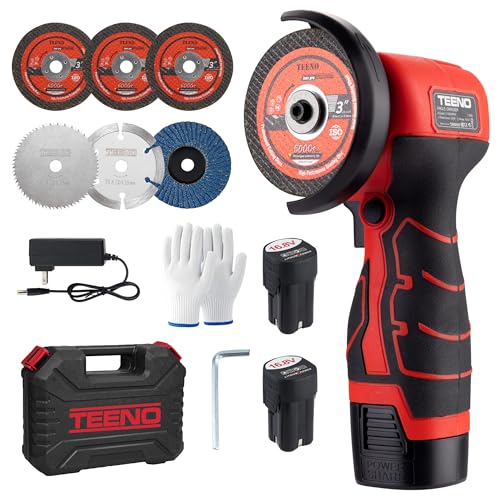
Best for: DIY users who need a portable small grinder for light cutting and grinding without an air hose or power cord. The kit includes two 16.8V, 2000mAh batteries and six cutting discs, with a listed maximum speed of 19,500 RPM.
The 3-inch format is intended for compact jobs, and the listed cutting depth is up to 1/2 inch. The product information describes discs for thin metal, rust smoothing, soft wood trimming, and small tile-detailing tasks. A rubberized grip and spindle lock support handling and accessory changes.
Why it was selected: It combines a compact angle-grinder format with two batteries and several types of accessories. Limitation: Its stated cutting depth and light-duty positioning make it a poor fit for deep or heavy-duty cuts.
SHALL 90-Degree Air Die Grinder

Best for: Users with a compatible air supply who want a right-angle tool for sanding, polishing, deburring, engraving, or rust removal. It runs at a listed 20,000 RPM and includes 1/8-inch and 1/4-inch collets plus 24 sanding discs.
The included accessories cover several finishing needs: louver, wool, fiber, and nylon discs in coarse, medium, and fine options. The listed operating pressure is 90 PSI, with air consumption of 4 CFM and a recommended hose inner diameter of 3/8 inch.
Why it was selected: Its 90-degree head and two collet sizes make it useful for small-scale finishing in restricted spaces. Limitation: This is a pneumatic tool, so buyers need an air compressor and suitable hose; it is not a cordless cutoff grinder.
SEESII Cordless Right Angle Die Grinder

Best for: Mobile grinding and detail work where an air hose would get in the way. This cordless brushless die grinder has a 1/4-inch collet, four speed settings, an LED work light, two 2000mAh batteries, and 23 listed accessories. Its maximum speed is 24,500 RPM.
The product description identifies grinding, deburring, engraving, and polishing as intended tasks. It also states a combined runtime of 40–50 minutes for the two batteries. A brushless motor and electronic speed control are listed features for adjusting operation to the task.
Why it was selected: It offers cordless access and speed adjustment in a right-angle die-grinder format. Limitation: A 1/4-inch collet tool is for compatible die-grinder accessories, not the same as a 3-inch cutoff-wheel angle grinder.
Rivlox Cordless 3-Inch Angle Grinder

Best for: Buyers looking for a basic portable mini angle grinder for household cutting, grinding, and polishing. The 12V kit includes two 1500mAh batteries, a charger, and five cutting discs. Its rubberized handle, side-slide switch, and spindle lock are listed for control and accessory changes.
The product details describe work on metal, wood, and tile, but do not provide a speed or maximum cutting-depth figure. Choose this model if a compact cordless tool and included batteries are more important than detailed performance specifications.
Why it was selected: Its 3-inch mini-grinder format directly suits buyers searching for a small angle grinder. Limitation: The supplied product information does not specify RPM or cutting depth, making performance comparisons less precise.
Ingersoll Rand 3101G Right Angle Die Grinder

Best for: Workshop users who want a compact pneumatic die grinder for confined-space cutting, grinding, and polishing. The listed specifications include a 1/3 HP motor, 1/4-inch collet, 20,000 RPM, and a weight of 1.3 pounds.
The right-angle shape is designed for hard-to-reach areas. A rear exhaust, self-locking throttle, durable ball bearings, and an ergonomic grip are among the listed features. These details make it a practical alternative to a disc-style mini angle grinder when the work calls for a collet-mounted accessory.
Why it was selected: It offers a compact, lightweight air-tool option with clear motor and collet specifications. Limitation: It requires an air compressor and does not include the accessory assortment listed with some grinder kits.
Buying Guide: How to Choose a Small Right Angle Grinder
Do you need an angle grinder or a die grinder?
A small angle grinder commonly uses a disc or wheel for cutting and surface grinding. A right-angle die grinder uses a collet to hold compatible small accessories for deburring, sanding, polishing, or engraving. Select the tool type based on the accessory your job requires; the two formats are not interchangeable by default.
Should you choose cordless or pneumatic power?
Cordless models avoid hoses and compressors, so they are easier to move around a home, yard, or vehicle. Check the battery voltage, capacity, number of batteries, and stated runtime when provided. Pneumatic models can suit workshops that already have a compressor, but verify pressure, air consumption, hose requirements, and compressor capacity before buying.
Which size and accessories matter?
Check the wheel diameter or collet size before purchasing. A 3-inch grinder and a 1/4-inch die grinder use different accessory systems. Review the included discs or attachments and confirm that they match the material and operation you plan to perform. For deeper cuts or demanding jobs, do not assume a mini tool has sufficient capacity; compare its stated limits with the work.
What safety details should buyers consider?
Use only accessories specified for the tool and follow the product instructions. Inspect discs and attachments before use, secure the workpiece, and wear appropriate eye and hearing protection. Avoid forcing a small grinder beyond its stated capacity, and disconnect its power source before changing accessories.
Frequently Asked Questions
Can a small angle grinder cut metal?
Yes, a compatible cutoff disc can cut suitable metal. The tool’s disc size and stated cutting capacity determine which jobs it can handle.
Is a die grinder the same as an angle grinder?
No. A die grinder typically holds accessories in a collet, while an angle grinder uses a disc or wheel. Check the tool and accessory specifications before choosing.
Is a cordless grinder better for working under a vehicle?
It can be more convenient where a power cord or air hose would restrict movement. For cordless die grinding, the SEESII listing specifically describes reaching under a car and into tight engine spaces.
What should I check before buying a pneumatic grinder?
Check the required operating pressure, air consumption, inlet and hose specifications, and whether your compressor can supply the needed air.
Can I use any cutting disc on a mini grinder?
No. Use only discs that match the grinder’s specified size and attachment requirements, and follow the manufacturer’s instructions.