Best Small Drill Press Vises for Precise, Compact Drilling Projects
If you need reliable mini and compact drill press vises for crafts, repair work, or jewelry making, these 5 options balance size, stability, and clamping power. They’re ideal for hobbyists, makers, and light workshop use. The list favors models with solid construction, adjustable jaws, and versatile clamping ranges. Below, find quick-fit choices and a buyer-friendly comparison to help you pick the right vise for your small drill press.
Summary of selected products
| Product | Best For | Jaw Opening (approx.) | Materials |
|---|---|---|---|
| WEN Drill Press Vise, 3-Inch | General drilling on woods, metals, plastics | 3.1 in | Cast iron |
| ArtyMaster Mini Drill Press Vise | Precision, small parts, jewelry work | 0-2.48 in | Aluminum alloy |
| Drill Press Vise, 4 Inch Jaw Opening | Heavier duty small-to-mid projects | 4.3 in | Cast iron / 45 steel |
| Luvan Mini Drill Press Vise | Compact, versatile shapes, DIY projects | 2.44 in | Aluminum / stainless elements |
| VEVOR Drill Press Vise, 4 Inch | Stable, easy mounting for wood/metal | 4 in | Cast iron |
WEN Drill Press Vise, 3-Inch (DPA423)
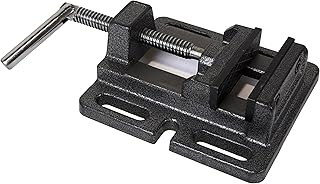
Designed for small-to-mid drilling jobs, this cast-iron vise provides solid stability with a 3-inch jaw opening and a 1-inch throat depth. It grips a range of materials including wood, metal, and plastic with consistent clamping force. Best for hobbyists and light workshop use where durable, simple operation matters. A caution: geometry is optimized for smaller workpieces; larger or oddly shaped items may require adjustments or an additional clamp.
ArtyMaster Mini Drill Press Vise

This aluminum mini vise focuses on precision and portability. It features a one-piece clamping block to keep the movable jaw level, reducing workpiece lifting during machining. The 0-2.48 inch clamping range, V-shaped grooves, and a red handle provide strong leverage for small, detailed tasks. Best for crafts, jewelry making, and small repairs where light, accurate clamping is essential. Limitation: aluminum construction offers less weight-bearing capacity than heavier cast-iron options.
Drill Press Vise, 4 Inch Jaw Opening

This 4-inch opening vise targets broader drilling tasks with a sturdy cast-iron body and a 45-steel jaw/pivot. Its long, stable jaw supports larger workpieces within a compact footprint. Best for users needing a stronger hold on wider items while maintaining a low-profile form. Caution: heavier build may require more bench space and a stable mounting surface.
Luvan Mini Drill Press Vise
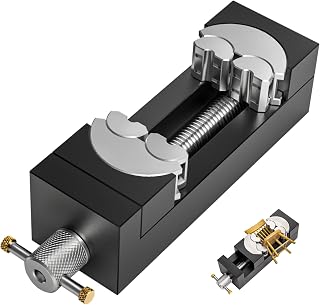
This compact, self-adjusting vise features a 2.44-inch jaw range and six independent movements that help the clamping surfaces adapt to various shapes. The stainless-metal construction and non-slip pad ensure stability on most workbenches. Best for DIY projects and jewelry work where quick, one-handed operation is beneficial. Limitation: deep-jaw capacity is relatively shallow for very tall or thick objects; plan accordingly.
VEVOR Drill Press Vise, 4 Inch
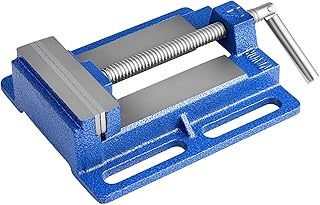
With a 4-inch jaw width and dual long slots, this cast-iron vise emphasizes easy mounting and precise positioning. It offers up to 7KN clamping force, making it suitable for more demanding drilling and grinding tasks in light metal or woodworking. Best for those who want a robust, stable vise that’s quick to install. Potential downside: heavier and may be bulkier for ultra-tight bench spaces.
Buying Guide: Small Drill Press Vise Essentials
How to choose by jaw size and range
Jaw size determines the largest workpiece you can clamp. For delicate tasks, smaller jaws offer better control; for wider pieces, a 4-inch opening can be advantageous. Consider the typical thickness you work with and whether a fixed or adjustable range suits your workflow.
Material and build quality
Cast iron cores provide stability and longevity, especially for metal drilling. Aluminum or lighter alloys reduce weight and cost, ideal for portable setups but may limit heavy-duty use. Dry-lubricated, smooth-slide components improve precision under repeated use.
Mounting and stability
Look for vises with slotted bases or standard mounting patterns. Anti-slip pads or textured jaws reduce movement during drilling. A secure base helps prevent shift, especially when working with small parts or high-speed drill bits.
Clamping force and jaw design
Higher clamping force is beneficial for small, delicate parts that might vibrate. Jaw design, including V-grooves or serrations, affects how well irregular shapes hold. One-piece clamping blocks help maintain level jaws and reduce workpiece lift.
Portability vs. durability
Lightweight mini vises are easy to reposition, but heavier vises offer greater rigidity. If you move between projects, prioritize models with compact profiles and minimal setup time. For fixed workstations, prioritize durability and stability.
Safety and usage cautions
Avoid using oversized pieces or objects that could jam or bind the mechanism. Ensure the vise is properly mounted to a sturdy bench, and check tightening regularly to prevent slippage during operation.
Frequently Asked Questions
- What is a drill press vise used for? It securely clamps workpieces during drilling to maintain precision and reduce movement.
- What jaw opening should I choose for small projects? A 2-3 inch opening is typically ideal for small parts, while 4 inches suits wider workpieces.
- Is cast iron better than aluminum for drill vises? Cast iron provides greater rigidity and stability for heavier use; aluminum is lighter and portable for crafts.
- Can I mount any vise on a standard drill press table? Most drill press vises use common mounting patterns, but verify base compatibility and receive a stable foundation.
- Should I choose a mini or a full-size vise for jewelry making? For jewelry and tiny components, a compact aluminum vise with precise jaws is often preferable for control.
- Do these vises require maintenance? Regularly check jaws, screws, and moving slides; apply light lubrication to maintain smooth operation.