Best Slide Compound Miter Saw Guide for Accurate Crosscuts
Find the right slide compound miter saw for precise, wide crosscuts and bevels. This guide highlights five top options, clarifying who each model is best for and why it was selected. It emphasizes chops for woodworking, cabinetry, and general remodeling, with a focus on ease of use, cutting range, and dust control. The overview below helps buyers compare blade counts, speed, bevels, and ergonomic features at a glance.
| Product | Best For | Key Benefit |
|---|---|---|
| DOVAMAN Updated 10-Inch Sliding Miter Saw (B0D14SDPC9) | Versatile multi-material projects | Dual-speed, ambidextrous design |
| SKIL 10″ Dual Bevel Sliding Compound Miter Saw MS6305-00 | Budget-friendly daily use | Four positive stops and LED line |
| DEWALT DWS780 (12-Inch) | Heavy-duty cabinet making | XPS LED shadow line, extended cuts |
| DEWALT DWS779 (12-Inch) | Advanced dust management | Tall fences for molding and accuracy |
| VEVOR Sliding Compound Miter Saw (12-Inch) | Compact workspace projects | LED alignment, aluminum base |
DOVAMAN Updated 10-Inch Sliding Miter Saw

The DOVAMAN model balances versatility and control for cutting wood, PVC, and soft metals. It uses dual speeds (5000 RPM and 3200 RPM) with three TCT blades to accommodate different materials. The 13-inch sliding rail and extendable side tables expand cutting capacity up to 4 x 13 inches, making it a strong choice for medium-scale projects. The ambidextrous design supports both left- and right-handed operators, enhancing comfort and safety. Best for hobbyists who need a single saw that can handle multiple materials without swapping blades frequently.
Best for: Home workshops that require multi-material cuts with an emphasis on adjustable speed and ambidextrous use. Caution: blade setup and alignment may require careful calibration to achieve optimal results across materials.
SKIL 10″ Dual Bevel Sliding Compound Miter Saw MS6305-00
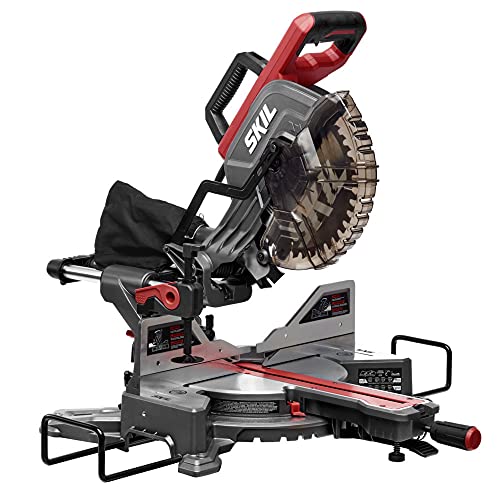
The SKIL MS6305-00 delivers solid performance in a cost-conscious package. It features a robust 15-amp motor producing up to 4800 RPM for fast, precise cuts. The dual bevel enables left and right bevels with four positive stop positions at 0°, 45°, and ±48°. An LED shadow line aids precise alignment, offering a clear cut line even in bright or shadowed environments. This saw is well-suited for DIYers and small shops that value straightforward operation and dependable crosscuts.
Best for: Builders seeking reliable miter and bevel capability without premium price. Caution: It relies on standard detents and LED guidance rather than a full-variable LED alignment system.
DEWALT Miter Saw DWS780 12-Inch

The DEWALT DWS780 pairs a 12-inch blade with a powerful motor and an integrated XPS LED shadow line for accurate cut indication. The saw’s design emphasizes extended power and durability for heavy-duty applications. Its precise cut line guide and robust construction are complementary for cabinetry, shelving, and trim projects that benefit from consistent accuracy. Best for: Professional or serious hobbyists tackling larger materials and demanding cuts. Caution: Heavier and bulkier than smaller models, requiring more workspace and stability during operation.
DEWALT Miter Saw DWS779 12-Inch

The DWS779 updates typical miter saw performance with a tall fence system that supports crown molding laid flat and base molding up to substantial heights. The 15-amp motor delivers up to 3800 RPM for efficient cutting, with a strong dust collection system to minimize cleanup. Best for: Professionals needing large capacity and stable support for complex molding and trim tasks. Caution: The tall fences and large footprint may limit portability in small shops.
VEVOR Sliding Compound Miter Saw 12-Inch

VEVOR’s 12-inch miter saw emphasizes precision alignment with LED guides and a high-strength aluminum base, making it lighter and easier to move than traditional cast-iron bases. The axial sliding system supports wider crosscuts, while the adjustable angles facilitate accurate cuts for woodworking, decking, and laminate work. Best for: Small workshops needing a balance of portability and dependable accuracy. Caution: Some users may find setup instructions less intuitive than premium brands.
Buying Guide: Key Purchase Considerations
- Cutting range and material compatibility: Look for a saw with a sliding rail and wide crosscut capacity if you work with long boards or large sheets. Check blade types included for wood, PVC, or soft metals.
- Bevel and miter capabilities: Dual bevels and multiple positive stops simplify repetitive cuts. Consider LED or shadow guides for visibility in different lighting.
- Motor power and speed: A higher RPM and a sturdy motor improve cut speed and consistency, especially on hardwoods. Balance with overall weight and portability.
- Dust collection: A dedicated dust bag or shroud helps keep your workspace cleaner and improves visibility during operation.
- Ergonomics and safety: Ambidextrous designs, comfortable grips, and stable bases reduce user fatigue and increase precision over long sessions.
- Size and footprint: Ensure your workspace can accommodate the saw’s height, width, and fence clearance. Tall fences may improve capability but reduce portability.
Frequently Asked Questions
- What is the main benefit of a slide compound miter saw?
It enables crosscuts and bevel cuts with a sliding mechanism that increases the material width you can handle in a single pass.
- Do I need a dual-bevel saw for home projects?
Dual bevel enables bevels to the left and right without flipping the workpiece, improving efficiency for frequent angled cuts.
- Is a laser or LED guide better for accuracy?
LED shadow lines and lasers both improve alignment; LEDs are typically easier to see in bright lighting and don’t rely on a reflective surface.
- Which saw is best for small workshops?
Models with lighter aluminum bases and compact footprints, such as some VEVOR versions, offer portable performance without sacrificing alignment features.
- What should I consider about dust management?
Strong dust collection reduces cleanup and helps maintain cut accuracy by keeping the cutting line clear of debris.