Best Self-Leveling Concrete Mixers and Floor Leveling Tools
The best setup for self-leveling concrete depends on whether you need to mix material, spread it, or do both. The IMAYCC 3200W drill mixer is best for buyers seeking a corded handheld mixer, while the TABU 6-cubic-foot model is better for larger batches. For spreading and finishing, the VKE kit includes a mixing rod alongside floor tools. The other kits focus on leveling and finishing rather than powered mixing.
| Product | Best For | Standout Feature |
|---|---|---|
| IMAYCC 3200W Drill Mixer | Handheld mixing | Variable-speed, corded design |
| TABU Electric Concrete Mixer | Larger batches | 6.0-cubic-foot capacity |
| VKE Self-Leveling Concrete Kit | Mixing and floor finishing | Mixing rod and leveling tools |
| IMAYCC 2100W Cement Mixer | Versatile small-job mixing | Six speeds and overheating protection |
| Self-Leveling Cement Tool Kit | Spreading and finishing | Telescopic pole and spiked roller |
IMAYCC 3200W Drill Mixer

Best for: Buyers mixing self-leveling compound or other materials with a handheld, corded tool. The product listing describes a 3200W, 110V mixer with variable speeds, intended for mud, mortar, paint, grout, plaster, and thinset.
It is selected for its stated high power and variable-speed operation, which offer control when mixing different materials. Choose this if you need a powered mixer rather than a complete floor-spreading kit. The listing does not specify a batch capacity, so avoid assuming it is suited to large-volume mixing.
TABU 6.0 Cu. Ft. Electric Concrete Mixer

Best for: Projects that call for a freestanding mixer and more batch capacity than a handheld drill mixer. This electric model lists a 6.0-cubic-foot capacity, wheels, and a stand; its stated applications include seeds, stucco, and mortar.
It is selected for its listed capacity and wheeled freestanding format, which distinguish it from portable drill mixers. Choose it if you need a dedicated mixing station. The listing does not confirm a specific self-leveling compound capacity or application, so check the compound manufacturer’s mixing instructions before use.
VKE Self-Leveling Concrete Tool Kit
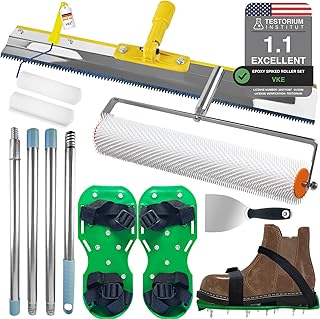
Best for: Buyers who want floor-finishing tools plus a mixing rod in one kit. Listed components include a 63-inch telescopic pole, stainless-steel squeegee, epoxy spiked shoes, spiked roller, and concrete mixing rod.
This kit is selected because it covers both material preparation and spreading or finishing tasks. It is better for someone assembling a floor-leveling setup than for someone seeking a powered mixer: the listing identifies a mixing rod, not a motorized mixer. Confirm that the included tools suit the coating and floor area in your project.
IMAYCC 2100W Cement Mixer
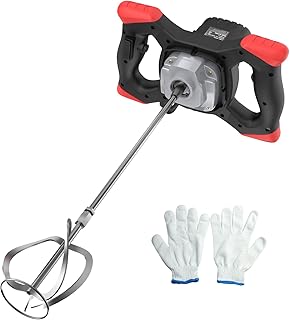
Best for: Buyers needing a portable handheld mixer with multiple speed settings. The listing specifies a 2100W motor, 270–900 RPM range, six speeds, and a screw-shaped dual paddle. It lists uses including cement, mud, paint, grout, plaster, thinset, and cementitious adhesives.
It is selected for its stated speed range and overheating protection, which automatically powers the tool off when overheated. The listing also describes a heat-dissipation design and self-locking switch. Choose this for material mixing, not floor spreading; no batch capacity is provided.
Self-Leveling Cement Tool Kit

Best for: Buyers who already have a mixer and need tools to distribute and finish self-leveling material. The kit lists a spiked roller, spike shoes, leveling rake, trowel, scraper, and telescopic extension pole that adjusts from 17 to 67 inches.
The spiked roller is described as helping release trapped air bubbles, while the pole can reduce the need to bend or kneel. This kit is selected for its range of finishing tools and adjustable reach. It does not list a powered mixer, so choose a separate mixing tool if you need to prepare compound.
Buying Guide: How To Choose A Self-Leveling Concrete Mixer
Do you need a powered mixer or finishing tools?
A mixer prepares the compound; a rake, squeegee, trowel, and spiked roller help spread or finish it. Handheld drill mixers suit buyers who prioritize portability and smaller mixing jobs. A freestanding mixer may suit projects requiring larger batches, but check the product details and compound instructions rather than assuming every mixer handles every self-leveling product.
How much material do you need to mix?
Compare stated capacity before choosing. The TABU lists a 6.0-cubic-foot capacity, while the handheld IMAYCC listings do not state a batch volume. Follow the self-leveling compound manufacturer’s instructions for water ratio, batch size, mixing time, and paddle type. Avoid preparing more material at once than you can place within the product’s working time.
Which finishing tools matter?
For surface work, look for tools that match the job: a leveling rake or squeegee for distribution, a trowel for detail work, and a spiked roller for addressing trapped air. Spiked shoes can help a user move across wet material, but the listed kits vary in their included components. Check the kit contents rather than treating all floor-leveling kits as interchangeable.
What should you check before buying?
- Confirm the tool is a powered mixer if mixing is your main need.
- Compare voltage, power, speed controls, and stated capacity where available.
- Check whether the product includes a paddle, mixing rod, or floor-finishing accessories.
- Follow the compound label and tool instructions for safe, compatible use.
Frequently Asked Questions
Can a handheld drill mixer mix self-leveling concrete?
A handheld mixer may be an option if its instructions and the compound manufacturer’s directions support that use. Check the required paddle, batch size, and mixing procedure before starting.
Is a concrete mixer the same as a floor-leveling tool kit?
No. A mixer combines the material, while a floor-leveling kit typically includes tools for spreading, smoothing, or finishing it. Some kits include a mixing rod but not a powered mixer.
Why use a spiked roller on self-leveling compound?
A spiked roller is used during finishing to help release trapped air bubbles. Follow the compound instructions for timing and technique.
Which option is better for larger batches?
The TABU model is the only listed option with a stated batch capacity: 6.0 cubic feet. Verify its suitability for your specific compound before purchase.