Best Screed Chairs for Concrete Projects: Top Picks for Level and Stability
Answer: For smooth, accurate concrete pours, these screed chair sets keep rebar and pipe guides steady while you screed. The best choices fit common pipe sizes (1.25–2 inches) or flat rails, stay in place, resist corrosion, and support large slab areas. This guide highlights options for DIY projects, commercial pours, and heavy-duty build sites, with notes on who each product is best for and why it was selected. If you’re shaping garage floors, basements, or expansive slabs, these chairs help ensure a level finish with fewer adjustements during the pour.
| Product | Best For | Key Advantage | Notes |
|---|---|---|---|
| MAKO FinCap Concrete Screed Chair (1000 lb) | Commercial/Industrial projects | Non-corrosive polymer, high load capacity | Works with 1-1/2″ pipes; part of a modular system |
| MAKO Jaws RailFin Concrete Screed Chair | Rail-supported pours | Supports 1/4″ flat rails, anti-bounce design | Best with flat rolled rails |
| MAKO Starter Kit Concrete Screed Support System | One-person setup | Includes driver tool and multiple chairs | Best for quick, repetitive pours |
| Red Line 25 Pack Concrete Screed Rail Chairs | Residential/commercial screeding | Heavy-duty metal chairs | Simple, reliable for standard rails |
| Shimeyao 100 Pcs Concrete Metal Screed Rebar Chairs | Large slabs | Bulk pack, holds up to 2″ pipes | Good value for big projects |
Introduction to top picks: The MAKO lineup emphasizes stay-in-place stability and corrosion resistance, ideal for long, heavy pours. Red Line chairs offer dependable metal construction for traditional screed rails. Shimeyao’s bulk options provide economical scalability for larger sites. Each product below includes practical uses, best-for scenarios, and clear cautions to help you choose confidently.
MAKO FinCap Concrete Screed Chair

Best for heavy-duty pours where corrosion resistance matters. The FinCap chair uses non-metallic polymer to resist rust and staining, maintaining stability under load. It is rated for up to 1,000 lbs when used with the MAKO Base Plate and FinStand system. This makes it a strong choice for commercial, industrial, and infrastructure concreting. Caution: ensure compatibility with your screed pipe size and set-up guidelines, as the system is most efficient when used as part of the complete MAKO Screed Support System.
Who it’s for: Contractors and builders working on large slabs or repeated pours where durability and consistent elevation are essential. Why selected: best-in-class load capacity combined with non-corrosive materials reduces maintenance during and after pours.
MAKO Jaws RailFin Concrete Screed Chair

Best for projects using flat rails. RailFin supports 1/4″ flat rolled rails and features a patented Fin-Lock system to prevent bounce-off and dislodgement during pours. It remains non-corrosive, made from medical-grade polypropylene. Caution: ensure your rail dimensions align with the 1/4″ rail compatibility and installation guidance for best results.
Who it’s for: Concrete crews prioritizing rail stability and precision elevation control. Why selected: the RailFin design minimizes movement, yielding smoother slabs when using flat rails.
MAKO Starter Kit Concrete Screed Support System
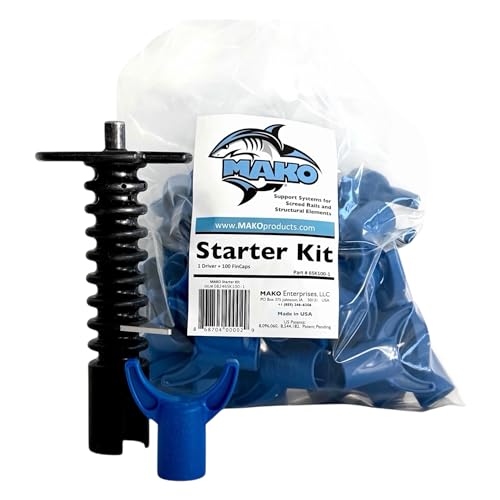
Best for quick, one-person setup. This starter kit includes 50 FinCap chairs and a driver tool to align supports with a string line or laser. It supports nominal 1-1/2″ screed pipe and accommodates other pipe sizes with adjustments. Caution: it’s designed to work best when spacing between supports is kept consistent (roughly 3–4 ft apart) for uniform slab elevation.
Who it’s for: Independent contractors and small crews needing fast, repeatable setup. Why selected: the included driver makes it easy to deploy multiple supports with accuracy, saving time on larger projects.
Red Line Concrete Screed Rail Chairs (25 Pack)

Best for standard residential and light-commercial screeding. These heavy-duty metal chairs provide reliable support for 3/8″x 2″ flat bars or similar configurations. They are straightforward to install and help maintain level results across typical slab sections. Caution: for very large slabs, ensure you have enough chairs to maintain consistent elevation across the entire pour.
Who it’s for: Homeowners and builders performing common garage or basement pours. Why selected: balance of durability, simplicity, and value for mid-scale projects.
Shimeyao 100 Pcs Concrete Metal Screed Rebar Chairs

Best for bulk planning and long runs. The 100-pack includes brackets that fit pipes up to 2″ outer diameter, suitable for garage floors, basements, and pads. The brackets form a stable guide for the screed plate, helping achieve a smoother, more precise finish. Caution: bulk purchases require careful inventory management on the job site to avoid misplacement or loss of components.
Who it’s for: Large-scale residential or commercial pours where bulk supply is advantageous. Why selected: high quantity helps ensure consistent support across extended slabs and multiple shifts.
Otoolling 100 Pcs Concrete Screed Rebar Chairs

Best for complete package versatility. The 100-count set holds pipes up to 2″ OD and is designed for garage, basement, and pad pours. It emphasizes precision and durability with a robust metal construction. Caution: confirm compatibility with your chosen screed pipe size and ensure the setup aligns with recommended spacing for even finishing.
Who it’s for: Builders seeking a broad selection of chairs with reliable performance. Why selected: strong value and broad compatibility across common screed configurations.
Buying Guide: Helpfully Compare Screed Chairs For Concrete
What sizes do screed chairs support?
Most chairs in this guide accommodate pipes up to 2 inches in outer diameter or flat rails around 1/4″ thick. If you use larger pipes or unusual rails, verify compatibility with the chair’s inner grip dimensions before purchasing.
Metal vs. non-metal materials: which to choose?
Non-metallic polymer chairs resist rust and staining, ideal for long-term embedded use and corrosion-prone environments. Metal chairs are typically more traditional, potentially cheaper in bulk, but may corrode over time if not protected.
Is stay-in-place important for my project?
Stay-in-place designs prevent movement during concrete placement, improving elevation control. This is especially valuable for long runs, high-traffic floors, and projects with strict flatness requirements.
How many chairs do I need per pour?
General guidance is 3–4 feet between supports. For large slabs or higher precision, space closer to 3 feet or less. Always plan for extra chairs to cover corners and edge sections.
What installation tools help?
A driver or alignment tool accelerates setup, enabling quick, repeatable positioning. If your system uses rails, ensure you have the right clamps or end caps for a secure fit.
Durability and project scale considerations
For industrial or infrastructure pours, prioritize high load capacity and corrosion resistance. For DIY garages or basements, balance cost with adequate durability and ease of use.
Compatibility quick-checklist
- Pipe or rail size must match the chair’s grip range.
- Check load capacity for the expected slab weight and thickness.
- Confirm stay-in-place features with your formwork plan.
- Ensure a consistent spacing plan across the entire pour.
FAQ
- What is a screed chair used for?
It supports screed guides (pipes or rails) above fresh concrete to maintain elevation during leveling.
- Do these chairs prevent concrete from moving during the pour?
Yes, stay-in-place designs minimize movement and help keep a uniform finish.
- Which chair is best for flat rails?
MAKO Jaws RailFin is designed for 1/4″ flat rolled rails and provides anti-bounce performance.
- Can I use these chairs with two different pipe sizes?
Some models support multiple pipe sizes; verify the grip range before mixing sizes on one pour.
- Are non-metallic chairs suitable for all concrete pours?
They resist rust and staining, making them ideal for embedded chairs in concrete slabs.
- How many chairs should I buy for a 1,500 sq ft slab?
Estimate 3–4 feet between chairs; plan for additional units to cover corners and edges.