Best Saws to Cut Stone for Tile, Masonry, and Lapidary Projects
The best saw to cut stone depends on the material and cut size: a wet tile saw suits tile work, a compact lapidary saw suits small rocks and gems, and a larger masonry cutter is better for thicker stone. The SKIL is designed for tile, while the PYY and 750W lapidary saw are aimed at detailed workshop projects. The VEVOR and DEWALT models offer portable options for stone, concrete, and masonry cutting. Compare the listed cutting capacity and water features before choosing.
| Product | Best suited for | Key distinction |
|---|---|---|
| SKIL 3540-02 | Tile cuts | Table saw with water reservoir |
| PYY Lapidary Rock Saw | Small stones and craft work | Variable speed and attachments |
| 750W Lapidary Saw | Gemstone workshop cutting | 38 mm capacity and water drip |
| VEVOR Electric Concrete Cutter | Stone, brick, and concrete | 9-inch blade and wet-cutting attachment |
| DEWALT DWC860W | Portable stone cutting | Compact wet-or-dry operation |
SKIL 7-Inch Wet Tile Saw

The SKIL 3540-02 is best for homeowners and DIYers making straight or angled cuts in tile. Its stainless steel tabletop supports tiles up to 12 by 12 inches, and an adjustable rip fence and miter gauge help guide straight and miter cuts.
A blade-cooling water reservoir is built into the saw. Water helps cool the blade and minimize dust and debris while cutting. Choose this model when tile is the primary material and a stationary tabletop setup fits the project. Its stated tabletop capacity is a limitation for tiles larger than 12 by 12 inches.
PYY Lapidary Rock Saw

This PYY saw is best for hobbyists cutting small stones, jade, and other materials for jewelry or art projects. Its 350W motor reaches up to 10,000 RPM, and a front dial allows speed adjustment. Listed blade uses include stone, wood, acrylic, plastic, aluminum, chrome, and precious metals.
The machine includes a water pipe and pump for wet sawing, along with attachments for polishing, grinding, and engraving when used with a flexible shaft or drill chuck. It was selected for its combination of cutting and craft functions. The listed stone thickness limit is 35 mm, so choose another saw for thicker pieces.
750W Variable-Speed Lapidary Saw
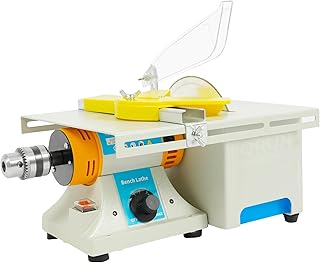
This wet lapidary saw is best for a gemstone workshop that needs more stated cutting capacity than the PYY model. Its 750W motor is specified for materials up to 38 mm thick, and its speed dial ranges from 1,000 to 10,000 RPM. The product description names jade, amber, and softwood as example materials.
An integrated water drip system cools the blade and material, with the stated purpose of reducing airborne dust and extending blade life. Choose this model if variable speed, wet cutting, and a 38 mm capacity match the work. Its focus is workshop-scale cutting; the supplied details do not specify a tile-table format or a cutting depth for large masonry jobs.
VEVOR 9-Inch Electric Concrete Cutter

The VEVOR cutter is best for users making cuts in stone, brick, porcelain, or concrete rather than small lapidary pieces. It has a 1,800W motor, a listed speed of 5,800 RPM, and a 9-inch circular saw with a stated cutting depth of 3.5 inches.
A water line, pump, and wet-cutting attachment provide direct water delivery during cutting. The product also lists a double switch, slow start, overload protection, and built-in GFCI design. Choose it for deeper masonry cuts and wet cutting. Its 9-inch cutting setup is less suited to fine gemstone slicing than a dedicated lapidary saw.
DEWALT DWC860W Wet Tile Saw

The DEWALT DWC860W is best for buyers who want a compact saw for stone and tile cuts. Its 10.8-amp, 1,300W motor is listed for granite, porcelain, concrete, and other stone materials. The 4-3/8-inch diamond blade cuts ceramic and stone materials up to 1-3/8 inches deep.
At a listed weight of 6.6 pounds, it is lightweight and compact compared with a tabletop tile saw. The product supports wet or dry cutting. Choose it when portability and a range of stone materials matter; avoid it if the project requires cuts deeper than the stated 1-3/8-inch capacity.
Buying Guide: How To Choose A Stone-Cutting Saw
What material and cut size do you need?
Match the saw to the material and dimensions first. A tile saw with a guided table is suitable for tile work, while lapidary equipment is designed for smaller stones, gems, and craft projects. For concrete, brick, or thicker stone, compare the cutter’s stated blade size and cutting depth. Do not assume a saw’s motor power alone determines whether it can handle a particular piece.
Should you choose wet or dry cutting?
Wet-cutting features appear on the SKIL, PYY, 750W lapidary, and VEVOR models. Their listed water systems cool the blade or deliver water during cutting; the SKIL also says its reservoir helps minimize dust and debris. The DEWALT is specified for wet or dry use. Follow the saw’s instructions for setup and operation, especially when water and powered equipment are used together.
Is a tabletop saw or handheld cutter a better fit?
A tabletop design can help guide tile cuts with a fence or gauge, as on the SKIL. A compact handheld-style cutter may be easier to move between work areas, while a lapidary machine is more appropriate for small, controlled workshop pieces. Consider how the material will be supported and whether the project needs straight cuts, angled cuts, or deeper slots.
Frequently Asked Questions
What type of saw is best for cutting stone?
It depends on the stone and cut. Use a lapidary saw for small rocks and gemstones, a wet tile saw for tile, and a masonry cutter for deeper cuts in materials such as concrete or brick.
Can a tile saw cut natural stone?
Some tile saws are specified for stone materials. Check the model’s stated material range, blade, and cutting capacity before use.
Why use water when cutting stone?
Water can cool the blade and material. Product descriptions also identify dust or debris reduction as a benefit of wet cutting.
How thick a stone can a lapidary saw cut?
Capacity varies by model. The PYY lists a maximum stone thickness of 35 mm, while the 750W lapidary saw lists capacity up to 38 mm.
Can one saw handle both tile and gemstone projects?
A multifunctional saw may serve more than one small-project purpose, but tile cutting and detailed gemstone work have different needs. Compare the saw’s cutting capacity, guidance system, speed control, and attachments with the actual project.