Best Saw Blades for Metal: Top Bi-Metal Options for Metal Cutting
Looking for saw blades that excel at metal cutting? This guide highlights five top bi-metal saw blade sets that deliver clean, fast cuts on metal while remaining versatile for wood and mixed materials. These blades are best for DIYers, contractors, and professionals who need reliable performance across sheet metal, pipes, rebar, and light wood tasks. Below you’ll find quick comparisons, suitability notes, and practical buying tips to help you choose the right blade set for your needs.
Summary of Selected Products
| Product | Best For | Notable Benefit |
|---|---|---|
| 12-Piece Bi-Metal Reciprocating Saw Blade Set | Home DIY and light construction | Four blade types cover wood and metal tasks in one kit |
| TOLESA Bi-Metal Reciprocating Saw Blades, 9″ 14TPI | Sheet metal and profiles | 0.9mm thin wall for heat reduction |
| 6-Inch Thick Metal Cutting Blades (18 TPI) 8 Pack | Thicker metal like pipe and rebar | Bi-Metal with durable HSS teeth |
| WORKPRO 32-Piece Reciprocating Saw Blade Set | Versatile wood and metal cutting | Includes pruning blade for branches |
| 10-Piece Ultimate Reciprocating Saw Blade Set | All-around tool kit | Cr-V wood and bi-material metal blades with storage box |
12-Piece Bi-Metal Reciprocating Saw Blade Set

This set combines four blade types to handle a range of tasks from demolition to precise metal cuts. It includes 6″ 6TPI wood blades for nail-fast work, 6″ 18TPI thin metal blades for sheets, 8″ 14TPI for medium-thick metal, and 9″ 6TPI wood blades for deeper cuts. Best for DIY homeowners and construction sites where both wood and metal cutting occur in the same project. The blades use high-carbon steel with heat treatment for sharpness and wear resistance. Caution: product data notes wear resistance, but continuous heavy-duty use may require routine blade changes.
TOLESA Bi-Metal Reciprocating Saw Blades, 9″ 14TPI
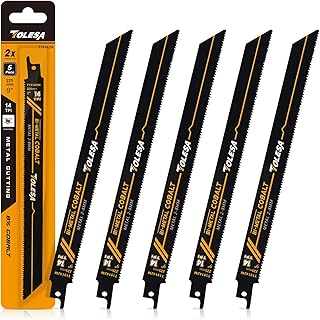
This 5-pack features 9″ blades with 14TPI, designed for heavy metal cutting. The cobalt edge enhances durability and allows fast cutting through sheet metal, pipes, and profiles. The blade’s 0.9 mm thin wall helps minimize heat buildup and reduces warp risk on dense metals. Best for users who frequently cut thick sheets or pipes and need steady, efficient performance. Choose this if you work with metal structures and want longer blade life. Limitation: suited for mid-range metal thickness, not optimized for extremely thick or highly brittle metals.
6-Inch Thick Metal Cutting Blades (18 TPI) – 8 Pack
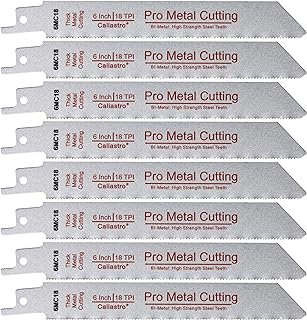
This eight-pack specializes in cutting metals up to 1/4 inch thick, using high-quality bi-metal construction, with HSS teeth bonded to a tough steel body. It’s ideal for fast cuts in black pipe, conduit, rebar, and angle iron. The blades have a thinner 0.05 inch thickness to reduce bending under load, making them more durable for demanding metal work. Best for rougher metal demolition or electrical/mechanical installations. Caution: designed for moderate thickness; avoid very thick or very hard metals beyond stated range.
WORKPRO 32-Piece Reciprocating Saw Blade Set

This versatile kit includes wood blades for coarse wood cutting up to 175 mm thickness and a pruning blade for branches up to 180 mm. The metal blades are bi-material, supporting metal cuts from 0.7–8 mm thick, including pipes and profiles up to 100 mm in diameter. Best for gardeners and homeowners who need a single kit that covers wood, metal, and pruning tasks. Limitation: some blades are specialized for pruning and may not be the best choice for high-volume metal demolition projects.
10-Piece Ultimate Reciprocating Saw Blade Set
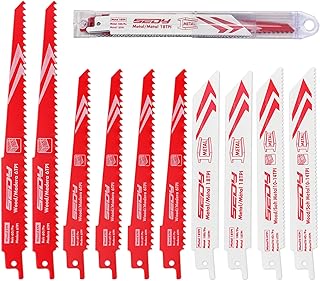
This premium set combines Cr-V steel wood blades with bi-material metal blades for a broad range of cutting tasks and includes a storage box for organization. It covers multiple thicknesses and materials, offering steady performance for both wood and metal projects. Best for woodworkers and DIYers who want a comprehensive, ready-to-go kit. Limitation: the focus on versatility may mean fewer blades specialized for extreme metal thickness compared to single-material kits.
Buying Guide: How To Choose The Right Metal Cutting Blade
What thickness of metal will you cut? For pipes, sheets, or rebar, select blades with appropriate tooth counts and metal compatibility. Higher TPI (teeth per inch) blades cut thinner metals more smoothly and with less burr, while lower TPI blades cut thicker metals faster but may produce rougher edges.
Blade material matters. Bi-metal blades combine a tough steel body with a hard high-speed steel edge for longevity under heavy use. Cobalt-enhanced edges increase heat resistance for demanding metal cutting.
Blade length affects reach and depth. Longer blades enable deeper cuts and demolition work, whereas shorter blades provide control in tight spaces.
Special designs help manage heat. Thin-wall blades and carefully spaced teeth reduce heat buildup, which minimizes distortion and extends blade life on hot metal work.
Compatibility is key. Ensure blades fit your reciprocating saw’s arbor size and are designed for mixed material cutting if you plan to switch between wood and metal frequently.
Frequently Asked Questions
- What is the difference between HSS and bi-metal blades? Bi-metal blades have a metal body with a high-speed steel edge, offering a balance of durability and sharpness for metal cutting. HSS teeth alone can be harder but may wear faster in mixed-material tasks.
- Can I cut wood with metal blades? Some blades are dual-purpose, but metal blades may wear rapidly or cause poor finishes on wood. Use wood-specific blades for clean wood cuts when possible.
- Which blade is best for cutting pipes? For pipes, choose blades with 14-18 TPI and a bi-metal construction to handle the curved surfaces and maintain edge life.
- How do I avoid blade overheating? Use blades with thinner walls and heat-dissipating tooth designs, and avoid forcing the blade through metal. Allow the saw to do the work.
- How many blades should I own for a project? A mixed set covering wood and metal helps you adapt quickly without swapping out blades frequently.