Best Saw Blades for Laminate Flooring: Smooth Cuts for Your Floor Project
If you’re installing laminate flooring, you need a blade designed to deliver clean, precise cuts with minimal chipping. This guide highlights five top-rated options that balance long life, heat resistance, and smooth finishes. The best-suited buyers include DIY homeowners, professional installers, and remodelers looking for reliable performance across laminate, engineered wood, bamboo, and hardwood surfaces.
Summary of selected products:
- Diablo PergoBlade D1012LF — 10″ blade with PCD teeth, ideal for laminate and wood flooring.
- WEN BL1080 — 80-tooth carbide finish blade for ultra-smooth cuts on miter and table saws.
- Diablo PergoBlade D1216LF — 12″ blade with PCD teeth, designed for long life on flooring jobs.
- Diablo PergoBlade D0708LF — 7-1/4″ blade with 8 teeth and anti-kickback design for laminate and wood.
- FOXBC 10-Inch Table Saw Blade — 80-tooth finish blade for dense wood cuts.
Diablo PergoBlade D1012LF — 10″ Laminate Flooring Blade

Best for: laminate flooring installations where long blade life and clean edges matter most. This blade uses Polycrystalline Diamond (PCD) teeth and a Perma-SHIELD coating to extend life and reduce heat buildup during cutting.
Why selected: The D1012LF is specifically designed for laminate and engineered wood, delivering smooth cuts with reduced chipping. Its anti-kickback and anti-vibration features help maintain accuracy on straight and angled cuts.
Limitation: Data indicates exceptionally long life, but performance can vary with non-laminate materials or very thick hardwoods. Choose this for laminate projects and similar materials.
WEN BL1080 — 80-Tooth Finish Blade

Best for: precision finishing on softwoods and hardwoods with a clean, paper-thin kerf for miter and table saw tasks. The ultra-fine 80 teeth help minimize tear-out on laminates and veneered surfaces.
Why selected: Its 10-inch diameter and 5/8-inch arbor fit most consumer miter and table saws, and the ultra-thin kerf reduces waste and effort for smoother finishes.
Limitation: The blade excels in finish quality but may require slower feed rates on very dense hardwoods to maintain edge life and cut quality.
Diablo PergoBlade D1216LF — 12″ Laminate Blade

Best for: large flooring jobs or projects that require long, straight cuts with high durability. The 12″ diameter helps with deep rips and reduces the number of blade changes on big installations.
Why selected: Like the smaller D1012LF, this blade uses PCD teeth and a robust geometry to extend life, offering long service life on laminate, engineered wood, and similar materials.
Limitation: Larger diameter requires compatible saws; ensure your equipment accommodates a 12″ blade before purchasing.
Diablo PergoBlade D0708LF — 7-1/4″ Laminate Blade
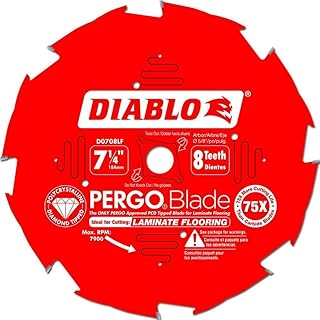
Best for: compact or portable saw setups where a small blade is necessary for tight spaces or finish passes on laminate and wood projects.
Why selected: This blade combines a compact 7-1/4″ size with PCD teeth and anti-kickback features to minimize chatter and provide steady cuts in constrained areas.
Limitation: Smaller diameter means more blade changes on longer runs; plan accordingly for bigger flooring jobs.
FOXBC 10-Inch 80-Tooth Finish Blade

Best for: high-quality finishes on softwood and hardwood, especially when an ultra-finish cut is required for laminate transitions and trims.
Why selected: The 80-tooth design delivers very smooth surfaces with minimal sanding, and the ATB grind provides efficient cutting with reduced heat and wear on blades.
Limitation: May be less aggressive on very dense materials; choose for finish-focused work rather than rapid stock removal.
Buying Guide: Key Considerations For Laminate Flooring Blades
Blade material and tooth design: Blades with Polycrystalline Diamond (PCD) teeth generally outlast carbide blades on laminate and engineered wood. Consider blades with anti-kickback features to improve safety and cut quality.
Diameter and arbor compatibility: Match blade diameter to your saw and ensure the arbor size (commonly 5/8″) fits your equipment. Larger blades can reduce number of passes but require compatible saws.
Kerf width: Thinner kerfs waste less material and can reduce blade drag, enabling cleaner cuts. For finish work, ultra-fine kerfs (around 0.071″ to 0.098″) are often preferred.
Finish quality vs. speed: High-tooth-count blades excel at finish work and reduce tear-out, but may cut more slowly on dense materials. For quick rips, a blade with fewer teeth and strong carbide teeth can be appropriate.
Safety and stability features: Look for anti-kickback designs and laser-cut anti-vibration features. These improve control and cut precision, especially on large laminate runs.
Blade life expectations: Blades marketed as long-life, especially with PCD teeth, are suitable for frequent flooring projects. If you install laminate often, a blade with extended life reduces downtime and cost per cut.
Frequently Asked Questions
- What blade is best for laminate flooring? A blade with PCD teeth or an ultra-finish carbide blade, designed for laminate and engineered wood, usually delivers cleaner cuts and longer life.
- Can I use a standard wood blade for laminate? It may work briefly, but standard carbide wood blades wear faster and can chip laminates. Use a laminate-specific blade for best results.
- What is kerf, and why does it matter? Kerf is the width of the cut made by the blade. A thinner kerf wastes less material and can require less power, improving cut quality and efficiency.
- Do I need a large-diameter blade for laminate? Larger blades can improve stability on long cuts, but ensure your saw can safely handle the diameter and that you have the appropriate arbor size.
- Are anti-kickback teeth essential? They help reduce sharp binding and kickback, which improves control and safety on long flooring runs.
- Is a high-tooth-count blade always better? For finish cuts and minimizing tear-out, yes. For fast material removal, a lower tooth count blade may be preferable.
The blades listed here are selected for laminate and related flooring tasks. When planning a flooring project, choose a blade that matches your saw’s compatibility, the type of laminate, and your finish requirements. Always follow manufacturer safety guidelines and confirm the blade type before purchasing.