Best Routers for Woodworking: Top Picks for Precise, Easy Routing
For woodworkers seeking reliable, precise routing, these top routers cover a range of needs—from compact palm routers for detail work to powerful fixed-base machines for bulk trimming. This guide matches each tool to typical buyers: hobbyists and DIY enthusiasts will value compact control; professional carpenters need power and consistency; and hobbyists exploring edging, grooving, and trim work will favor versatile features. Below is a quick summary table of the five selected models to compare core capabilities at a glance.
| Product | Type | Power | Best For |
|---|---|---|---|
| BOSCH PR20EVS Colt | Palm Router | 5.6A | Detailing and edge routing on small pieces |
| Bosch 1617EVS | Fixed-Base Router | 12A motor | Fixed-base stability and table mounting |
| SKIL RT1323-00 | Fixed Base | 10A | General routing with adjustable speed |
| TwoWin Router Tool | Compact Handheld | 800W | Edging, trimming, and portability |
| DEWALT DCW600B | Cordless | Brushless, 20V | Cordless versatility on varied projects |
BOSCH PR20EVS Colt 1.0 HP: Compact Power, Precise Depth
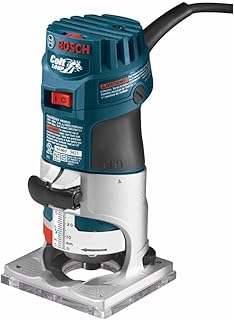
The BOSCH PR20EVS Colt is a small, 1.0 HP palm router designed for tight spots and detailed work. It features a precise depth adjustment system for macro and micro changes, plus a quick-clamp system to move or swap bases quickly. The straight edge guide helps guide the router along edges, while the angled cord exit keeps the cord out of the work area. Best for hobbyists and small-piece work where control and light weight matter.
Best for: Detail work, edge routing on small boards, and users who value quick base changes. Limitation: Lower maximum bit diameter (1 5/16 inch in a fixed base) compared with larger fixed-base machines.
Bosch 1617EVS 2.25 HP: Fixed-Base Powerhouse

The Bosch 1617EVS offers a 12-amp motor with constant response circuitry and a microfine depth adjust, making it a robust choice for larger routing tasks. The threaded three-hole base pattern enables quick mounting to router tables, which is essential for precision work and repeated cuts. It balances power with control, suitable for professional use or serious hobbyists seeking smooth, clean cuts.
Best for: Fixed-base routing on larger pieces, table mounting, and projects requiring sustained power. Limitation: Heavier than palm models; less ideal for one-handed operation on small pieces.
SKIL 10 Amp Fixed Base: Solid General Router

The SKIL RT1323-00 brings a 10-amp motor with a fixed base and adjustable speed, plus a soft-start feature for a controlled takeoff. This is a versatile, entry-to-mid-level option suitable for edging, grooving, and edge-trimming projects. It’s best for users who want a straightforward router with reliable performance at a reasonable price point.
Best for: General purpose routing, beginners moving toward more detailed work, and projects where a soft-start helps reduce tear-out. Limitation: Not as feature-rich as some pro-grade models in terms of base versatility and high-end stability.
TwoWin Router Tool: Portable 800W Trimmer Kit

The TwoWin Router Tool is a compact 800W device designed for handheld trimming and edging. It includes a 1/4″ collet and a 15-piece tungsten carbide router bit set, plus a transparent base for clear trimming lines. The kit’s aluminum and plastic construction provides stability during 작업, with a lift knob for easy depth control. Best for hobbyists who need a portable router with a broad bit-set for multiple tasks.
Caution: The included bits and base design emphasize ease of use over heavy-duty, continuous production routing. Best for light to moderate routing tasks. Limitation: Not a fixed-base router; may be less stable for long, straight cuts without a guide.
DEWALT 20V Max XR Cordless Router: Cordless Convenience

The DEWALT 20V Max XR cordless router offers cordless convenience with a brushless motor and variable-speed dial. The depth adjustment ring enables fast height changes, and dual LEDs illuminate the work area for better visibility. This model is best for portable setups or projects away from power outlets, where mobility is a priority.
Best for: Projects requiring mobility or occasional use away from outlets, and users who value bright work area lighting. Limitation: Battery-powered tools generally require battery management and may have shorter run times on heavy-duty tasks.
Buying Guide: Key Considerations For Your Woodworking Router
- Power and speed range: For hardwoods and thick stock, look for a router with at least 12A or higher and a wide speed range to match material density and bit type.
- Base type: Choose fixed-base for stability and table mounting, or palm/compact bases for detail work and portability. A plunge base can add versatility, though not listed among these models.
- Depth and micro-adjustments: Precise depth control and repeatable settings minimize tear-out and improve edge quality on consistent cuts.
- Guides and accessories: Edge guides, straight guides, and substitution-friendly bit sets enhance accuracy and value for edging and grooving tasks.
- Corded vs cordless: Corded routers deliver consistent power; cordless models offer portability but require battery management and potential compromises in runtime.
- Control features: Soft-start reduces kickback. Constant-response circuitry maintains speed under load, improving cut quality on tougher materials.
- Portability vs stability: Lightweight palm routers excel in tight spaces; heavier fixed-base routers provide stability for longer runs and router table use.
- Bit compatibility and capacity: Ensure the router accepts the common bit sizes needed for your typical projects (e.g., 1/4″ shank, specific diameters).
Frequently Asked Questions
- What router should a beginner start with for wood projects? A compact palm router or a light fixed-base router with soft-start and a basic edge guide is ideal for learning control and accuracy.
- Is a cordless router suitable for professional work? Cordless Routers offer mobility, but may have shorter run times and slightly less consistency under heavy loads compared with corded models.
- What is the advantage of a fixed-base router? Fixed-base routers provide stability for longer cuts and easier routing table mounting, which improves precision on repeat tasks.
- When should I choose a variable-speed router? Variable-speed control helps match RPM to the bit material, improving cut quality with different woods and bit types.
- What counts as essential accessories for a router? An edge guide, straight edge, dust collection compatibility, and a reliable bit set are core accessories for versatile routing.
- Are soft-start features important? Yes, soft-start reduces user kickback and helps achieve smoother starts, protecting both the workpiece and the bit.