Best Power Tool Vacuum Switches for Dust Control and Safety
Answering the needs of woodworkers, craftspeople, and DIYers who want synchronized dust collection with their power tools, these vacuum switches help prevent circuit overload, reduce airborne dust, and keep workspaces cleaner. The top picks here are suited for different shop sizes and tool sets—whether you need two tool outlets, a manual override, or configurable delay times. Use this guide to compare how each model fits a specific setup, from small garages to larger woodworking shops.
| Product | Best For | Key Advantage |
|---|---|---|
| Ortis Vacuum Switch (Two Outlets, Auto Delay) | Woodworking shops needing two tools plus a vacuum | Auto delay up to 7s; easy two-outlet setup |
| SENCTRL Auto Vacuum Switch | High-demand tool users with up to 30A capacity | Load sensing with 1s turn-on delay |
| O’SKOOL Automatic Vacuum Switch | Small to medium garages with hose-clearing needs | 10s delay-off; simple 3-outlet setup |
| AWROY Auto Vacuum Switch | DIYers needing straightforward three-outlet setup | 10s delay-off; clear labeling for setup |
| Ortis Adjustable Actuation Vacuum Switch | Precision control for varying tool demands | Configurable actuation threshold and shutoff delay |
Ortis Vacuum Switch With Two Tool Outlets

The Ortis model offers two tool outlets and three vacuum modes: automatic, off, and on with auto switching. Its automatic delay feature provides a 1-second start delay and a 7-second shutoff delay in auto mode. This helps prevent circuit overload, reduces airborne dust, and maintains cleaner air in the workspace. It is best for woodworking setups that use multiple tools at once and want a compact, integrated switch solution.
Best for: Woodworkers needing simultaneous tool and vacuum control without extra power strips. Better for: modest-sized shops prioritizing dust control. Choose this if you want straightforward auto operation with a built-in delay. Caution: installation options include screw fastening or traceless wall-mounting adhesive, which may affect placement depending on wall material.
SENCTRL Automatic Vacuum Switch for Power Tools

The SENCTRL model emphasizes high-current handling with a UL-certified 14 AWG cord and a 30A capacity. It features three run modes—Auto, Off, and On—and includes a load-sensing mechanism. A 1-second turn-on delay helps prevent overload, and the device is designed for durability with flame-retardant materials. This model is well-suited for pro-grade workshops or DIYers running powerful tools in tandem with a vacuum.
Best for: Users who operate high-draw tools and want clear load protection. Better for: larger hobbyist shops or small workshops hitting near current limits. Choose this if you need explicit overload protection and a manual override option. Caution: no explicit notes on multiple tool outlets beyond the two-tool port, which may require a separate power strip for additional tools.
O’SKOOL Automatic Vacuum Switch
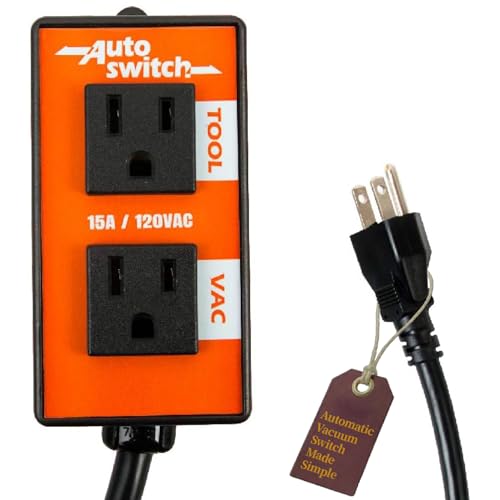
This switch is built for real woodworking setups, syncing a vacuum with table saws, miters, routers, and sanders. It turns the vacuum on as the tool starts and adds a 10-second delay after the tool stops to clear dust from the hose. It supports an easy three-outlet setup, and clearly labeled ports simplify installation. This model is best for small to medium shops needing dependable, simple automation and a practical run-time delay.
Best for: Small-to-medium workshops seeking reliable auto-start/stop with a clear setup. Better for: users who routinely switch between tools and want a consistent delay to exhaust dust. Caution: the 10-second delay means clean-up time is fixed; longer delays aren’t adjustable on this unit.
AWROY Automatic Vacuum Switch with 10s Delay-Off

AWROY provides tool-activated dust control with a 10-second delay-off after tool shutdown. It uses a simple three-outlet setup, with clearly labeled ports that simplify configuration. This model suits garages and light-to-moderate woodworking spaces where a quick, user-friendly solution is preferred. It emphasizes automatic operation without demanding extensive setup knowledge.
Best for: DIYers and hobbyists seeking straightforward automation. Better for: spaces that require quick setup and a reliable auto-run feature. Choose this if you want a cost-efficient, easy-install option. Caution: the data specifies a 10-second delay-off, which may not fit projects needing longer cleanup times.
Ortis Adjustable Actuation Vacuum Switch
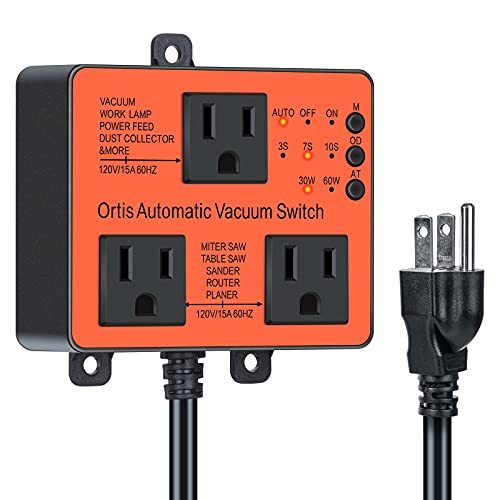
This Ortis model combines two tool outlets with three vacuum modes—Auto, Off, and On—and adds an adjustable actuation threshold. Consumers can choose 30W or 60W actuation, preventing the vacuum from running too long or failing to shut off after tool use. It also allows configurable shutoff delays (3s/7s/10s). This is ideal for shops with varied tool types and dust tasks, needing precise control over when the vacuum engages and disengages.
Best for: Users who need precise control over activation thresholds and delay timings. Better for: shops with mixed tools and dust tasks requiring tuning. Choose this if you want LED indicators and adjustable settings. Caution: setup is a little more involved due to multiple adjustable parameters; misconfiguration could affect timing.
Buying Guide: Key Purchase Considerations
- Number of tool outlets: If you run more than one tool simultaneously, choose a model with at least two tool outlets to minimize extra power strips.
- Activation delay: Delays help prevent circuit overload and help clear dust. Look for adjustable delays if your workflow varies.
- Manual override: Some cabs offer manual ON/OFF options for greater flexibility when tools are used intermittently.
- Current and wire gauge: For high-draw tools, select switches rated for 30A or higher and UL-listed cords to ensure safety and longevity.
- Mounting options: Consider screw mounting or adhesive mounting based on your wall material and workspace layout.
- Durability and materials: Flame-retardant casings and robust cords reduce heat buildup and extend service life in workshop environments.
FAQ
- What is a vacuum switch for power tools?
It automatically turns a shop vacuum on when a connected tool starts and turns it off after a delay when the tool stops. - Why use a delay-off feature?
It helps clear residual dust from hoses and reduces the chance of dust re-entry when a tool stops. - Do I need two tool outlets?
If you frequently run a vacuum with multiple tools at once, two outlets reduce the need for extra power strips and simplify wiring. - Is adjustable actuation important?
Yes, it allows you to tailor activation thresholds to match your tool’s power draw and prevent false starts or prolonged vacuum operation. - Can I install these switches myself?
Most models offer screw or adhesive mounting; follow the manufacturer’s instructions for a secure install and test before heavy use.