Best Power Feeder for Shaper: Top Picks for Smooth, Safe Milling
Finding the right power feeder for a shaper helps achieve consistent cuts, improved safety, and higher production. The best options below cover a range of budgets and configurations, from compact, versatile units to heavy-duty, multi-axis feeders. This guide is ideal for woodworkers seeking reliable feed control on shapers, routers, and related machines. Each product includes who it’s best for and why it stands out, plus a practical caveat to consider before you buy.
| Product | Best For | |
|---|---|---|
| Infinity Tools Mini Power Feeder (MPF-001) | Small shops, router tables, shapers | Compact, adjustable speed, reversible feed, flexible mounting |
| Powermatic 3-Roll PF3-JR | Small to mid-size shops needing reliable, horizontal/vertical setup | Continuous-duty motor, universal joints, secure positioning |
| Grizzly G0826-2/3 HP 3 Roller | Mid-range production with variable speeds | BLDC motor, versatile speeds, strong feed control |
| Grizzly G4179 1/2 HP | Production milling and longer stock feeding | Dedicated feeder for higher throughput, multi-axis options |
| Powermatic PF-31 | Higher demand workshop setups | Heavy-duty, reliable feed with robust positioning |
Infinity Tools Mini Power Feeder MPF-001
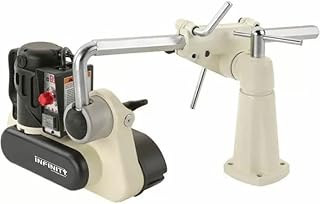
The Infinity Tools MPF-001 is a compact power feeder designed for versatility on router tables, shapers, table saws, and bandsaws. It uses a 1/8 HP motor to provide steady, controlled feed with a speed range of 6.5 to 56 feet per minute. The unit is reversible, enabling climb or conventional feed, which helps with difficult cuts and finish quality. It also offers flexible mounting for horizontal on a table or vertical along a fence, making it suitable for small shops or tight setups.
Best for: Small shops and DIY enthusiasts who need a lightweight, adaptable feeder that can handle varied tasks without heavy investment. Reason: its compact form factor and reversible feed make it easy to switch between router and shaper tasks while maintaining control over feed pressure.
Limitation: The 1/8 HP motor may be less suited to heavy, frequent production milling or very dense stock. Consider a higher-horsepower option for high-volume work.
Powermatic 3-Roll Power Feeder PF3-JR

The PF3-JR is a 1/4 HP feeder designed for dependable, continuous operation. Its design emphasizes a smooth transfer of power from the gearbox to the feed roller, with movable universal joints and locking mechanisms to secure horizontal, vertical, or angled feed positions. A robust roller chain and sprocket system supports reliable feeding across a variety of materials, making it a good choice for hobbyists expanding into more ambitious projects or small production tasks.
Best for: Users who want a solid, versatile feeder capable of secure multi-position operation. Reason: the PF3-JR’s flexible mounting and positive feeding help maintain consistent results on diverse stock.
Limitation: Slightly smaller power range may not suit aggressive milling or very thick stock compared to higher-horsepower models.
Grizzly Industrial G0826-2/3 HP 3 Roller

The Grizzly G0826 offers a 1/2 HP motor with a BLDC drive and a 220V single-phase supply. It provides multiple-speed control across a broad range (7 to 72 FPM) to accommodate a variety of cutting needs. The three-roller design promotes consistent feed while handling longer stock with less manual effort, making it a strong mid-range option for shops pursuing higher throughput without stepping into industrial equipment territory.
Best for: Shops needing stronger power with a broad speed range for varied materials. Reason: the 1/2 HP, 220V configuration and three-roller design help maintain steady feed under tougher milling tasks.
Caution: Ensure electrical compatibility with your shop power setup; 220V machines may require dedicated circuits and proper wiring knowledge.
Grizzly Industrial G4179 1/2 HP Power Feeder

The Grizzly G4179 feeder targets production-oriented users who need more reliable stock feeding during longer runs. It highlights forward and reverse capabilities plus X, Y, and Z adjustments, enabling precise position control for varied milling applications. This model is designed to enhance throughput while keeping feed pressure consistent across different stock dimensions.
Best for: Production milling and longer stock feeding where consistent feed is critical. Reason: multi-axis adjustment promotes stable performance across complex setups.
Caution: As with many production feeders, longer setups may demand more space and robust mounting hardware to ensure rigidity during operation.
Powermatic PF-31 3-Roll Power Feeder
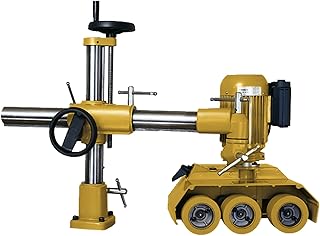
The PF-31 is a high-capacity 1 HP feeder designed for demanding shop environments. Its continuous-duty motor and robust gear and chain system provide dependable feeding across a wide range of materials and stock sizes. The design supports horizontal, vertical, or angled feed positions with locking mechanisms to secure precise setups, making it suitable for serious woodworking operations where reliability is essential.
Best for: Workshops with heavy milling requirements and frequent, larger stock feeding. Reason: higher horsepower and proven robustness support sustained performance in production tasks.
Caution: This model is larger and heavier, so ensure adequate mounting space and structural support on your machine table or fence system.
Buying Guide: How To Choose A Power Feeder For A Shaper
- Power and stock size: Higher horsepower handles denser stock and more aggressive milling. For frequent heavy use, prioritize 1/2 HP or 1 HP models.
- Speed range: Wider speed ranges (low and high FPM) give flexibility for different materials and cut types. Consider needs like fine finish vs. rapid material removal.
- Feed direction and mounting: Look for models with reversible feeds and multiple mounting options to adapt to horizontal and vertical setups on shapers or fences.
- Number of rollers: Three-roller designs tend to offer steadier feeding for longer stock, reducing chatter and stalling. Two-roller feeders can be adequate for lighter tasks.
- Control features: Locking joints, universal joints, and secure clamps improve stability, especially in production scenarios where repeatability matters.
- Electrical requirements: Some feeders use 110V while others require 220V. Verify your shop wiring and circuit availability to avoid installation issues.
- Footprint and compatibility: Ensure the feeder fits your shaper’s table, fence, or router setup. Compact units excel in small shops; larger feeders suit production environments.
Frequently Asked Questions
- What is a power feeder used for on a shaper? A power feeder provides a controlled, consistent feed rate for shapers to improve surface finish and reduce operator fatigue.
- What should I consider before buying a power feeder? Consider horsepower, speed range, mounting flexibility, roller configuration, and electrical requirements.
- Is a three-roller feeder better than a two-roller feeder? Three-roller designs generally offer smoother, more stable feed, especially on longer stock, but a two-roller feeder can be sufficient for lighter tasks.
- Can I use a power feeder with other machines? Yes, most feeders are compatible with router tables, bandsaws, and table saws in addition to shapers.
- Are higher horsepower feeders always better? Not necessarily; choose based on your typical stock size and the type of milling you perform. Higher horsepower is beneficial for heavy, frequent work.
- Do feeders require special electrical setup? Some do, especially 220V units. Check your shop’s electrical circuits and any required adapters or outlets.