Best Planing Bits for Routers: Five Spoilboard Surfacing Options
The best planing bit for a router depends on your router’s collet, the area you need to flatten, and the cutter design. These five spoilboard surfacing bits include options with 1/4-inch and 1/2-inch shanks and cutting diameters from 1 to 2 inches. Choose the 1/2-inch-shank BINSTAK bit for a 2-inch cutting diameter, the six-wing insert bit for a multi-blade design, or a smaller-diameter option for narrower surfacing work. Confirm your router’s capacity and the bit’s dimensions before choosing.
| Product | Shank | Cutting diameter | Best suited for |
|---|---|---|---|
| BINSTAK four-wing surfacing bit | 1/2 inch | 2 inches | Wide surfacing and slab flattening |
| Extra-large four-wing bit | 1/4 inch | 1-1/2 inches | Users needing a 1/4-inch shank |
| Six-wing insert bit | 1/2 inch | 2 inches | Buyers seeking an insert-blade design |
| BINSTAK compact surfacing bit | 1/4 inch | 1 inch | Narrower surfacing coverage |
| BINSTAK insert surfacing bit | 1/2 inch | 2 inches | Buyers comparing a 2-inch insert option |
BINSTAK Four-Wing 2-Inch Surfacing Bit

This carbide-tipped bit has a 1/2-inch shank, a 2-inch cutting diameter, and a 1/2-inch cut length. Its four-wing design is intended for bottom cleaning, spoilboard resurfacing, slab flattening, trimming, and slotting or grooving. The listed features also describe a hardened steel body, anti-kickback design, and heat-resistant Teflon coating.
Best for: Woodworkers who need a broad cutter for surfacing a spoilboard or flattening a slab and have a compatible 1/2-inch collet. It stands out for combining a 2-inch cutting diameter with several stated woodworking uses. Limitation: Its 1/2-inch shank is not suited to a router that only accepts 1/4-inch shanks.
Four-Wing 1-1/2-Inch Bit With 1/4-Inch Shank
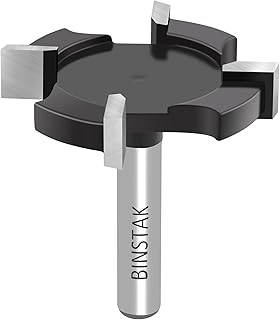
This bit has a 1/4-inch shank, a 1-1/2-inch cutting diameter, and a 1/4-inch cut length. Its carbide-tipped, four-wing design is described for slab flattening, spoilboard resurfacing, trimming, and slotting or grooving. The listing also specifies a hardened steel body, anti-kickback design, and heat-resistant Teflon coating intended to reduce resin buildup.
Best for: Buyers who need a 1/4-inch-shank option but want more coverage than a 1-inch cutter. Its diameter is smaller than the 2-inch models, so it may require more passes over a broad surface. Check that the router and setup are appropriate for the bit before use.
Six-Wing 2-Inch Insert Surfacing Bit

This 1/2-inch-shank bit has a 2-inch cutting diameter and six carbide inserts. The listing identifies the insert dimensions as 10 by 10 by 2.2 millimeters and describes the inserts as TiN coated. Its steel body has an anti-kickback design. The product description says the six-wing configuration is intended to provide balanced, efficient surfacing.
Best for: Buyers comparing a multi-insert design for spoilboard or slab surfacing who have a 1/2-inch collet. The replaceable-insert format distinguishes it from the listed carbide-tipped, fixed-wing options. Limitation: This bit’s stated insert dimensions and 1/2-inch shank should be checked against the intended setup and replacement-part needs.
BINSTAK 1-Inch Compact Surfacing Bit

The product name identifies this as a carbide spoilboard surfacing bit with a 1/4-inch shank and 1-inch cutting diameter. That smaller diameter gives buyers a narrower cutter size to compare with the 1-1/2- and 2-inch options in this guide.
Best for: Buyers whose priority is a 1-inch cutting diameter and a 1/4-inch shank. It was selected to provide a compact-size alternative in the range. Limitation: The supplied product information does not provide further details about wing count, cut length, or coating, so verify those specifications before purchase.
BINSTAK 2-Inch Insert Surfacing Bit
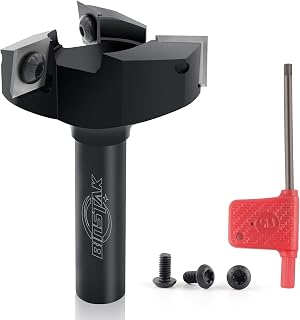
This BINSTAK bit is described as a carbide insert surfacing bit with a 1/2-inch shank and 2-inch cutting diameter. Its stated use is slab flattening and wood planing. It offers another insert-style option for buyers comparing 2-inch cutters, alongside the six-wing model above.
Best for: Buyers looking for a BINSTAK-labeled insert bit in the 2-inch, 1/2-inch-shank size category. Limitation: The supplied features do not specify insert count, insert dimensions, coating, or cut length. Confirm these details if they matter to your setup or maintenance plan.
Buying Guide: How to Choose a Router Planing Bit
Which shank size fits your router?
Start by matching the bit shank to the router collet. The products here use either 1/4-inch or 1/2-inch shanks. Do not assume a bit will fit based only on its cutting diameter; check the router’s documentation and the collet size. A larger shank does not automatically mean a better choice if it is incompatible with your tool.
What cutting diameter should you choose?
A 2-inch cutter covers a wider path than a 1-inch cutter, while a 1-1/2-inch bit sits between them. Wider coverage can be useful when resurfacing larger areas, but make sure the router and work setup are suitable for the bit. A smaller diameter may be preferable when you want a narrower cutting path. The listed cut lengths also differ, so compare that measurement where provided.
Fixed carbide tips or insert blades?
Some options are described as carbide-tipped, while others use carbide inserts. The six-wing model specifies six inserts; the other insert model’s supplied details do not state a count. Compare the exact replacement and maintenance information from the product listing rather than assuming insert styles share the same specifications.
What safety and setup details matter?
Use a surfacing bit for its stated purpose and follow the router and bit manufacturers’ operating instructions. Check that the bit is securely installed, the workpiece is secured, and the router can accommodate the cutter. The product descriptions mention anti-kickback designs on some models, but that feature does not replace safe operating practices. Avoid choosing solely by wing count or coating when other specifications are unclear.
Frequently Asked Questions
What is a planing bit for a router used for?
A router planing or surfacing bit is used to flatten or resurface wood, such as a slab or spoilboard. Some listed bits also state trimming and slotting or grooving as uses.
Can I use a 1/2-inch-shank bit in a 1/4-inch collet?
These are different shank sizes. Choose a bit that matches the router’s approved collet configuration, and consult the tool instructions rather than assuming the sizes are interchangeable.
Is a 2-inch surfacing bit always the best choice?
No. A 2-inch cutter provides a wider cutting diameter, but the appropriate choice depends on router compatibility, the work area, and the bit’s other dimensions.
What is the difference between four-wing and six-wing designs?
The listed six-wing model has six carbide inserts and is described as having a balanced, efficient design. The four-wing models have four wings. The product information alone does not establish that one design is best for every router or project.
What should I check before ordering?
Confirm shank size, cutting diameter, cut length when listed, cutter style, and the router’s capacity. For models with incomplete specifications, verify missing details in the product listing before deciding.