Best Sliding Miter Saws for Accurate Crosscuts and Wide Boards
A sliding miter saw is a strong choice for cutting wider boards while making crosscuts, bevels, and angled cuts. The SKIL MS6305-00 is best for buyers who want dual-bevel operation and an LED shadow line. DOVAMAN offers dual-speed settings and multiple blades, while VEVOR emphasizes a space-saving sliding system. For larger 12-inch capacity, compare the DEWALT DWS779 and DWS780.
| Saw | Best For | Standout Feature |
|---|---|---|
| SKIL MS6305-00 | Dual-bevel versatility | LED shadow line |
| DOVAMAN 10-Inch | Different materials and speeds | Three included blades |
| VEVOR 10-Inch | Workspaces near a wall | Forward-and-back sliding action |
| DEWALT DWS779 | Molding and trim work | Tall sliding fences |
| DEWALT DWS780 | Visible cut-line alignment | XPS LED shadow system |
SKIL MS6305-00 Dual-Bevel Sliding Saw
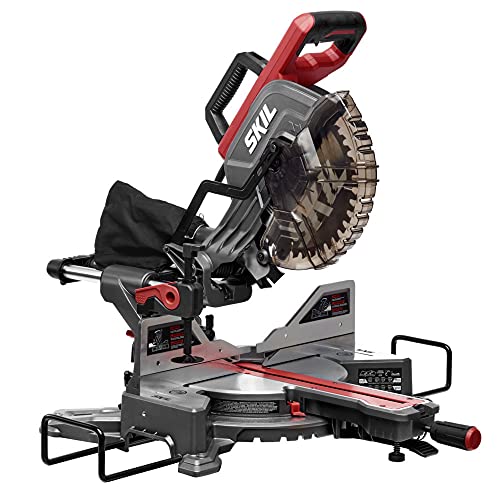
The SKIL MS6305-00 combines a 10-inch blade with a 15-amp motor rated at 4,800 RPM. Its dual-bevel design has positive stops at 48 and 45 degrees left, zero degrees, and 45 degrees right. The LED shadow line indicates the cut path and is presented as an alternative to laser-style alignment.
Best for: Home renovators and trim workers who want to make bevel cuts in either direction without repeatedly repositioning the workpiece. It was selected for its combination of sliding capability, dual bevels, and shadow-line guidance. A limitation is that the listed bevel stops do not include a positive stop at 48 degrees right.
DOVAMAN 10-Inch Dual-Speed Sliding Saw

This DOVAMAN saw includes three 10-inch TCT blades: two 40-tooth blades and one 48-tooth blade. Its two speed settings are 5,000 and 3,200 RPM, and the product information names wood, PVC, and soft metals as intended materials. A 13-inch sliding rail, extendable side tables, ambidextrous operation, and nine positive stops support a range of project setups.
Best for: DIY users who value included blade options and adjustable speed for different listed materials. Its broad stated cutting range and left- or right-handed operation make it a flexible option. The listing describes the maximum capacity inconsistently, so verify the exact cutting capacity for the model before buying. Blade choice and speed should follow the material and manufacturer instructions.
VEVOR 10-Inch Sliding Compound Miter Saw

VEVOR’s 10-inch saw uses a 15-amp motor and a 60-tooth blade. Its LED guide, precision scale, and locking system help set and align cuts. The axial sliding system moves forward and backward for wider crosscuts, and the manufacturer says the design allows the saw to sit against a wall. An aluminum base is described as lighter than traditional cast iron bases.
Best for: Buyers who need sliding crosscuts but want to conserve bench space. It was selected for its wall-friendly slide design and LED alignment feature. Consider the limitation that the supplied information does not specify a maximum crosscut capacity or bevel-stop positions, so compare those details with your project needs.
DEWALT DWS779 12-Inch Sliding Miter Saw

The DWS779 is a 12-inch, double-bevel sliding compound saw with a 15-amp motor rated at 3,800 RPM. Its tall sliding fences support crown molding up to 7-1/2 inches nested and base molding up to 6-3/4 inches vertically against the fence. The saw also includes a dust bag, and the listed dust collection system captures over 75% of generated dust.
Best for: Trim carpenters and remodelers who regularly work with taller molding and want a larger blade format. The tall fences and double-bevel design are its main selection reasons. It is larger-blade equipment than the 10-inch options, so check available workspace and the manufacturer’s capacity details for your specific cuts.
DEWALT DWS780 With XPS Cut-Line Light

The DWS780 is a 12-inch double-bevel sliding compound saw with a 15-amp, 3,800-RPM motor. Its integrated XPS LED cut-line positioning system indicates the blade’s cut line and is described as adjustment-free. The supplied listing also identifies a material clamp, blade wrench, and dust bag.
Best for: Buyers prioritizing a clear cut-line indicator on a 12-inch sliding saw. The XPS system distinguishes it from the DWS779 listing, which highlights dust collection and tall fences instead. The provided features do not state a maximum cutting capacity, so confirm that specification before choosing it for wide stock.
Buying Guide: How to Choose a Sliding Miter Saw
What blade size and capacity do you need?
Blade diameter alone does not determine whether a saw can handle your workpiece. Sliding rails increase crosscut reach, while blade size, fence design, and saw geometry also affect capacity. Compare the published crosscut and vertical cutting capacities with the dimensions of your lumber or molding. The DOVAMAN listing, for example, gives different maximum-capacity figures in its name and features.
Is single bevel or dual bevel better?
A dual-bevel saw tilts both left and right, which can reduce the need to flip or reposition material when making opposing bevels. Choose dual bevel for frequent trim or framing work that calls for bevels in both directions. A single-bevel saw can still make bevel cuts, but the operator may need to turn the workpiece to change direction.
Which alignment system suits your work?
Laser and LED systems help indicate where the blade will cut, but the designs differ. SKIL lists an LED shadow line, while the DEWALT DWS780 lists an XPS LED cut-line system. Check the guide’s visibility in your work area and follow the saw manual for setup and calibration. A guide does not replace securing the material or using safe cutting technique.
What else should you compare?
- Material: Match the blade and saw settings to the material. DOVAMAN lists wood, PVC, and soft metals, but users should follow its instructions for blade selection.
- Workspace: A sliding saw needs room for its rails and material supports. VEVOR describes a wall-friendly axial slide; still measure the full setup.
- Dust and portability: Compare dust collection details, included accessories, and the saw’s dimensions against your jobsite and storage needs.
- Cut repetition: Positive stops and readable scales can make repeated angle settings easier to reproduce.
Frequently Asked Questions
What does the slide do on a miter saw?
The sliding mechanism moves the blade assembly forward and backward, allowing wider crosscuts than a fixed-head saw of similar design.
Is a 10-inch or 12-inch sliding miter saw better?
Neither size is universally better. Choose based on the saw’s stated cutting capacity, the material sizes you handle, and the space available for the tool.
Do I need a double-bevel sliding saw?
A double-bevel saw is useful when you frequently cut bevels in both directions. Occasional users may prefer to compare the cost, capacity, and features of single-bevel models as well.
Can these saws cut metal?
The DOVAMAN listing names soft metals among its intended materials and includes multiple blades. Confirm the correct blade and operating instructions before cutting any metal; do not assume every miter saw blade is suitable.