Best Miter Saws for Woodworking Projects
The best miter saw for woodworking depends on the cuts and material sizes you handle most. The SKIL is best for woodworkers who want dual beveling and a shadow line; the Metabo HPT suits portable shop or job-site work; the DEWALT DWS780 is a larger-blade sliding option; the DEWALT DWS715 offers a straightforward 12-inch, single-bevel design; and the DOVAMAN adds sliding capacity and included blades for varied materials.
| Saw | Best For | Standout Feature |
|---|---|---|
| SKIL MS6305-00 | Compound-angle cuts | Dual bevel and LED shadow line |
| Metabo HPT C10FCG2 | Portability | 24-pound design |
| DEWALT DWS780 | Heavy-duty woodworking | 12-inch blade and cutline system |
| DEWALT DWS715 | Repeatable miter cuts | 14 positive miter stops |
| DOVAMAN 10-Inch Sliding Saw | Wider cuts and material variety | Sliding rail and three included blades |
SKIL MS6305-00 Dual-Bevel Sliding Saw
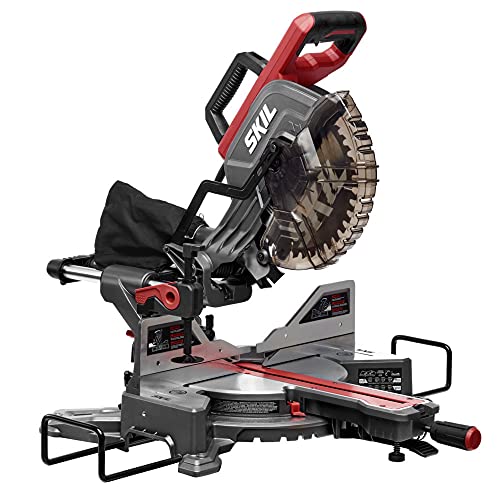
The SKIL combines a 15-amp motor rated at 4,800 RPM with dual beveling and a sliding design. Its LED shadow line indicates the cut line, and the saw has four positive bevel stops: 48 and 45 degrees left, 0 degrees, and 45 degrees right.
Best for: Woodworkers who make frequent compound cuts and want to bevel in either direction. The dual-bevel setup can reduce the need to reposition a workpiece for opposite-side bevels. Choose this model if those adjustments matter more than a lightweight, compact saw.
Limitation: The listed bevel stops do not include a 48-degree right stop, so check the angle range you need before buying.
Metabo HPT C10FCG2 Portable Miter Saw
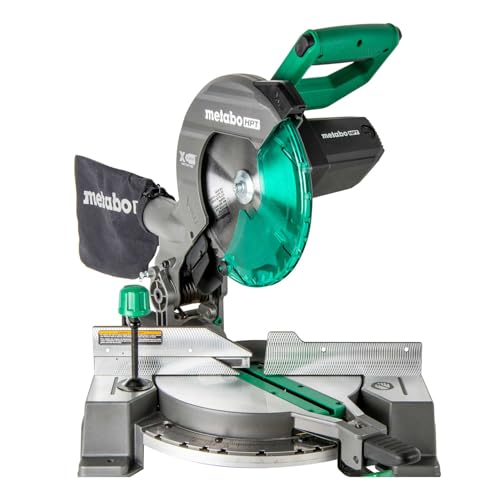
This 10-inch saw has a 15-amp motor with a no-load speed up to 5,000 RPM, an Xact Cut shadow line, an improved miter scale, and a workpiece vice clamp. At 24 pounds, it is the most clearly portable option among these selections.
Best for: Woodworkers who move between a home shop and job sites or need a saw that is easier to store. The clamp helps hold stock in position, while the shadow line and scale support cut alignment. Choose it for portability and basic compound-cut versatility.
Limitation: It is a single-bevel saw with a 0-to-45-degree bevel range, so opposite bevels may require turning the workpiece.
DEWALT DWS780 12-Inch Sliding Saw

The DWS780 pairs a 12-inch blade with a sliding compound design and a 15-amp motor rated at 3,800 RPM. Its XPS LED cutline system provides an adjustment-free cutline indication, and the listed package includes a material clamp, blade wrench, and dust bag.
Best for: Woodworkers seeking a larger-blade saw for demanding cutting tasks and a clear cutline reference. The sliding action is intended for wider crosscuts than a non-sliding design can provide. It is a better fit for a dedicated work area than for buyers prioritizing low weight.
Limitation: The product information describes a 12-inch, 15-amp saw but does not provide specific cutting-capacity figures; confirm capacity against your stock dimensions.
DEWALT DWS715 12-Inch Compound Saw

The DWS715 is a 12-inch, 15-amp single-bevel compound saw. Its stainless-steel miter detent plate has 14 positive stops, and the product information highlights a precise miter system, machined base fence support, and a tall sliding fence that supports 5-1/2-inch base vertically.
Best for: Woodworkers who want a 12-inch blade and repeatable miter settings for trim or general woodworking. The positive stops can help when returning to common miter angles. Choose this model if a sliding rail or dual bevel is not a priority.
Limitation: It is single bevel, so it is less convenient than a dual-bevel saw when making opposing bevel cuts without rotating the material.
DOVAMAN 10-Inch Sliding Multi-Material Saw

The DOVAMAN includes a 13-inch sliding rail, extendable side tables, a laser guide, and three 10-inch TCT blades: two 40-tooth blades and one 48-tooth blade. Its dual-speed settings are 5,000 and 3,200 RPM. The listed materials include wood, PVC, and soft metals.
Best for: Woodworkers who need a sliding saw for wider stock and value having multiple blades for different material tasks. Its ambidextrous design is intended for both left- and right-handed operators. Select it when versatility and added support are more important than a simple, compact setup.
Limitation: The product listing describes multiple materials and speed settings; check the included blade’s suitability before cutting any particular stock.
Buying Guide: How To Choose A Woodworking Miter Saw
Do you need a sliding saw?
A sliding rail lets the blade travel across the workpiece, making a sliding model a practical choice for wider crosscuts. A non-sliding saw may suit narrower stock and a more basic setup. Compare the saw’s stated cutting capacity with the dimensions of the boards you regularly use; do not assume that blade diameter alone determines capacity.
Would dual bevel save time?
A dual-bevel saw can tilt both left and right, which is useful for repeated compound cuts in different directions. A single-bevel model can still make bevel cuts, but you may need to turn the workpiece to change the bevel direction. Choose based on how often your projects require opposing bevels.
Which blade and alignment features matter?
Blade tooth count and design affect the cut and the materials a blade is intended for. Review the included blade details and use a blade suited to the work. Shadow lines and laser guides help indicate cut position, while positive stops and a clear miter scale help set repeatable angles. These features assist setup but do not replace securing the workpiece and checking alignment.
Should portability or work support come first?
If you move the saw often, consider the listed weight and how easily it can be stored. For larger workpieces, look for sliding action and side-table support. A clamp or vise can help secure material. Also consider whether your workspace can accommodate the saw’s movement and the stock being cut.
Frequently Asked Questions
What is a miter saw used for in woodworking?
A miter saw makes crosscuts and angled cuts in wood. Compound models also tilt the blade to make bevel cuts, while sliding models can cut wider stock than their non-sliding counterparts.
Is a 10-inch or 12-inch miter saw better?
Neither size is automatically better. Compare the saw’s stated capacity with your usual stock, and consider the blade options and portability you need.
Is a sliding miter saw necessary?
It is useful when your projects require wider crosscuts. If you mainly cut narrower stock, a non-sliding model may meet your needs.
Is dual bevel important for woodworking?
Dual bevel is helpful for frequent compound cuts in both directions because it can reduce workpiece repositioning. For occasional bevel cuts, a single-bevel saw may be sufficient.
Can these saws cut materials other than wood?
Some listings specify additional materials, but suitability depends on the blade and saw setup. Check the manufacturer’s instructions and blade specifications before cutting anything other than the intended material.