Best Miter Saw Blades for PVC and Aluminum Projects
Direct answer: For PVC and light aluminum work, high-tooth, carbide-tipped blades rated for non-ferrous materials perform best. The selected options below cover aluminum, plastics, and PVC with clean finishes, while noting limits such as material thickness and blade rotation direction. This guide highlights who each blade is best for and why it fits PVC-focused tasks.
| Product | Material Focus | Best For |
|---|---|---|
| IVY Classic 35056 Swift Cut 10″ | Aluminum, Plastic, Vinyl Siding | Light gauge aluminum and PVC/plastic trim |
| TOYAKI 10-Inch 120-Tooth | Wood and Soft Materials | Fine finish for wood; not ideal for PVC |
| WEN BL1080 80-Tooth | Wood and Soft Materials | Ultra-fine finish in softwoods |
| IVY Classic 35050 7-1/4″ 128T | Aluminum, Plastic | Trim and light aluminum/plastic work |
| TOYAKI 10-Inch TCG Aluminum Blade | Aluminum, Non-Ferrous Metals | Aluminum and non-ferrous finish |
Product sections compare blades that can handle PVC-friendly tasks, from trimming vinyl siding to cutting thin aluminum and plastics. The following picks prioritize non-ferrous cutting, clean finishes, and stable operation on miter saws.
IVY Classic 35056 Swift Cut 10″ Blade

The IVY Classic 35056 is a 10″ steel blade designed for light gauge aluminum, plastic, and vinyl siding up to 1/8″ thick. It uses a high carbon-alloy steel composition and is best for trimming PVC profiles and thin metal edges. It is recommended to rotate in the direction of the arrows to prevent accidents.
Best for: Home hobbyists or DIYers working on vinyl siding and PVC trim where a clean cut is essential. This blade shines on light plastics and thin aluminum applications. Caution: not suitable for thicker non-ferrous materials beyond 1/8″.
TOYAKI 10-Inch 120-Tooth Fine-Finish
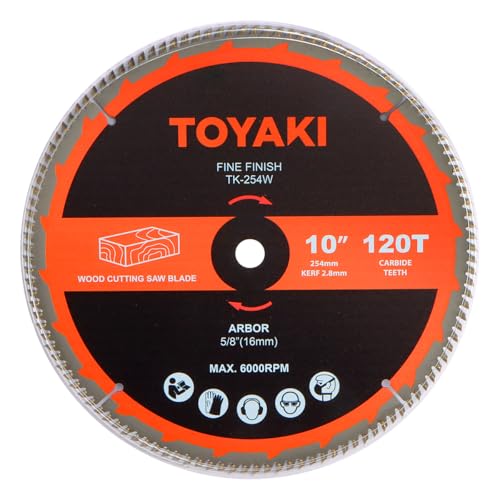
TOYAKI’s 120-tooth 10-inch blade is engineered for fine finishes on wood and soft materials, with an emphasis on consistent cuts and reduced vibration. While excellent for precise woodwork, it is better for wooden surfaces rather than PVC; choose this if your project mixes wood trim and PVC accents and you require very clean wood cuts.
Best for: Wood-focused projects adjacent to PVC work, where a fine finish on wood matters. Not recommended for thick PVC or thick aluminum due to tooth geometry optimized for wood.
WEN BL1080 80-Tooth Ultra-Fine Finish
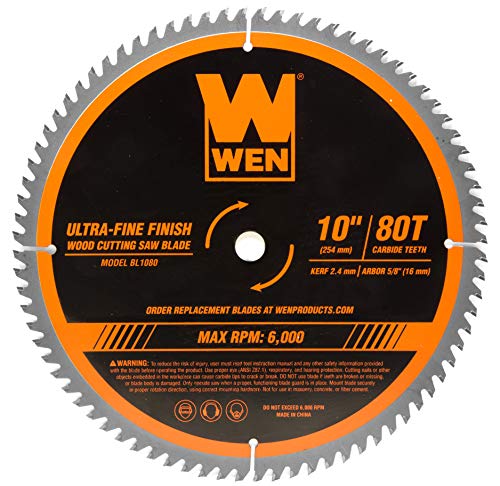
The WEN BL1080 features an 80-tooth carbide-tipped blade with a 10″ diameter and a 5/8″ arbor. It offers a very thin kerf for efficient cutting and is suitable for smooth, fine finishes on softwoods and some plastics. For PVC, it can perform decently on thin sections but is generally optimized for wood.
Best for: Projects requiring smooth, fine cuts in softwoods or PVC where gentle material removal is desired. Better for wood than hard plastics or thick PVC; avoid heavy non-ferrous metals.
IVY Classic 35050 7-1/4″ 128T Blade

The IVY Classic 35050 is a 7-1/4″ aluminum and plastic cutting blade with 128 teeth and a 5/8″ diamond knockout arbor. It emphasizes precision-ground teeth and a smooth cutting action. It is best for light aluminum and PVC/plastic trim where a clean edge is crucial.
Best for: Smaller miter saw setups or projects involving trim work with PVC and aluminum. Caution: thinner kerf may require careful feed rate to maintain finish on tougher plastics.
TOYAKI 10-Inch TCG Aluminum Blade

This TOYAKI blade uses a Aluminum Working 120-Tooth arrangement and 10-inch diameter with 2.8mm thickness. It is balanced for accurate, stable cutting in aluminum and non-ferrous materials. It provides a finer finish suitable for PVC/plastic-aluminum transitions where clean edges matter.
Best for: Aluminum and non-ferrous metal trimming on PVC installations. Choose this if you need better aluminum concurrency and a precise finish. Limitation: designed primarily for aluminum; performance on thick plastics may vary.
Buying Guide
What to consider when choosing a miter saw blade for PVC and aluminum work:
- Material compatibility: Look for blades explicitly rated for aluminum, non-ferrous metals, and plastics. Avoid blades designed only for wood when cutting PVC or aluminum.
- Tooth count and geometry: Higher tooth counts (e.g., 120T-128T) yield finer finishes on plastics and soft metals; lower counts cut faster but may roughen edges. For PVC, a fine-tooth blade reduces chipping.
- Kerf and balance: Ultra-thin kerf blades remove less material per pass and reduce heat, which is beneficial for plastics. Balanced blades minimize vibration for cleaner cuts.
- Arbor compatibility: Most blades use a 5/8″ arbor. Confirm your miter saw hardware matches to avoid improper seating or wobble.
- Safety and direction: Follow arrows on the blade to ensure rotation direction is correct; improper orientation can cause kickback or poor edge quality.
Comparison snapshot:
- Best for PVC trims: IVY Classic 35056 Swift Cut 10″ and IVY Classic 35050 7-1/4″ 128T due to aluminum/plastic focus and clean edge teeth.
- Better for aluminum: TOYAKI 10-Inch TCG Aluminum Blade and TOYAKI 10-Inch 120-Tooth Fine-Finish blade for aluminum and non-ferrous tasks.
- Best overall ultra-fine finish: WEN BL1080 80-Tooth for softwoods and light plastics; good balance of finish and kerf.
FAQs
- Q: Can I use any wood blade for PVC cutting?
A: No. Wood blades can tear or chip PVC; use blades rated for plastics or non-ferrous materials for cleaner PVC edges. - Q: Is a higher tooth count always better for PVC?
A: Generally yes for clean edges, but balance with blade thickness and saw power to avoid bogging down in harder plastics. - Q: Do I need to replace blades when cutting aluminum?
A: If you frequently cut aluminum, consider a blade designed for non-ferrous metals to reduce galling and improve life. - Q: What thickness should limit PVC cutting on these blades?
A: Most PVC tasks described are up to 1/8″ thick; thicker PVC may require specialized non-ferrous blades or alternative tools. - Q: How important is blade rotation direction?
A: Very; incorrect rotation direction reduces cut quality and can be hazardous. - Q: Are there blades that work well for both PVC and wood?
A: Some blades can handle light plastics and wood, but for best PVC results, choose blades explicitly rated for plastics or non-ferrous materials.