Best Masonry Blades for Chop Saws: Five Options and How to Choose
The best masonry blade for a chop saw must match the saw’s blade diameter, arbor, and cutting method. Among these options, the 12-inch general-purpose diamond blade is suited to concrete and brick jobs, while the Casaverde 12-inch blade is described for wet cutting a wider range of materials, including stone. The 14-inch RHAPSODY blade may suit saws designed for that diameter. One listed product is a reciprocating-saw blade, not a chop-saw blade, so it is included only as a tool-type comparison.
| Product | Stated size | Best suited for |
|---|---|---|
| Casaverde Turbo Diamond | 12 inch; 1-inch/20mm arbor | Wet cutting stone and masonry |
| General Purpose Diamond Blade | 12 inch; 1-inch arbor | Concrete, brick, and masonry |
| RHAPSODY Segmented Blade | 14 inch; 1-inch/20mm arbor | Dry or wet general-purpose cutting |
| ORIXTREME Segmented Blade | 10 inch; 7/8–5/8-inch arbor | Dry or wet cutting in a compatible saw |
| Masonry Reciprocating Blade | 12 inch | Aerated concrete and hollow brick with a reciprocating saw |
Casaverde 12-Inch Turbo Diamond Blade
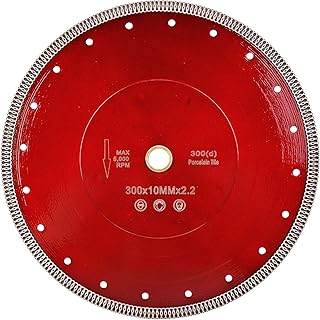
This 12-inch turbo diamond blade is described for wet cutting granite, marble, brick, masonry, paving flags, and concrete. Its listed arbor is 1 inch/20 mm, and the product name identifies use with table and chop saws.
Best for: Buyers who need a 12-inch blade for wet cutting several types of stone and masonry. It was selected for its stated material range and chop-saw use. Limitation: The listing emphasizes wet cutting, so confirm the saw and job setup support that method before choosing it.
12-Inch General-Purpose Diamond Blade

This 12-inch diamond blade is described for concrete, brick, and masonry. Its listing specifies a 1-inch arbor, a 15 mm extra-tall segment height, and a stated cutting depth of 3-5/8 inches.
Best for: Buyers seeking a general-purpose option focused on concrete and brick, with the stated depth and segment dimensions useful for comparing specifications. Limitation: Confirm that the saw accepts a 12-inch blade and 1-inch arbor; the product information provided does not specify wet or dry use.
RHAPSODY 14-Inch Segmented Diamond Blade

This two-piece set is described for dry or wet cutting concrete, reinforced concrete, masonry, brick, and block. Each blade is 14 inches and has a 1-inch/20 mm arbor.
Best for: Buyers whose chop saw is specifically built for a 14-inch blade and who want a stated dry-or-wet-use option across common masonry materials. Limitation: Its diameter is larger than the 10- and 12-inch options, so it is not a fit for saws that do not support 14-inch blades.
ORIXTREME 10-Inch Segmented Diamond Blade

This general-purpose segmented blade is listed for dry or wet cutting concrete, masonry, brick, and block. It measures 10 inches, with a 7/8-to-5/8-inch arbor, a 10 mm segment height, and a stated thickness of .090 inch.
Best for: Buyers with a compatible 10-inch saw who want a blade described for both wet and dry cutting. The listing says its slots support airflow, dust movement, heat dissipation, and slurry removal. Limitation: The arbor differs from the 1-inch/20 mm sizes listed for several other blades, so verify fit before purchase.
Masonry Reciprocating Saw Blade, 12-Inch

This two-pack is described as a reciprocating-saw blade with thickened carbide and extra-large teeth for aerated concrete and hollow brick.
Best for: Buyers cutting those materials with a reciprocating saw. It is included because it addresses masonry cutting, but it is not a chop-saw blade. Limitation: Do not select it for a circular chop saw; the product is specifically identified for a reciprocating saw.
Buying Guide: How To Choose A Masonry Chop-Saw Blade
Which blade diameter and arbor should I check?
Check the saw manual and existing blade for the required diameter and arbor size before comparing cutting claims. A 10-inch blade is not interchangeable with a 12- or 14-inch blade. Arbor fit matters as well: the listed options include 1-inch/20 mm, 1-inch, and 7/8-to-5/8-inch configurations. Do not assume a blade fits because its material description matches the job.
Should I choose wet or dry cutting?
Choose based on the blade’s stated use and the saw’s instructions. The Casaverde listing specifies wet cutting; RHAPSODY and ORIXTREME describe both wet and dry cutting. The provided details do not state a cutting method for the general-purpose 12-inch option. Follow the blade and saw manufacturers’ directions, and use appropriate dust controls and protective equipment.
What material will I cut?
For concrete, brick, and block, compare blades that explicitly list those materials. For marble, granite, or paving flags, the Casaverde product specifically names those materials. A general-purpose description does not establish suitability for every stone type, so check the product specifications for the exact material and intended cutting conditions.
Frequently Asked Questions
Can I use any masonry blade on a chop saw?
No. The blade must match the saw’s permitted diameter, arbor, and intended cutting method. Also confirm that the blade is designed for the tool type.
Is a reciprocating-saw masonry blade suitable for a chop saw?
No. A reciprocating blade is made for a reciprocating saw, not a circular chop saw. The 12-inch masonry reciprocating blade listed here is a different tool category.
Does a 1-inch arbor fit a 20 mm arbor saw?
Do not assume so. Verify the exact arbor and any permitted adapter requirements in the saw and blade documentation before installation.
Which option is listed for both wet and dry cutting?
The RHAPSODY 14-inch and ORIXTREME 10-inch segmented blades are described for dry or wet cutting. Confirm that the saw supports the blade and selected cutting method.