Best Foam Products to Consider for Lifting a Driveway
For lifting a settled driveway, use a professional polyurethane concrete-lifting system—not ordinary gap-filling spray foam or adhesive foam. The products listed here have different purposes: the backer rod can help prepare a driveway joint, while the spray foams are for sealing or bonding, not raising concrete. The wheel cribs and post kit are not driveway-lifting products. Review each product’s stated use before buying, and contact a concrete-lifting contractor when a slab needs to be raised or stabilized.
| Product | Best suited for | Driveway-lifting role |
|---|---|---|
| MD Building Foam Backer Rod | Preparing medium joints | Joint filler, not a lifting material |
| Loctite Tite Foam Big Gaps | Sealing large gaps | Not for lifting slabs |
| Soma Fix Spray Foam Adhesive | Bonding building materials | Not for lifting slabs |
| Race Ramps Foam Wheel Cribs | Supporting vehicle tires | Unrelated to driveway repair |
| Postloc 1-Post Kit | Setting a post | Not for lifting slabs |
MD Building Foam Backer Rod

This 1/2-inch, 20-foot closed-cell foam rod is designed to fill medium gaps and provide a base for caulk. The product information specifically identifies concrete gaps and expansion joints in driveways and sidewalks as possible uses.
Best for: Homeowners preparing a driveway joint for caulking, rather than trying to raise a sunken slab. It is the most directly relevant option here for routine driveway joint maintenance.
The rod can be trimmed with scissors and twisted to help fill larger gaps, according to the listing. It helps reduce the amount of caulk needed and can block drafts, moisture, dust, and insects.
Limitation: Backer rod fills a joint; it does not inject under concrete, restore support beneath a slab, or lift a driveway.
Loctite Tite Foam Big Gaps
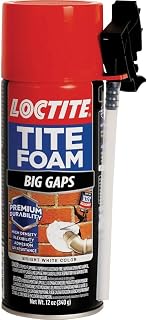
Loctite Tite Foam Big Gaps is a polyurethane spray foam sealant for filling, sealing, and insulating gaps and cracks up to 3 inches. Its listed features include a high-density foam structure and flexibility to accommodate building-material movement.
Best for: Sealing suitable gaps around building materials when insulation or an air seal is the goal. It is a better match for gap sealing than driveway slab lifting.
Limitation: The listing describes a sealant, not a concrete-lifting grout or injection system. Do not treat its expansion as a controlled way to raise a driveway; uneven expansion could create an unintended result.
Soma Fix Spray Foam Adhesive

This 26-ounce polyurethane foam adhesive is described as bonding materials such as brick, concrete, stone, and insulation boards. The listing says it grabs in about 60 seconds, has controlled expansion for adhesive application, and is intended for indoor and outdoor use.
Best for: Buyers who need a fast-grabbing adhesive for compatible building materials. It may suit a bonding or mounting task, but that is different from lifting a driveway.
Limitation: The listed features do not identify the product as a slab-jacking foam or provide a driveway-lifting procedure. Its adhesive function should not be mistaken for a way to fill voids beneath concrete and raise the slab.
Race Ramps Foam Wheel Cribs

This set of two solid high-density foam cribs is designed to support vehicle tires during maintenance or display. The listing states a capacity of 1,500 pounds per crib, tires up to 12 inches wide, and a 12-inch height.
Best for: A vehicle owner seeking tire cribs for service access, subject to the product’s stated limits. It is included for clarity because its foam construction may sound relevant to a foam search, but its purpose is automotive support.
Limitation: These cribs do not lift, repair, or stabilize a driveway. Do not use them as a substitute for equipment designed to support a concrete slab.
Postloc 1-Post Kit

Postloc is described as a concrete alternative for setting one post. The listing says it works with all post types and requires no tools.
Best for: Buyers looking for a post-setting product, not for someone trying to raise a driveway. It is distinct from both joint sealants and concrete-lifting materials.
Limitation: The listed features do not describe driveway repair, void filling, or slab lifting. Choose a product specifically designed for the task rather than assuming a concrete alternative will work beneath pavement.
Buying Guide: What To Know Before Choosing Foam
Can ordinary spray foam lift a driveway?
These product listings describe adhesive foam, insulation sealant, joint filler, or unrelated foam supports. None identifies a concrete slab-lifting system. Professional polyurethane lifting uses materials and injection methods intended to fill voids and raise concrete in a controlled manner. Confirm product labeling and intended application before using any foam under a slab.
Is the problem a joint or a sunken slab?
A gap between concrete sections may call for suitable joint preparation and caulk; the MD backer rod is listed for this kind of role. A settled or tilted slab is a different problem that may involve loss of support beneath the concrete. Filling the visible joint does not correct the underlying settlement.
What should buyers compare?
- Intended use: Distinguish between sealing, bonding, insulation, post setting, and concrete lifting.
- Application area: Check whether the product is specified for joints, building gaps, or structural concrete work.
- Expansion and movement: A gap-filling foam’s expansion or flexibility does not by itself establish that it can safely lift a slab.
- Repair scope: Consider slab size, settlement, drainage, and cracking before selecting a repair approach.
For a driveway that needs lifting, ask a qualified concrete repair contractor what system is appropriate for the slab and site conditions. For a simple expansion-joint maintenance job, use materials specifically intended for joint filling and sealing.
Frequently Asked Questions
Which listed product is most relevant to driveway maintenance?
The MD Building Foam Backer Rod is the most directly relevant for preparing medium driveway or sidewalk joints for caulk. It does not lift concrete.
Can Loctite Tite Foam raise a sunken driveway?
The listing describes it as a gap-filling and insulating sealant, not a slab-lifting product. Do not use it as a substitute for a concrete-lifting system.
What is the difference between foam backer rod and lifting foam?
Backer rod is placed in a joint as a base for caulk. Lifting foam is used in a purpose-designed process to fill space beneath concrete and raise the slab.
Are Race Ramps wheel cribs driveway repair products?
No. They support vehicle tires for maintenance or display and are not designed to repair or lift concrete.
When should I contact a contractor?
Contact a concrete repair professional when a driveway slab is sunken, uneven, cracked, or needs to be raised. These listed products do not provide a driveway-lifting system.