Best Hole Saws for Cement Board: Five Options for Common Cuts
The best hole saw for cement board depends on the hole diameter and the material’s thickness. For broad openings, the four-inch and 4-1/4-inch carbide-grit models are sized for lighting or vent cutouts and list cement board among their target materials. The Spyder 4-1/2-inch model is a larger carbide-tipped option. A 1-1/4-inch SDS Plus concrete saw is better suited to small holes in masonry, not a first choice for cement board. Compare the stated size, cutting depth, and material list before choosing.
| Product | Best for | Diameter or depth |
|---|---|---|
| 4-1/4-inch carbide-grit saw | Large lighting or vent openings | 4-1/4 inches; 1-1/2-inch depth |
| PLG2SUPT 4-inch carbide-grit saw | Four-inch openings in fiber cement | 4 inches; 1-1/2-inch depth |
| 4-inch carbide-grit saw | Four-inch openings in cement board | 4 inches; 1-1/2-inch depth |
| Spyder carbide-tipped saw | Larger, multi-material openings | 4-1/2 inches |
| 1-1/4-inch SDS Plus concrete saw | Small holes in concrete or brick | 1-1/4 inches |
4-1/4-Inch Carbide-Grit Hole Saw

Best for: Installers making a large opening for a four-inch recessed light, dryer vent, or roof vent. The 4-1/4-inch diameter provides a larger cut than a four-inch saw, so check the opening size required by the fixture or installation instructions.
This model lists cement board, stucco, old plaster, drywall, and Sheetrock among its intended materials. Its tungsten carbide grit edge is designed for abrasive surfaces, and the stated cutting depth is 1-1/2 inches. It is a relevant choice when that diameter and depth match the job.
Limitation: The listed cutting depth is 1-1/2 inches, so it may not suit thicker assemblies. Do not assume the larger diameter is interchangeable with a four-inch opening.
PLG2SUPT 4-Inch Carbide-Grit Cutter
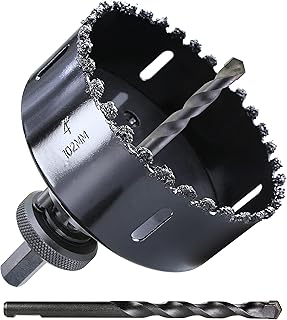
Best for: Buyers who need a four-inch cut and want a model specifically listing fiber cement siding and backer board. The product also lists Hardy Plank, air brick, stucco, drywall, and plasterboard, making it a practical match for jobs that involve several abrasive building materials.
The saw has a carbide-grit edge, a stated maximum cutting depth of 1-1/2 inches, and a plug-removal design described as easy for clearing the cut material. The listing claims cutting up to 50% faster than a traditional hole saw; treat that as the manufacturer’s claim rather than a guaranteed result for every board or drill setup.
Limitation: Its maximum depth is 1-1/2 inches. Choose another approach if the material stack exceeds that depth.
4-Inch Carbide-Grit Hole Saw
Best for: A four-inch opening through cement board or other listed abrasive materials. This size is worth considering when a four-inch cut is required and a 4-1/4-inch opening would be too large.
The listing identifies recessed lights, dryer vents, and roof vents as applications. It names cement board, stucco, old plaster, drywall, Sheetrock, plastic, and PVC as materials, and specifies a tungsten carbide grit edge and 1-1/2-inch cutting depth. Choose it if the exact diameter and supported depth fit the planned opening.
Limitation: The stated depth is limited to 1-1/2 inches. Confirm the required opening size rather than relying on the application examples alone.
Spyder 4-1/2-Inch Carbide-Tipped Hole Saw
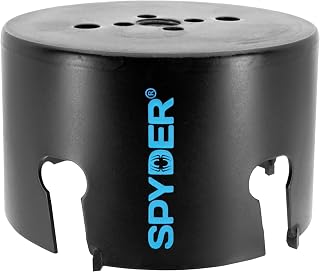
Best for: Buyers who need a 4-1/2-inch diameter and value a listed multi-material tool. The product name identifies fiber cement board, wood, PVC, plastic, concrete block, and ceramic tile as compatible materials. Its carbide-tipped construction distinguishes it from the carbide-grit models above.
Choose this saw when the required opening is 4-1/2 inches and the material is among those named in the product information. It offers a larger listed diameter than the four-inch options.
Limitation: The supplied product details do not state cutting depth or additional setup information. Verify those specifications before purchase if depth or mounting requirements are important.
1-1/4-Inch SDS Plus Concrete Hole Saw

Best for: Small-diameter holes in concrete, cement, or brick walls. This 1-1/4-inch tool has a tungsten carbide tip and an SDS Plus shank rod, which makes it a distinct option from the larger cement-board hole saws.
It is included as a specialized alternative for buyers whose work involves masonry rather than a broad fixture opening. Its listed materials are concrete, cement, and brick wall.
Limitation: Cement board is not named in the supplied material list. Avoid choosing it as the default cement-board saw; the diameter is also much smaller than the four-inch options.
Buying Guide: How To Choose A Hole Saw For Cement Board
What diameter do you need?
Match the saw diameter to the required opening, not just the fixture’s advertised size. The options here range from 1-1/4 inches to 4-1/2 inches. Check the installation instructions and measure the intended cut before selecting a bit. A 4-1/4-inch saw is not a direct substitute for a four-inch model when the opening must remain smaller.
Does the cutting depth match the board assembly?
Two four-inch models and the 4-1/4-inch model state a 1-1/2-inch cutting depth. Compare that limit with the full thickness of the material being cut, including any layers behind it. The Spyder and SDS Plus listings provided here do not specify depth, so confirm the missing detail before ordering if it affects your job.
Carbide grit or carbide-tipped?
The carbide-grit models specifically name cement board or fiber cement among their target materials. The Spyder model uses a carbide tip and also lists fiber cement board, plus several other materials. The SDS Plus model is described for concrete, cement, and brick; its supplied details do not identify cement board. Material names and tool design should guide the choice.
What else should you check before cutting?
- Confirm the hole saw’s diameter and maximum cutting depth against the project requirements.
- Check the tool’s product information for required mounting or drill compatibility; these details are not provided for every option here.
- Secure the workpiece and follow the tool maker’s instructions for operation and dust control.
- For a deep or layered opening, plan how to clear the cut material and verify that the saw can reach through the full assembly.
Frequently Asked Questions
Can a carbide-grit hole saw cut cement board?
The listed four-inch and 4-1/4-inch carbide-grit models name cement board as a target material. The PLG2SUPT listing also names fiber cement siding and backer board.
Which size is best for a four-inch opening?
Choose a four-inch saw when the required cut is four inches. A 4-1/4-inch or 4-1/2-inch model makes a larger opening and may not fit the installation requirement.
How thick can these four-inch saws cut?
The two four-inch carbide-grit options in this comparison state a maximum cutting depth of 1-1/2 inches. Check the product details for any depth requirement beyond that.
Is a concrete hole saw the same as a cement-board hole saw?
Not necessarily. The 1-1/4-inch SDS Plus model lists concrete, cement, and brick, but not cement board. Select a product that specifically names the material you intend to cut.
Which option suits a larger vent or light opening?
The 4-1/4-inch carbide-grit model is listed for recessed lighting and dryer or roof vents. Confirm that its diameter and 1-1/2-inch cutting depth match the installation.