Best Hoes for Mixing Concrete: 5 Heavy-Duty Options
The best hoe for mixing concrete has a sturdy head and a design that helps move material through the mix. The Truper TruPro is the clearest choice for frequent mortar, concrete, or plaster mixing because it has a perforated forged-steel head and a long handle. The BULLY TOOLS models suit buyers who also want a general-purpose masonry and garden hoe, while the Kraft Tool is a compact option. A general weeding hoe may be less suited to concrete work.
| Product | Best For | Key Difference |
|---|---|---|
| Truper TruPro 7-Inch Mortar Hoe | Mixing mortar, concrete, and plaster | Perforated forged head and 60-inch handle |
| BULLY TOOLS 58-Inch Mason Hoe | Heavy-duty, multi-purpose work | 12-gauge steel head and fiberglass handle |
| BULLY TOOLS 22-Inch Mason Hoe | Compact handling | Shorter fiberglass handle |
| Kraft Tool Short Mortar Hoe | Short-handle mixing tasks | 21-inch wood handle |
| 58-Inch Garden Hoe | Garden work with occasional mixing needs | Perforated head designed to reduce soil sticking |
Truper TruPro 7-Inch Mortar Hoe

Best for: Buyers who need a dedicated tool for mixing mortar, concrete, or plaster. Its listed features specifically identify all three materials, making it the most directly targeted option in this group.
The 7-inch head is made from one-piece forged high-carbon steel and has two flow-through holes intended to reduce drag as material moves through the head. The 60-inch North American ash handle provides leverage, and a reinforced steel ferrule is designed to secure the head to the handle.
Why it stands out: The perforated head and construction-focused design make it a stronger match for mixing than a standard garden hoe. Limitation: The 60-inch handle may be less convenient for buyers who prefer a short-handled tool or have limited storage space.
BULLY TOOLS 58-Inch Mason Hoe

Best for: Buyers who want one heavy-duty hoe for masonry tasks and broader digging, spreading, or cultivation work. The product is described as a mason hoe for mixing concrete, and its listed features emphasize commercial-grade use.
This model has a 12-gauge steel head and a long fiberglass handle. Its product information also identifies U.S. manufacture and describes the tool as intended for rigorous tasks. Choose it if you value a long handle and a robust steel head in a multipurpose tool.
Why it was selected: Its stated concrete-mixing purpose and heavy-duty construction make it more relevant than a basic weeding hoe. Limitation: The supplied features do not specify a perforated head, so buyers seeking holes to help material pass through should compare it with the Truper.
BULLY TOOLS 22-Inch Mason Hoe

Best for: Buyers who prefer a compact hoe for digging, spreading, or smaller mixing tasks. The product name describes it for mixing concrete and soil cultivation, and the listing identifies it as made in the United States.
Compared with the 58-inch BULLY TOOLS model, this version has a much shorter 22-inch handle. That can be useful when a long handle is not wanted, but it also means less reach. Choose this model if compact handling matters more than standing leverage.
Why it was selected: It offers a concrete-mixing use case in a shorter format. Limitation: The short handle may require closer, more bent-over work than a long-handled hoe.
Kraft Tool Short Mortar Hoe

Best for: Buyers looking for a short-handled mortar hoe. The product name specifies a 6-1/2-by-4-3/4-inch head and a 21-inch wood handle, making its compact format clear.
This model is identified as a mortar hoe, and its listed country of origin is the United States. It may suit users who want a short tool rather than a long-handled hoe. The supplied product details do not describe the head material or whether it has openings.
Why it was selected: Its mortar-hoe designation makes it relevant to mixing tasks, while the short handle differentiates it from the Truper. Limitation: The available specifications provide fewer construction details for comparing durability or material-flow design.
58-Inch Perforated Garden Hoe
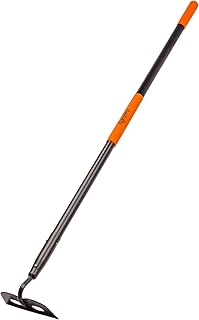
Best for: Buyers whose main need is gardening but who are considering a hoe for occasional material-moving tasks. Its listed perforated head is designed to prevent sticky or moist soil from clinging and to reduce resistance.
The product features a high-carbon-steel head and an integrated fiberglass handle that requires no assembly. Those features describe a garden and weeding tool, not a dedicated concrete-mixing hoe. The perforations may be useful for moving material, but the listing does not specifically identify concrete as a recommended use.
Why it was selected: The long handle and perforated head offer relevant design points for comparison. Limitation: Choose a product explicitly described for concrete or mortar instead if mixing is your primary task.
Buying Guide: How to Choose a Hoe for Mixing Concrete
Should you choose a mortar hoe or a garden hoe?
For regular concrete, mortar, or plaster mixing, start with a tool identified for masonry work. The Truper is explicitly described for these materials, and the Kraft is labeled a mortar hoe. A garden hoe may be a better fit when gardening is the main job and mixing is secondary.
Does a perforated head matter?
Holes in a hoe head can allow material to pass through as you pull and push it. The Truper lists two flow-through holes as a feature intended to reduce drag. The 58-inch garden hoe also has a perforated design, but its listed purpose is reducing soil buildup, not mixing concrete.
Which handle length is more practical?
A long handle offers reach and leverage while working from a standing position. The Truper has a 60-inch handle, and the BULLY TOOLS long model is 58 inches. The Kraft and short BULLY TOOLS options have handles around 21 to 22 inches, which are more compact but require closer handling.
What head and handle details should you compare?
Check the stated head material, thickness, shape, and attachment method. The Truper specifies forged high-carbon steel and a reinforced ferrule; the long BULLY TOOLS model specifies 12-gauge steel and fiberglass. Do not assume two hoes have the same mixing performance just because both are called masonry tools.
Frequently Asked Questions
What type of hoe is best for mixing concrete?
A masonry or mortar hoe is generally the more direct choice. Look for a sturdy head and, if material flow matters, a perforated design.
Can I use a garden hoe to mix concrete?
A garden hoe may move material, but its listed purpose may be soil cultivation or weeding. For regular concrete mixing, choose a hoe specifically described for masonry work.
Is a long handle or short handle better?
A long handle provides more reach and leverage. A short handle is more compact but may require closer, bent-over work.
Why do some mortar hoes have holes?
Openings let material pass through the head. The Truper listing says its holes are designed to reduce drag during mixing.