Best Hand Saws for Cutting Wood: Top Picks for Precise, Easy Work
When choosing a hand saw for wood, look for a sharp blade, a comfortable grip, and a design that fits your cutting task. This guide highlights five well-rounded options for DIYers, professionals, and hobbyists. Each product is described with who it’s best for, why it’s chosen, and any notable limitations. Below is a quick summary to help you compare at a glance.
| Product | Best For | Key Feature |
|---|---|---|
| JORGENSEN 15 Inch Pro Hand Saw | General woodworkers | 8 TPI, durable aluminum handle |
| Jeweler’s Saw Frame & Replacement Blades Collection | Detailed cutting | High carbon steel blades, 4/0–2 assortment |
| 14 in. Pro Hand Saw | Framers and trim work | 11 TPI fine-cut for precise work |
| 8-In-1 Multi Blades Hand Saw | Versatile projects | Eight blades with quick-change mechanism |
| JORGENSEN 15-Inch Hand Saw (Coarse Blade) | Rough cuts and pruning | Coarse blade, ergonomic handle |
JORGENSEN 15 Inch Pro Hand Saw, 8 TPI Fine Cut
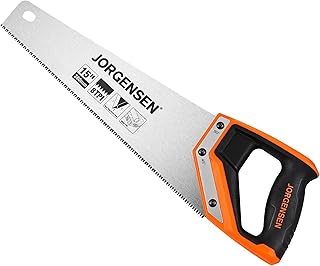
The 15” JORGENSEN Pro Hand Saw uses a 0.85 mm high carbon steel blade with triple-ground teeth and an induction-hardened 8 TPI. Best for fast, clean cuts on wood, drywall, and plastic pipe. The non-slip ABS+TPE handle reduces fatigue during long sessions. Choose this if you want a durable, versatile saw for everyday carpentry and trimming tasks. Caution: ensure tight blade tension to prevent wandering on fine cuts.
Jeweler’s Saw Frame & Replacement Blades Collection

Best for fine detail work, model making, and jewelry or woodcraft projects. The assortment includes high carbon steel blades with a thumbscrew grip for precise control. Choose this if you need multiple blade thicknesses in one kit. Limitation: designed more for delicate cuts than heavy timber work.
14 in. Pro Hand Saw, 11 TPI Fine-Cut

Long, precise cuts with 11 TPI, suitable for framing, trimming, and dry wall projects. The soft-grip handle reduces fatigue during extended use. Best for users needing finer cuts than a typical bank saw but still requiring a robust grip. Better for detail work than heavy demolition; avoid if you need rough, fast timber removal.
8-In-1 Multi Blades Hand Saw

This multi-blade saw includes eight blades with a quick-change mechanism, supporting drywall, wood, metal, plastic, and plywood. Best for versatile projects and on-the-go tool kits. Choose this if you need a single tool for varied tasks. Caution: blade changes require a secure lockback mechanism to avoid slips during use.
JORGENSEN 15-Inch Hand Saw, 8 TPI Coarse Blade
Best for rough cuts, pruning, and general demolition work. The coarse blade delivers quicker material removal, while the ergonomic aluminum handle supports comfortable use. Choose this if you need a robust saw for larger timber tasks. Limitation: less ideal for fine, precise cuts compared to finer-tooth blades.
Buying Guide: Key Purchase Considerations
- Tooth Per Inch (TPI): Higher TPI means finer cuts; lower TPI cuts faster but leaves rougher edges. Match the blade to your project needs.
- Blade Material: High carbon steel blades hold sharpness; consider heat treatment for durability in frequent use.
- Handle Comfort: Look for non-slip grips and ergonomic shapes to reduce hand fatigue during longer sessions.
- Blade Width and Length: Longer blades offer deeper cuts; ensure the saw fits the workpiece and space you’re cutting in.
- Ease of Blade Change: For multi-blade tools, check locking or quick-change mechanisms to minimize downtime.
- Intended Use: Fine cuts for plywood or drywall vs. rough timber cuts; some saws excel in detailed work, others in rapid material removal.
FAQ
- What is the best hand saw for fine wood cutting?
– A saw with a higher TPI, like 11–14 TPI, is typically better for fine cuts on wood and plywood. - Are multi-blade hand saws worth it for beginners?
– They offer versatility, but may be heavier; ideal for those who frequently encounter varied materials. - How should I maintain hand saw teeth?
– Keep teeth sharp with light filing or sharpening as needed and avoid bending teeth during use. - Is an ergonomic handle necessary for DIY projects?
– Yes, to reduce fatigue and improve control during extended use. - What should I consider when cutting drywall with a hand saw?
– Use a saw designed for drywall or a fine-tooth blade, and work slowly to minimize tearing.