Best Full Kerf Table Saw Blades for Precise Crosscuts and Durable Rips
When you need a full kerf table saw blade, you’re looking for durability, clean cuts, and reliable chip clearance across a range of materials. This guide highlights five top blades that excel in laminated boards, hardwoods, plywood, melamine, and chipboard. Each pick targets a different cutting need—from crosscuts to ripping—so you can choose based on material type, machine compatibility, and desired finish. The buyers below are grouped by use-case: carpenters handling cabinetry, hobbyists doing DIY woodwork, and professionals seeking best crosscut performance.
Summary table of chosen products:
- Brand/Model: CMT Laminated & Chipboard Full Kerf Blade – Best for Chipboard and laminates on stationary table saws
- Brand/Model: Freud LU84R011 Combination Blade – Best all-around with premium carbide blend for mixed woods
- Brand/Model: CMT 10″ Industrial Combination Blade – Best for versatile crosscut and rip cut on multiple saws
- Brand/Model: CMT General Purpose 10″ – Best for general purpose crosscuts with smooth performance
- Brand/Model: CMT Orange Tools 283.680.10 HiATB – Best HiATB for precise crosscuts and plywood
CMT Laminated & Chipboard Full Kerf Blade – 10″ D, 5/8″ Bore, 60 Teeth

This blade is designed for chipboard, laminates, melamine, plywood, and other sheet goods, making it a strong choice for cabinetry and panel work. It fits most Miter Saws, Radial Arm Saws, and Stationary Table Saws, enabling versatile cutting across machines. It leans toward clean crosscuts and reliable chip clearance for laminated materials. Best for: cabinetmakers and hobbyists working with laminated panels who need a full kerf cut with dependable finish. Caution: avoid heavy hardwood ripping if the blade isn’t optimized for high-density woods.
Why this blade stands out: It is optimized for chipboard and laminates with a geometry that reduces chipping along delicate edges. The wide kerf aids stability for precise crosscuts on full-width panels, and its compatibility with multiple machines makes it a flexible addition to a shop.
Freud LU84R011 Combination Blade – 10″ 50 Teeth

Freud’s Premium TiCo carbide blend combines one flat tooth with ATB teeth for smooth crosscuts and efficient ripping. Large gullets improve chip removal, making this blade a strong all-purpose option for mixed woods and plywood. Best for: woodworkers who want a single blade that can handle crosscuts and ripping with clean results. Caution: some users may prefer a dedicated crosscut blade for ultra-fine plywood finishes.
Why this blade stands out: The TiCo carbide blend delivers edge retention and durability, while the combination tooth design balances aggressive ripping with smooth crosscuts. The blade’s geometry supports fast material removal and consistent cuts across varying wood types.
CMT 10-Inch Industrial Combination Blade – 50 Teeth

This blade family covers chipboard, hardwoods, laminates, plywood, and veneers. It’s compatible with Miter Saws, Portable Table Saws, and Slide Miter Saws, making it a versatile choice for shops with multiple saw types. Best for: DIYers and professionals who perform both crosscuts and rips across a range of board types. Caution: may require slight tuning for extreme hardwoods to maintain edge life.
Why this blade stands out: Its broad material compatibility supports varied shop tasks without swapping blades, while the 50-teeth configuration provides a balanced cut for crosscuts and light rips on multiple machines.
CMT General Purpose Blade – 10″, 40 Teeth

With a laser-cut body and tensioning features, this general-purpose blade is built for crosscuts and rips on various saws, including Miter Saws and Stationary Table Saws. Material compatibility includes soft and hardwoods, laminates, and melamine. Best for: those who need a reliable all-round blade for everyday woodworking that doesn’t require specialized tooth geometry. Caution: fewer teeth means rougher finishes on highly figured veneers or delicate laminates.
Why this blade stands out: The combination of modern laser-cut technology and durable steel supports precise cuts while maintaining acceptable chip clearance across common wood types. It’s a practical option when a single blade should cover many tasks.
CMT 283.680.10 HiATB Flat Kerf Blade – 80 Teeth
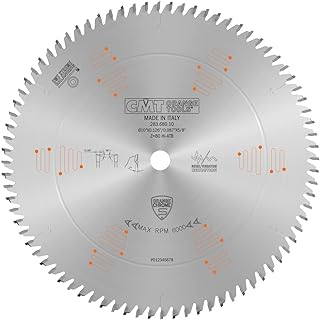
This blade features a HiATB grind with 80 teeth and a full kerf of 0.126 inches. It excels in crosscutting and ripping plywood, laminates, and melamine, delivering clean edges on both soft and hardwoods. Best for: professionals who require very smooth crosscuts on plywood and melamine with minimal chipping. Caution: HiATB edges can wear faster on very hard woods without proper feed pressure.
Why this blade stands out: The HiATB grind and high tooth count provide refined crosscuts and clean finishes on sheet goods, making it ideal for cabinetry tasks and double-sided melamine installs. The full kerf supports stable cuts in wider panels.
Buying Guide: Choosing a Full Kerf Blade for Your Table Saw
What types of projects are you tackling? If your work centers on cabinetry and laminated panels, prioritize blades designed for chipboard and melamine with solid chip clearance. For mixed woods, a versatile combination blade offers the best balance of ripping and crosscut performance. If you frequently cut plywood or veneered plywood, look for HiATB or alternate-top designs that minimize tear-out.
Machine compatibility matters. Confirm the blade’s bore size (commonly 5/8″) and kerf width to ensure a snug fit with your miter saw, table saw, or radial arm saw. A blade that is too narrow may cause excessive vibration; a blade that is too wide may not fit your machine’s throat plate.
To prevent chipping on delicate laminates, consider splitter-equipped blades or those with anti-chipping geometry. For clean crosscuts on sheet goods, blades with higher tooth counts (60–80) reduce tear-out, while blades with 40–50 teeth perform well for general-purpose cutting of solid woods.
Durability and edge life are driven by the carbide grade and tooth geometry. TiCo carbide blends and HiATB/grind configurations tend to offer longer life on dense woods and plywood, while flat-top teeth with solid gullets work well for fast, aggressive ripping on softwoods.
Materials and machine compatibility quick-reference
- Chipboard, laminate, melamine: look for blades marketed for sheet goods with robust chip clearance.
- Hardwoods and veneered plywood: prefer High Alternate Top Bevel (HiATB) or advanced grind families for cleaner edges.
- Multiple machines: choose blades listed as compatible with miter saws, portable/slide miter saws, and stationary table saws.
Tips for getting the best results
- Use appropriate feed rate to minimize edge tear-out and maximize blade life.
- Ensure your saw is properly tuned and aligned to prevent uneven cuts.
- Match the blade kerf to your saw’s insert and riving knife setup for safe operation.
FAQ
- What is a full kerf blade? A full kerf blade has a blade thickness that creates a wider cut compared to thin-kerf blades, offering better stability and reduced deflection on demanding cuts.
- Which blade is best for laminated plywood? Blades designed for sheet goods with good chip clearance and a geometry that minimizes chipping—such as HiATB or dedicated laminate blades—are typically best.
- Can I use a combination blade for both ripping and crosscuts? Yes, but expect a trade-off: dedicated rip blades are faster for ripping, while dedicated crosscut blades yield smoother finishes. A high-quality combination blade can handle both adequately.
- How many teeth should a general-purpose blade have? Generally 40–50 teeth for solid wood, with higher tooth counts providing cleaner crosscuts on plywood and laminated panels.
- Is a larger kerf important for table saw stability? A wider kerf can improve stability and reduce vibration on large panels, but it also removes more material per cut and can demand more power from the saw.
- Should I use a blade with anti-chipping features? Yes, for sheet goods like melamine and plywood to minimize edge chipping and delamination along the cut line.