Best Flattening Bits for Routers and CNC Spoilboards
The best flattening bit depends on your router’s collet, the cutting width you need, and whether you prefer fixed cutting edges or replaceable inserts. The POWERTEC 2-inch bit is best for users seeking a wide cutter with a 1/4-inch shank; the six-wing, 2-inch insert bit is better suited to setups that use a 1/2-inch shank. The other picks offer different combinations of diameter, wing count, and shank size for flattening slabs and resurfacing spoilboards.
| Product | Shank | Cutting diameter | Notable feature |
|---|---|---|---|
| POWERTEC Slab Flattening Bit | 1/4 inch | 2 inches | 1/2-inch cutting depth |
| Six-Wing Insert Surfacing Bit | 1/2 inch | 2 inches | Replaceable carbide inserts |
| BINSTAK Four-Wing Surfacing Bit | 1/4 inch | 1-1/2 inches | Teflon coating |
| Three-Wing Carbide-Tipped Bit | 1/2 inch | 2 inches | Three cutting wings |
| 2+2-Flute Insert Surfacing Bit | 1/4 inch | 1-3/8 inches | Insert-carbide design |
POWERTEC 2-Inch Slab Flattening Bit

This bit has a 1/4-inch shank, a 2-inch cutting diameter, and a stated 1/2-inch cutting depth. Its hardened steel body and tungsten carbide-tipped cutting edges are designed for flattening, trimming, dado cuts, slots, and grooves. The product description also specifies an anti-kickback design.
Best for: Woodworkers who need a wide cutter with a 1/4-inch shank. It was selected for its combination of 2-inch cutting diameter and stated cutting depth. The listing says it is not intended for trim, compact, or palm routers, so avoid it for those tools.
Six-Wing Insert Surfacing Bit

This surfacing bit uses a 1/2-inch shank, a 2-inch cutting diameter, and six carbide inserts measuring 10 by 10 by 2.2 mm. The listing says the inserts are TiN-coated and claims up to 2.5 times longer life compared with uncoated inserts. It also describes a steel body and anti-kickback design.
Best for: Users whose router accepts a 1/2-inch shank and who want an insert-style cutter. Choose it if replaceable blades and a six-wing layout suit your workflow. The listed shank size rules it out for a 1/4-inch collet unless the tool setup supports the correct shank.
BINSTAK Four-Wing 1-1/2-Inch Bit
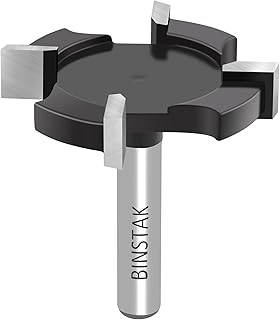
This bit has a 1/4-inch shank, a 1-1/2-inch cutting diameter, and a 1/4-inch cut length. Its four wings have carbide tips, and its hardened steel body has an anti-kickback design. The heat-resistant Teflon coating is described as helping reduce resin buildup and make cleaning easier. Listed uses include slab flattening, spoilboard resurfacing, trimming, and slotting or grooving.
Best for: Buyers who want a 1/4-inch-shank option with a smaller cutting diameter than the 2-inch models. Its 1-1/2-inch width may suit jobs where a wider cutter is not the priority. Check that the listed cut length meets the requirements of your work.
Three-Wing 2-Inch Carbide-Tipped Bit

This model has a 1/2-inch shank, a 2-inch cutting diameter, and a 1/2-inch cut length. It uses three carbide-tipped wings in a hardened steel body, with an anti-kickback design and heat-resistant Teflon coating. The product description lists slab flattening, spoilboard resurfacing, trimming, and slotting or grooving.
Best for: Woodworkers looking for a 2-inch, three-wing cutter with a 1/2-inch shank. It offers a different wing count from the six-wing insert model while retaining a wide cutting diameter. Avoid it if your router does not accept a 1/2-inch shank.
2+2-Flute Insert Surfacing Bit

The product title specifies a 1/4-inch shank, 1-3/8-inch cutting diameter, and 2+2-flute insert-carbide design. It is described as a slab-flattening and woodworking planing bit. The supplied product details do not specify additional dimensions or materials beyond those in the title.
Best for: Buyers who need a smaller cutting diameter and an insert-carbide style with a 1/4-inch shank. It was selected as an alternative to the wider cutters above. Confirm the bit’s detailed specifications before purchase if cut length or insert information is important to your project.
Buying Guide: How to Choose a Router Flattening Bit
Does the shank fit your router?
Check the router’s collet size first. These picks have either a 1/4-inch or 1/2-inch shank, and those sizes are not interchangeable without compatible equipment. The POWERTEC listing specifically says its bit is not intended for trim, compact, or palm routers. Confirm your tool’s permitted bit size and operating instructions before selecting a cutter.
How wide should the cutting diameter be?
A 2-inch diameter covers a wider path per pass than the 1-1/2-inch and 1-3/8-inch options. A wider cutter can be useful for surfacing broad areas, but the right choice depends on your router, sled or CNC setup, and workpiece. Do not treat diameter alone as a measure of performance; compare the full specifications and tool requirements.
Should you choose wings or inserts?
Wing count and cutting-edge construction differ among these bits. The listed choices include three-wing and four-wing carbide-tipped designs, a six-wing insert model, and a 2+2-flute insert option. The six-wing product includes carbide inserts and makes a stated comparison about coated insert life. Check whether replacement inserts or cutting edges are available for the exact model before buying.
What else should you compare?
Review cut length or cutting depth, intended uses, and any stated coating or anti-kickback design. For example, the POWERTEC bit lists a 1/2-inch cutting depth, while the four-wing BINSTAK bit lists a 1/4-inch cut length. Those terms and dimensions may be presented differently by manufacturers, so verify that the specification matches your job.
Frequently Asked Questions
What is a flattening bit used for?
A flattening bit removes material to level a wood slab or resurface a spoilboard. Some models also list trimming, dado, slotting, or grooving among their intended uses.
Is a 2-inch bit always the better choice?
No. A 2-inch bit has a wider cutting diameter, but the appropriate size depends on the router, setup, and project. Confirm shank fit and tool suitability before choosing.
What is the difference between a 1/4-inch and 1/2-inch shank?
The shank diameter must match a compatible router collet. Choose only a bit size permitted by your router and setup.
Do insert-style surfacing bits use replaceable cutters?
The six-wing product is specifically described as having carbide inserts and includes insert blades. Check the exact model’s product details for insert replacement information.
Can these bits be used in a handheld router?
Router compatibility varies by model. The POWERTEC listing excludes trim, compact, and palm routers; for other bits, verify the tool manufacturer’s size and operating requirements.