Best Fine Finish Circular Saw Blades for Smooth Wood Cuts
The best fine finish circular saw blade depends on your saw size and the material you plan to cut. The Diablo 7-1/4-inch blade suits smooth crosscuts in common wood types, while the WORKPRO and FOXBC 6-1/2-inch blades offer high tooth counts for trim and plywood. For plywood-focused cuts, the 140-tooth IRWIN and DEWALT blades are options to compare. Check blade diameter, arbor, and saw speed before buying.
| Blade | Best For | Notable Feature |
|---|---|---|
| Diablo 7-1/4-inch, 40T | Wood crosscuts | Carbide teeth and thin kerf |
| WORKPRO 6-1/2-inch, 60T | Trim and cabinetry | Thin kerf and expansion slots |
| FOXBC 7-1/4-inch, 60T | Fine-finish wood cutting | ATB teeth and carbide tips |
| IRWIN 7-1/4-inch, 140T | Smooth cuts | Precision-ground steel teeth |
| DEWALT 7-1/4-inch, 140T | Plywood | High tooth count |
Diablo 7-1/4-Inch 40-Tooth Finish Blade

Best for: Buyers who want one finish blade for crosscutting hardwood, softwood, and plywood. This 7-1/4-inch blade has 40 ATB teeth and a 5/8-inch arbor. Its TiCo high-density carbide teeth are designed for smooth crosscuts, while the super-thin laser-cut kerf is intended to reduce material loss and support faster cutting.
The Perma-SHIELD coating is designed to resist heat, gumming, and corrosion. This combination makes the blade a versatile choice for woodworkers who need a balance of cut quality and speed rather than an especially high tooth count.
Limitation: A 40-tooth blade has fewer teeth than the 60- and 140-tooth options here, so choose a higher-tooth blade when a plywood- or trim-focused cut is the priority. Confirm the saw accepts the blade’s diameter and arbor and does not exceed its 8,000 RPM maximum.
WORKPRO 6-1/2-Inch 60-Tooth Blade

Best for: Owners of compatible 6-1/2-inch saws cutting plywood, trim, or cabinetry. Its 60 ATB carbide-tipped teeth are intended to reduce splintering and create a fine finish. Laser-cut expansion slots are described as reducing vibration and noise, and the thin kerf is intended to reduce saw load and material waste.
This blade is a focused alternative to the Diablo: it is smaller in diameter and has more teeth, making it better suited to trim and cabinetry work when the saw requires a 6-1/2-inch blade. Listed materials also include laminates.
Limitation: It is not a substitute for a 7-1/4-inch blade; verify the saw’s required diameter and arbor. Its stated kerf range varies by size, so check the product specifications for the exact blade configuration.
FOXBC 7-1/4-Inch 60-Tooth ATB Blade
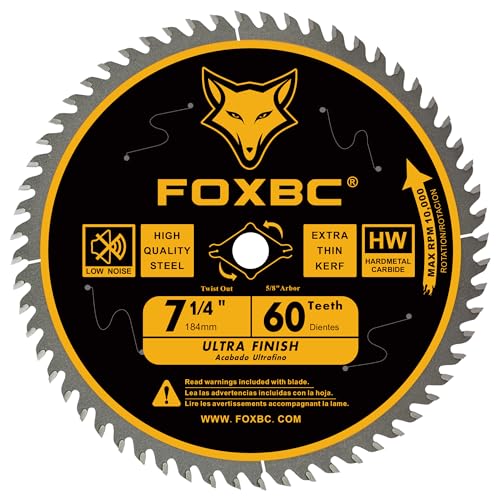
Best for: Buyers seeking a 7-1/4-inch blade with a higher tooth count for fine-finish wood cutting. The blade has 60 ATB carbide teeth, a 5/8-inch arbor, and a listed 0.063-inch kerf. Its high-density tungsten carbide teeth are described as tough and wear-resistant.
Compared with the 40-tooth Diablo, this FOXBC blade prioritizes tooth count and a thin kerf. Its diamond knockout is also listed in the product specifications; check the blade and saw details to confirm the mounting configuration suits your tool.
Limitation: The listed application is wood cutting, so do not assume it is appropriate for materials not specified by the manufacturer. Confirm the arbor and blade diameter before installation.
IRWIN 7-1/4-Inch 140-Tooth Steel Blade

Best for: Buyers comparing a high-tooth-count blade for smoother, accurate cuts. IRWIN lists precision-ground teeth, a fully hardened blade plate, and heavy-gauge high-carbon steel construction. The product has 140 teeth and a 0.087-inch kerf.
The high tooth count distinguishes it from general-purpose 40-tooth blades and makes it a relevant option when finish quality is the main consideration. Its hardened plate is described as helping the blade run true over time.
Limitation: This is a steel blade, not a carbide-tipped blade according to the supplied product details. Its 0.087-inch kerf is also wider than the thin-kerf options listed here.
DEWALT 7-1/4-Inch 140-Tooth Plywood Blade
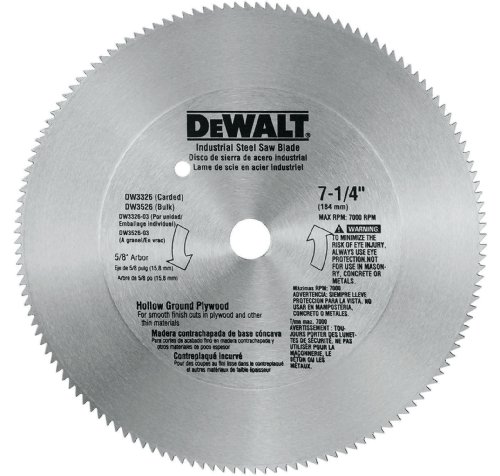
Best for: Buyers looking for a 7-1/4-inch blade specifically identified as a plywood blade. DEWALT lists 140 teeth and describes it as easy to use. Its high tooth count makes it a useful comparison against the 40-tooth general-purpose Diablo when clean plywood cuts are the priority.
Limitation: The supplied product details do not specify the arbor size, kerf, tooth geometry, or blade material. Confirm those details and saw compatibility before purchasing, particularly if those specifications are important to your setup.
Buying Guide: How to Choose a Fine Finish Circular Saw Blade
What blade diameter and arbor does your saw require?
Start with the saw manual or the markings on the existing blade. These products include both 6-1/2-inch and 7-1/4-inch diameters, which are not interchangeable by assumption. Check the arbor size and any mounting requirements, too. A blade that does not match the saw’s specifications should not be installed.
How many teeth do you need?
Tooth count helps compare intended use, but it is not the only measure of cut quality. The 40-tooth Diablo balances smooth crosscuts with cutting speed. The 60-tooth options emphasize finish work, while the 140-tooth IRWIN and DEWALT blades are high-tooth-count choices, with DEWALT specifically identified for plywood. Consider the material and the cut direction when selecting.
Does kerf matter?
A thin kerf removes less material and can reduce the load on the saw, according to the listed features of the thin-kerf products. The Diablo and FOXBC 7-1/4-inch blades list thin kerfs, as do the WORKPRO and other 6-1/2-inch options. Compare the actual kerf with your saw and the cut requirements rather than relying on the term “thin” alone.
Which tooth material and design should you compare?
ATB teeth are specified for the Diablo, WORKPRO, and FOXBC 7-1/4-inch blades. Carbide or tungsten-carbide teeth are also identified for these products. IRWIN’s listed construction is high-carbon steel with precision-ground teeth. Compare the manufacturer’s stated material and intended applications; do not assume all high-tooth-count blades share the same construction.
Frequently Asked Questions
Is a higher tooth count always better for a fine finish?
No. Tooth count is one factor. Blade design, material, kerf, and whether the blade suits the cut also matter. Match the blade to the material and saw.
Can I use a 6-1/2-inch blade on a 7-1/4-inch saw?
Do not assume compatibility. Follow the saw manufacturer’s instructions for blade diameter, arbor, and mounting requirements.
Which listed blade is specifically described for plywood?
The DEWALT 7-1/4-inch, 140-tooth blade is identified as a plywood blade. WORKPRO also lists plywood among its intended materials.
What does a thin kerf mean?
A thin kerf removes a narrower strip of material. Product features may describe it as reducing material waste or saw load, but check the blade’s exact specifications and your saw’s requirements.