Best Fiber Cement Saw Blade Picks for Clean, Long-Lasting Cuts
Find the right fiber cement saw blade for your project with top performers chosen for durability, dust control, and clean cuts. This guide helps professionals and DIY enthusiasts pick blades that fit 7-1/4-inch circular saws, deliver smooth finishes, and reduce wear on hard fiber cement materials. Best uses include fibercement siding, HardiePlank projects, and laminate flooring installations. The following table highlights five strong options and who they suit best.
| Product | Best For | Why It Stands Out |
|---|---|---|
| WEN BL0704 7-1/4-Inch PCD Blade | General fiber cement and laminate work | Ultra-thin kerf for clean cuts; high RPM rating |
| Diablo D0704DH Hardie Blade | Heavy-duty fiber cement with long life | PCD teeth deliver up to 75X life; James Hardie approved |
| TWIN-TOWN 7-1/4″ 6 Tooth PCD Blade | Thin kerf, versatile hardie projects | Low waste; compatible with multiple hard cement boards |
| ABBESUN 2-Pack 7-1/4″ 4T PCD Blade | Value pack, high durability | Long life, reduced dust, anti-vibration |
| TOMAX PCDM61204 6-1/2″ 4T Blade | Smaller diameter cuts in fiber cement | Four PCD teeth for fast, efficient cuts |
WEN BL0704 7-1/4-Inch PCD Blade for Fiber Cement and Laminate

The WEN BL0704 is a 7-1/4-inch blade featuring a 5/8-inch arbor and a high RPM rating up to 7000. Its ultra-thin 1/15-inch (1.8 mm) kerf aims to reduce waste and deliver cleaner cuts when cutting fiber cement board and laminate flooring. This blade is best for contractors and serious DIYers who need fast cutting with precise, smooth finishes and a lightweight blade profile that minimizes heat buildup.
Who it’s best for: A professional remodeling contractor or skilled DIYer cutting both fiber cement and laminate floors. Why chosen: Combines a thin kerf with a durable construction suitable for repetitive cuts. Caution: The blade’s thin kerf makes alignment and stable guiding critical for best results.
Diablo HardieBlade D0704DH 7-1/4″ Fiber Cement Blade

This blade uses a PCD triple-chip design to extend life, reportedly up to 75 times longer than standard carbide blades, making it suitable for very heavy-duty fiber cement cutting. It also claims less dust generation—up to 50% reduction—improving workplace safety and cleanliness. James Hardie approval signals a level of endorsed performance for fiber cement materials.
Who it’s best for: Pros cutting dense fiber cement or multiple boards in quick succession. Why chosen: Longevity and dust reduction offer noticeable advantages on demanding projects. Caution: Dust reduction performance may vary by material and setup.
TWIN-TOWN 7-1/4″ 6-Tooth PCD Blade

This blade emphasizes performance with a 1.8 mm kerf designed for fast, smooth cuts and minimal material waste. It is particularly suited to cutting hardie plank, Eternit, MDF, and Corian, making it a versatile choice for project blends that include fiber cement and other ultra-hard materials.
Who it’s best for: Builders needing a flexible blade for a mix of hard fiber cement and other hard surfaces. Why chosen: Anti-stick coating helps prevent dragging and heat buildup. Caution: Availability and fit are contingent on the arbor and compatibility with your saw model.
ABBESUN 2-Pack 7-1/4″ 4T PCD Fiber Cement Blades

This two-pack offers the Diablo D0704DH-compatible 4-tooth PCD design, delivering up to 75X longer cutting life and a low-dust profile thanks to a laser-cut kerf and anti-vibration features. It’s a practical option for those who want extended blade life and cleaner cuts in fiber cement projects such as siding or flooring.
Who it’s best for: Value-conscious buyers needing more than one blade for ongoing projects. Why chosen: High durability and dust reduction support safer, longer sessions. Caution: Ensure exact compatibility with your Diablo-style 7-1/4″ hardie blade model before purchasing.
TOMAX PCDM61204 6-1/2″ PCD Blade
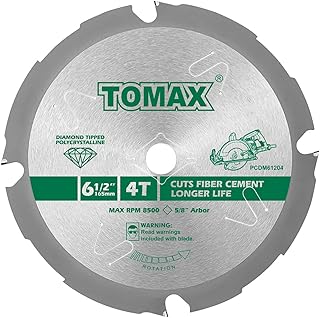
The TOMAX blade is a 6-1/2-inch option with four PCD teeth designed to accelerate cutting of HardiePlank and similar fiber cement products. The slightly smaller diameter can be advantageous for tight spaces or cutouts where a full 7-1/4-inch blade would not fit, while still offering the benefits of PCD technology for reduced wear.
Who it’s best for: Projects requiring tighter radii or smaller-cut sections. Why chosen: Combines a PCD tooth design with a compact size for versatility. Caution: Smaller diameter may limit depth of cut on some saws and boards.
Buying Guide: Key Considerations For Fiber Cement Blades
Material compatibility matters. Choose blades specifically labeled for fiber cement to maintain edge life and minimize dust. A thin kerf helps reduce waste and heat but requires precise guiding and stable saw setup.
Tooth design and material. PCD-tipped teeth offer longer life on hard fiber cement like HardiePlank and Eternit. Be mindful of the number of teeth and kerf; more teeth can produce smoother cuts but may slow feed rates on thick boards.
Arbor compatibility and RPM. Confirm your saw’s arbor size (commonly 5/8 inch for 7-1/4-inch blades) and ensure the blade’s maximum RPM matches or exceeds your tool’s RPM. Higher RPMs typically enable faster cuts with cleaner finishes.
Dust control and safety. Some blades advertise dust reduction; using a good vacuum system and PPE remains important for fiber cement dust exposure. Consider blades with anti-vibration coatings to reduce noise and chatter.
Warranty and approvals. Look for blades with manufacturer endorsements or building-product approvals when working on regulated projects. This can influence performance expectations in long-term use.
FAQ
- What blade is best for fiber cement siding? A PCD-tipped 7-1/4″ blade with a thin kerf and low-dust performance is typically ideal for siding cuts and long runs.
- Can I use a 6-1/2″ blade on a standard circular saw? Some 6-1/2″ blades fit certain saws, but check arbor size, compatibility, and cut depth before use.
- Why choose a PCD blade over a carbide blade? PCD blades last longer on hard fiber cement, provide faster cutting, and can generate less heat and dust in heavy-use scenarios.
- Is dust reduction guaranteed? Dust reduction varies by material and cutting conditions. Always use proper dust extraction and PPE.
- How do I select between multiple blades? Consider project scope, board type, required cut depth, and whether you need more blades for ongoing work or a single purchase for a temporary job.
- Are these blades compatible with all 7-1/4″ saws? Not all 7-1/4″ blades fit every saw. Verify arbor size, maximum RPM, and slip-fit compatibility with your model.