Best Epoxy in a Tube: Top Quick-Setting Epoxies for DIY Repairs
Epoxy in a tube offers fast, mess-free bonding for a wide range of materials. This guide highlights five top-ready epoxy tubes that are well-suited for DIY repairs, construction, and small- to medium-scale projects. The best choices vary by set time, strength, and compatibility with wood, metal, or masonry. This overview helps buyers pick the right tube for fast fixes, structural repairs, or sealing tasks. The table below summarizes each option’s core strengths and ideal use cases.
| Product | Best For | Key Benefit |
|---|---|---|
| Akona Fast-Setting Anchoring Epoxy | Concrete, rebar, bolts | 12-minute set, moisture tolerant |
| West Systems 610 Resin/Hardener Epoxy | Wood, metal, fiberglass, masonry | Self-metering cartridge for accurate mix |
| Gorilla 2 Part Epoxy (0.85 oz Syringe) | Household & automotive repairs | Dries clear, 5-minute set |
| J-B Weld KwikWeld | General repairs, DIY projects | Fast 6-minute set, strong 3127 PSI |
| TotalBoat Thixo (185 ml Cartridge) | Vertical or overhead work | No mixing required, thickened for no-sag bonding |
Akona Fast-Setting Anchoring Epoxy
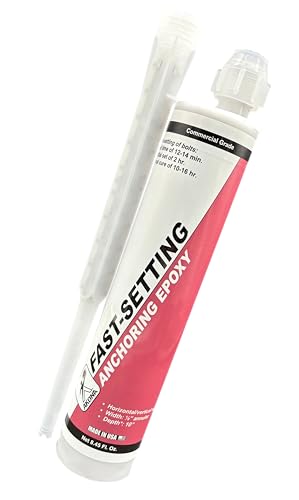
The Akona tube is designed for high-strength anchoring in concrete, rebar, steel, and masonry. It is moisture tolerant and resists chemicals and solvents, making it suitable for water-exposed or industrial environments. The fast-drying formula sets in about 12 minutes and fully cures in 16 hours, enabling quicker project progress. This option suits professionals working with structural anchor bolts or threaded rods as well as DIYers tackling masonry repairs. Best for projects where quick stabilization is needed and moisture exposure is a concern. A potential limitation is the shorter working window if temperatures are high, which can require faster handling.
West Systems 610 Resin/Hardener Epoxy
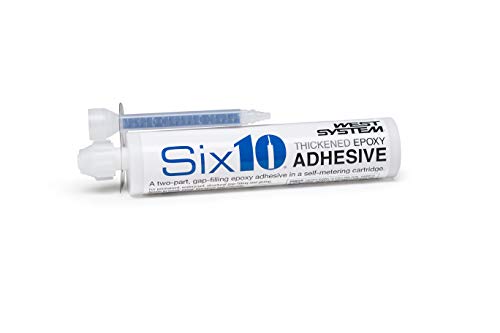
This two-part epoxy uses a self-metering cartridge for a precise 1:1 mix, eliminating manual measuring. It delivers the strength typical of West System products, with broad material compatibility—from wood and metals to fiberglass and masonry. The solution is well-suited for structural repairs, marine applications, and general construction where a reliable bond is required without complicated mixing. Choose this when you value consistent, easy dispensing and compatibility across diverse substrates. Limitation: users should follow the cartridge instructions closely to maintain the correct ratio.
Gorilla 2 Part Epoxy, Clear (0.85 oz Syringe)

Gorilla’s clear epoxy is ideal for visible repairs on household and automotive projects. It features a 5-minute set time, allowing quick repositioning, and dries clear for a clean finish. It also functions as a gap filler, which helps when bonding uneven or vertical surfaces. Best for cosmetic repairs or projects where a discreet, strong bond is important. Caution: the clear resin may be less forgiving for heavy-load structural bonds compared to longer-set epoxies.
Gorilla 2 Part Epoxy (Pack of 2)
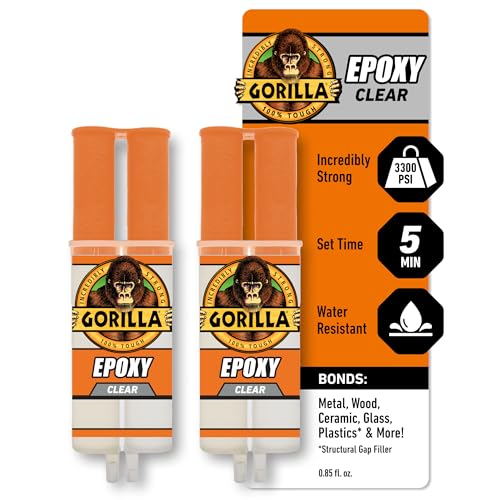
This twin-pack version provides extra epoxy for multiple repairs with the same 5-minute set and clear finish as the single syringe. It’s convenient for small projects or kits that involve several quick fixes. Best for homeowners who want extra material on hand for incidental repairs. Limitation: still best for smaller, speed-focused repairs rather than long-term structural bonds.
J-B Weld KwikWeld Epoxy

KwikWeld provides a fast 6-minute set with a full cure in 4–6 hours, designed for a range of repairs on metal, plastic, ceramic, and wood. The syringe ensures a clean 1:1 mix and reduces waste, making it convenient for repeated use. Best for quick-turn repairs where strength matters and the user can manage a short curing window. Caution: for larger or highly stressed joints, consider longer-curing formulations for maximum strength.
TotalBoat Thixo (185 ml Cartridge)

TotalBoat Thixo offers a thickened, no-mix epoxy adhesive designed for bonding, sealing, and filling. Its viscosity stays where you apply it, even on vertical or overhead surfaces, while remaining workable enough to wet out substrates like fiberglass. It cures to a hard, waterproof bond suitable for wood, fiberglass, metals, brick, and tile. Best for overhead or vertical installs and when you need a self-supporting adhesive. Limitation: even thixo can require precise application in very hot or cold conditions to maintain consistency.
Buying Guide: Key Considerations For Epoxy In A Tube
What surface are you bonding? Wood, metal, concrete, masonry, or composites may require different epoxies or cure times. For anchoring or structural tasks, fast-set formulas with good moisture and chemical resistance can be crucial. If visibility matters, opt for a clear epoxy to minimize aesthetics concerns.
- Working time vs. cure time: Shorter sets enable quick fixes but reduce repositioning opportunities. Longer cures often yield stronger bonds for load-bearing joints.
- Viscosity and sag resistance: Thicker formulations stay in place on overhead or vertical surfaces; thinner mixes flow into gaps better on flat surfaces.
- Substrate compatibility: Check whether the epoxy bonds well with concrete, wood, metal, plastics, or composites relevant to your project.
- Dispensing method: Cartridges with self-metering tips simplify mixing and reduce waste; syringes provide consistent 1:1 ratios.
- Water exposure and chemical resistance: For outdoor or wet environments, select moisture-tolerant and chemically resistant epoxies.
Frequently Asked Questions
- What is the advantage of a tube epoxy over a traditional two-part kit?
Tubes often offer easier application, less mixing, and faster set times for quick repairs. - Can epoxy bonds be drilled or painted?
Yes, many epoxies cure hard enough to be drilled, sanded, and painted. - Are clear epoxies suitable for masonry repairs?
Clear epoxies are ideal for visible repairs, providing a discreet finish. - Is a 5-minute epoxy strong enough for structural use?
For light to moderate loads, yes; for heavy structural loads, consider longer cure times and higher-strength formulations. - How important is substrate preparation?
Proper surface cleaning and roughening improve adhesion and cure quality across most epoxy systems. - Should I avoid using epoxy in high-heat conditions?
Extreme heat can affect cure time and bond strength; follow product guidelines for temperature ranges.