Best Crimper Tool for Cable: Top Picks for Wire Rope and Terminal Crimps
Looking for the best crimper tool for cable? This guide highlights five reliable options suited to different needs, from DIY projects to professional work. Each product excels at crimping aluminum or copper sleeves, wire rope, and terminal lugs. Ideal buyers include DIY enthusiasts, marine or outdoor installers, electricians, and hobbyists who require precise, durable crimps and dependable cutting capabilities. The table below compares key details to aid quick decisions.
| Product | Best For | Crimp Range | Notes |
|---|---|---|---|
| Sanuke Wire Rope Crimping Tool Kit | All-around kit for small sleeves | 1/64″ to 5/64″ | Includes 160 aluminum sleeves and 10 stainless thimbles |
| Professional-grade battery cables | 12AWG-2/0AWG | 9 dies included | |
| Klein Tools VDV226-110 | Data and communication cabling | Standard RJ connectors | Modular, versatile |
| iCrimp Wire Rope Crimping Tool (3/64″–1/8″) | Aluminum and copper sleeves | 3/64″ to 1/8″ | Includes 4-size integrated jaw |
| iCrimp Wire Rope Crimper (3/64″–1/8″) | Railings, fishing, general wire rope | 3/64″ to 1/8″ | High-carbon steel, ergonomic |
Sanuke Wire Rope Crimping Tool Kit

Best for light to medium-duty projects. This kit uses heavy-duty steel for corrosion resistance, suitable for sea water exposure and outdoor use. It offers four crimping positions (1/64″, 0.1-0.5mm; 1/16″, 0.5-1.0mm; 5/64″, 1.0-1.5mm; 2.0mm) to cover common sleeve sizes. The accompanying 160 aluminum crimping loop sleeves and 10 stainless steel thimbles expand on-site capabilities. The included hardened side cutters help reduce fraying. Best for DIY rope-gate anchors, leash lines, or small marine projects. Choose this if you need an affordable, all-in-one kit with extra sleeves. Caution: not designed for heavily coated or exotic materials; check sleeve compatibility before use.
Brileine 10 Tons Hydraulic Crimping Tool

Best for professional-grade battery and welding cable work. This hydraulic crimping tool delivers 10 tons of force with a 0.45-inch stroke and works with 12AWG through 2/0AWG sizes. It includes nine hexagonal dies (covering common large-gauge crimps) and is designed for copper, aluminum, and stainless steel conductors. The tool is ideal for electricians and mechanics who need consistent, high-pressure crimps. Choose this if you require a robust, multi-die hydraulic option. Limitation: heavier and bulkier than manual crimpers, which may affect portability.
Klein Tools VDV226-110

Best for data and voice cabling installations. This modular tool combines a crimper, wire stripper, and cutter with pass-through RJ45 compatibility for straight-through terminations. It is designed for STP/UTP cables and ensures flush trimming at the connector face to minimize conductor exposure and improve contact reliability. Ideal for technicians doing frequent, on-site network installs. Choose this if you need a compact, all-in-one data cabling solution. Caution: primarily aimed at data connectors; not a general-purpose power wire crimp tool.
iCrimp Wire Rope Crimping Tool (Aluminum and Copper Sleeves)
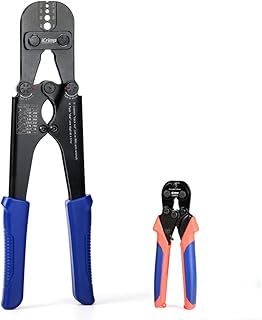
Best for aluminum oval sleeves and stopping sleeves. This tool features drop-forged high-grade alloy steel jaws and heat treatment for tight, clean crimps. It supports swaging 3/64″ to 1/8″ wire rope onto aluminum ferrules and includes a dedicated cutter for wire rope up to 1/8″. Notably suited for outdoor railing or marine projects where sleeve reliability matters. Choose this if you need a tool with robust jaws and a straightforward cutting capability. Limitation: not designed for coated wire; peel coating before swaging.
iCrimp Wire Rope Crimper 3/64″–1/8″

Best for railing, cable, and fishing installations. This version offers four crimp die positions from 3/64″ to 1/8″ with high-carbon steel, heat-treated, and polished jaws for precise crimps. Ergonomically designed handles with non-slip grips reduce fatigue on long projects. Choose this if you prioritize a steel-crimping tool with ergonomic comfort for repetitive use. Caution: rust-proof finish helps durability, but proper maintenance is still essential to prevent corrosion in harsh environments.
Buying Guide: Key Purchase Considerations
- Crimp range and sleeve compatibility: Match the tool’s crimping range to the sleeve sizes you plan to use (e.g., 3/64″–1/8″ for most aluminum and copper sleeves).
- Material and build quality: For outdoor or marine use, choose tools with corrosion-resistant steel and robust jaws to maintain crimp integrity over time.
- Die availability: Some tools include multiple dies; ensure the included dies cover your target sizes or allow easy replacement.
- Portability vs. power: Manual tools are portable and budget-friendly; hydraulic tools deliver higher force for larger gauge cables but are heavier.
- Additional capabilities: When working with data cables, a combined wire stripper and cutter can streamline installations; for data networks, consider pass-through connectors.
- Ergonomics: Look for non-slip grips and balanced handles to reduce fatigue during long sessions.
Frequently Asked Questions
- What is the difference between a manual and hydraulic crimper? Manual crimpers are lighter and cheaper, suitable for smaller sleeves. Hydraulic crimpers provide higher force for larger cables and can be more efficient for frequent, heavy-duty work.
- Can I use these tools on coated wires? Some tools are not designed for coated wire; you may need to peel or remove coating before crimping for a reliable connection.
- Are pass-through data cable crimpers suitable for RJ45 connectors? Yes, models like Klein VDV226-110 are designed to streamline data cable terminations with pass-through connectors.
- How do I choose the right crimping dies? Check the tool’s die range and confirm compatibility with the sleeve or lug sizes you use most often.
- Is corrosion resistance important for marine use? Yes, tools exposed to seawater benefit from corrosion-resistant steel and protective finishes to extend life between maintenance cycles.
- Can I use a single tool for both wire rope and lugs? Some tools are multi-purpose, but for optimal results, select a tool designed for your most frequent task (lugs, sleeves, or rope).