Best Cold Cut Chop Saw Options for Metal Cutting
Answering buyers looking for clean, cold-cut metal cutting solutions, this guide highlights five top chop saws designed for burr-free, cool cuts and long blade life. Ideal for fabricators, welders, and metalworkers who need fast, precise performance with minimal heat. The following selections balance power, precision, and durability for professional use, with notes on suitability for different materials and workflows.
Summary Table of Chosen Products (quick reference):
| Product | Best For | Key Advantage |
|---|---|---|
| Evolution S355CPSL | Portable metal cutting on job sites | Dry-cut technology for cool, burr-free cuts |
| Evolution S14MCS | Cold-cut versatility for fabricators | EVOMAX motor, long blade life, burr-free performance |
| VEVOR 14″ Chop Saw | Budget-conscious metal cutting with adjustable angles | 0–45° cuts, dry-cut, robust clamping |
| Evolution R355CPS | Multi-material cutting with 45° capability | Large cut capacity, tungsten carbide blade included |
| DEWALT DW872 | Heavy-duty metal cutting with speed | High-speed carbide-tipped blade, wide material range |
Evolution S355CPSL: Heavy-Duty 14″ Metal Chop Saw
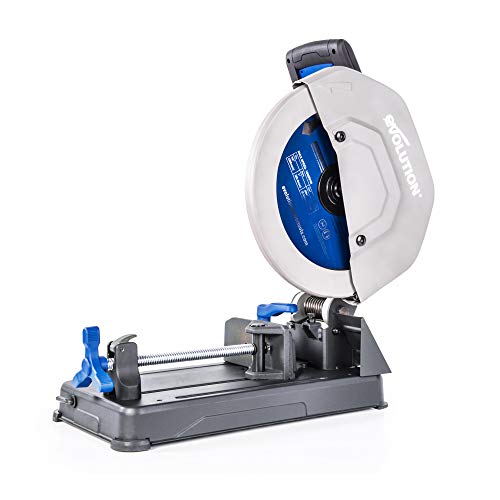
Best for: professional metal fabricators needing portable, burr-free cuts with controlled heat. This model uses a dry-cut, carbide-tipped blade for cool operation and clean finishes, with adjustable 0–45° miter capacity. The integrated chip deflector simplifies cleanup on site.
Why selected: It combines portability with a dry-cut design that minimizes heat and sparks, improving weld-ready results and reducing thermal distortion. The quick-release vise aids fast clamping for accurate, repeatable cuts.
Caution: Dry-cut performance depends on blade condition and material; ensure proper blade selection for different metal types to maintain burr-free results.
Evolution S14MCS 14″ Mitering Chop Saw

Best for: metal fabricators who need fast, low-dust cuts with precise beveling and long blade life. This model supports aggressive cold-cut performance with an EVOMAX motor and includes a blade designed for 3500+ cuts in mild steel.
Why selected: It is engineered for heavy-duty, cool cutting, delivering burr-free results and extended blade life. The soft-start and electronic brake add safety and workflow efficiency.
Caution: The blade life claim is blade-dependent; practice proper feed rates to optimize performance and prolong blade life.
VEVOR 14″ Chop Saw: 355mm Dry Cut, 2800W

Best for: professionals needing robust 14″ cutting capacity with a 4x speed profile and a large tilt range for angled cuts. Dry-cut technology minimizes heat and sparks for clean metal edges.
Why selected: The thicker vise and improved blade clamping reduce wobble, enabling more accurate, repeatable cuts. The 0–45° fence makes angle work straightforward.
Caution: The product benefits from a sturdy, level workspace to prevent movement during cuts; ensure adequate material support.
Evolution S355CPS (R355CPS family): 14-Inch Multi-Material Chop Saw
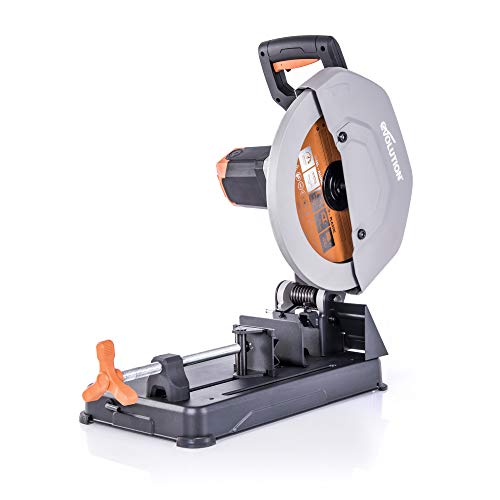
Best for: users needing a versatile tool that handles metal, plastic, and wood with a single blade setup. It provides a large cutting capacity and clean cuts with a tungsten carbide blade.
Why selected: The multi-material capability reduces tool switching on mixed-material projects. The included blade and 45° capability support flexible, efficient workflows.
Caution: Multi-material use may require blade-substitution or maintenance to sustain optimal performance for differing substrates.
DEWALT DW872: 14-Inch Metal Cutting Saw

Best for: professionals needing fast, wide-capacity metal cutting with a carbide-tipped blade for durable performance. This model emphasizes speed and a robust build for tough metals.
Why selected: The carbide-tipped blade supports deep cuts and longer blade life, enabling faster material processing. This choice suits workshop environments with higher throughput needs.
Caution: Higher speed and power require careful handling; ensure proper PPE and safety guards are in place during use.
Buying Guide
What should you consider when choosing a cold-cut chop saw?
- Material compatibility: Decide between dedicated metal-only tools and multi-material machines for mixed projects.
- Cutting technology: Dry-cut or wet-cut options affect heat, burrs, and cleanup. Dry-cut typically reduces heat and sparks.
- Blade life and type: Carbide-tipped blades offer durability and cleaner cuts; confirm blade availability and replacement costs.
- Power and speed: Higher amperage and RPMs improve cutting speed but may demand stronger power sources and precision control.
- Bevel and miter range: For angled cuts, ensure the miter capacity and fence design meet your typical angles (0–45° is common).
- Clamping and stability: A solid vise and anti-wobble features improve accuracy and reduce material movement during cuts.
- Safety features: Soft start, blade brake, and debris deflectors contribute to safer operation in busy shops or on job sites.
- Portability vs. capacity: Lighter models are easier to move between sites; larger blades offer deeper cuts but add weight.
Frequently Asked Questions
- What is a cold-cut chop saw?
It uses a carbide-tipped blade and special cooling methods to minimize heat and burrs during metal cutting. - Are dry-cut chop saws better than wet-cut for metal?
Dry-cut generally keeps heat down and reduces mess, but some applications benefit from liquid cooling. - Can these saws cut aluminum, steel, and other metals?
Many models handle multiple metals; verify blade type and material capabilities for each model. - What safety practices are essential?
Wear eye and ear protection, use clamps, keep guards in place, and ensure a stable work surface. - How do I extend blade life?
Use the correct blade for the material, avoid forcing the cut, and perform regular maintenance as specified by the manufacturer. - Do these tools require annual recalibration?
Most models benefit from periodic checks on alignment and fence accuracy to maintain precision.