Best Chainsaw Chain Sharpeners for Quick, Accurate Edge Maintenance
Finding the right chain sharpener can dramatically reduce downtime and keep your saw cutting efficiently. This guide highlights five dependable options that suit different user needs—from DIY homeowners to pros who rely on reliable gear in the field. Each product is evaluated for ease of use, compatibility, and practical limitations, helping you choose the best fit for your saw size and skill level.
Summary at a glance: the following table compares core aspects of the selected sharpeners to help you compare quickly. Rows show product name, best-use scenario, and a key benefit to aid quick decision-making.
| Product | Best For | Key Benefit |
|---|---|---|
| Sharp Pebble Electric Chainsaw Sharpener Kit | Home workshops, frequent sharpening | Electric power and angle guide for consistent angles |
| Oregon Universal Chainsaw Field 7pc Sharpening Kit | On-the-go sharpening, multiple tools | Includes multiple files and a travel pouch |
| Chainsaw Sharpener Jig Kit (OMCCHK) | Manual, portable sharpening | Simple clamp-and-pawl design for quick use |
| NINGHW Portable Chainsaw Sharpener | Outdoors, compact setup | Two-hole design for easy positioning |
| Stihl 2 in 1 Easy File Chainsaw Sharpener | Stihl owners or basic upkeep | Simple, familiar file-style sharpening |
Sharp Pebble Electric Chainsaw Sharpener Kit

The Sharp Pebble electric sharpener is designed for ease of use with an included chain angle guide, making consistent tooth angles straightforward. Best for DIYers and professionals who want a quick turnaround on blunt chains without manual filing. It ships with multiple wheel bits (5/32”, 3/16”, 7/32”) to fit a range of chain pitches, plus a wrench and an instructional eBook for reference. A single-pass sharpening workflow helps maintain uniform depth and edge sharpness.
Who it’s for: ideal for serious hobbyists and small repair shops that need reliable, repeatable sharpening. The built-in angle guide assists right- or left-handed users in maintaining consistent angles across the entire chain. A potential limitation is the reliance on electrical power and a learning curve for new users who must set the correct grinding angle for each tooth.
Best for: users who want an electric, fast, and repeatable sharpening process with a guided angle approach.
Oregon Universal Chainsaw Field 7pc Sharpening Kit
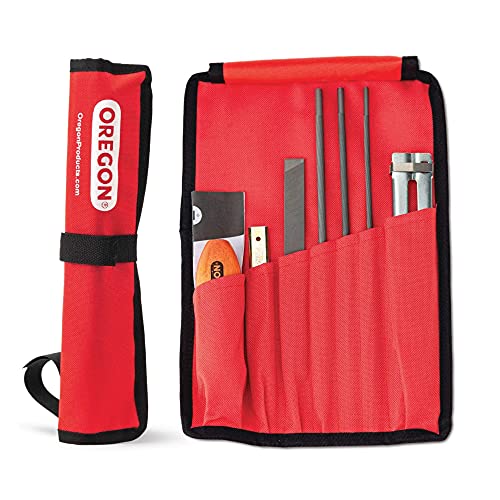
The Oregon kit combines multiple round files (5/32″, 3/16″, 7/32″) with a 6″ flat file, a filing guide, a universal handle, and a travel pouch. It is well-suited for users who want a portable, all-in-one sharpening solution that can service chainsaws, pole saws, and other tools. The included filing guide helps set depth and maintain consistent results during sharpening. A good choice for fieldwork and shop cleanup alike.
Who it’s for: best for users who value a comprehensive, portable toolkit with explicit guides for depth and angle. Better for traditional file-based sharpening enthusiasts who appreciate a broad kit. Limitation: the process is manual and requires steady technique to achieve optimal results across all teeth.
Chainsaw Sharpener Jig Kit (OMCCHK)

This manual jig offers a simple, portable sharpening option with two fixed sharpening holes and a 30° angle. Its clamp-and-pawl design keeps the chain steady while you sharpen, which helps ensure uniform tooth edges. Suitable for chainsaws from 4″ to 22″ and many models, it’s crafted from rust-resistant alloy for durability. The kit includes a cleaning brush for maintenance and a quick-turn handle for faster operation.
Who it’s for: choose this if you want a lightweight, quick manual sharpening method you can carry on jobsites. Better for hands-on users who prefer a tactile filing approach and want a fast 3–5 second sharpening action per tooth. Caution: it requires manual coordination and may take longer to sharpen an entire chain compared to electric options.
NINGHW Chainsaw Sharpener Portable

The NINGHW sharpener emphasizes portability and straightforward operation. It supports most electric and gas chainsaws and uses a two-hole design for positioning. The design keeps the sharpening stone close to the chain, enabling rapid touch-ups in outdoor settings. A practical option when you need a compact, easy-to-store tool that travels well.
Who it’s for: best for outdoor workers who require a compact, easy-to-use sharpener with quick setup. Better for occasional touch-ups rather than heavy, professional-grade profiling. Caution: as a portable device, it may not offer the same degree of precision as larger, dedicated electric sharpeners in demanding environments.
Honoson 3 Pieces Chainsaw Chain Round Files
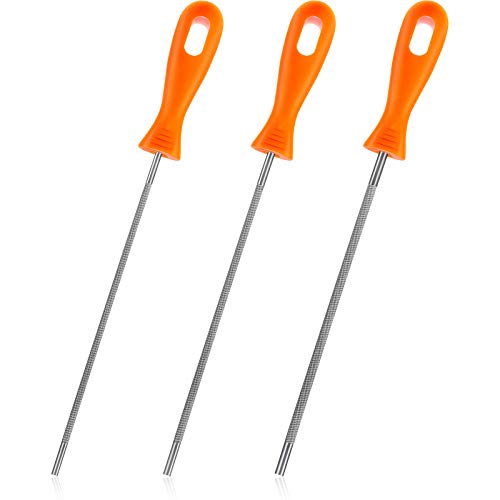
The Honoson set includes three round sharpening files in 5/32″, 7/32″, and 3/16″ sizes, with a plastic handle for grip. These files provide a traditional, affordable option for maintaining chain teeth individually. If you’re comfortable with manual sharpening, this kit offers precise control over tooth shape and depth in a compact package.
Who it’s for: best for traditional file users who prefer a simple, budget-friendly approach. Choose this if you already have the exact files you need or want a targeted set for specific chain sizes. Limitation: manual sharpening requires careful technique to ensure uniform tooth angles and consistent results across the chain.
Hipa 12 Pack Chainsaw File Kit

The Hipa kit offers a broad selection of round files plus a 6″ flat file, a depth gauge, and a quick check gauge. This all-in-one kit aims to support universal chainsaw sharpening needs, including depth control and edge consistency. The orange pouch improves visibility and portability for field use. It’s a practical choice for users who want a complete, ready-to-go kit.
Who it’s for: best for users seeking a comprehensive set that covers multiple file sizes and verification tools. Better for home workshops and job sites where quick reference gauges help maintain uniform sharpening. Caution: the number of pieces can be overwhelming for beginners who are only sharpening a single chain size.
Stihl 2 In 1 Easy File Chainsaw Sharpener
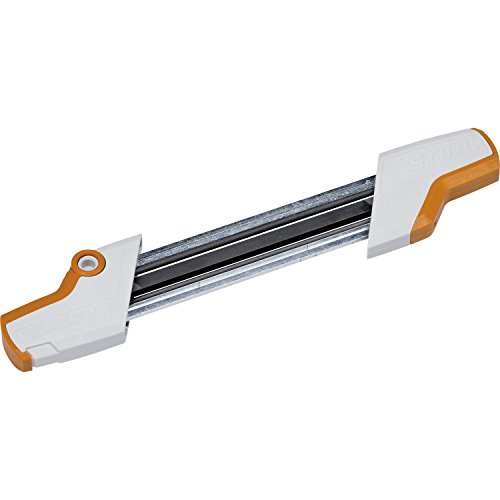
Stihl’s 2-in-1 option emphasizes familiar file-based sharpening for Stihl chains. This compact setup is well-suited for users who want a simple, proven approach to maintaining chain teeth with standard file tools. It’s a straightforward choice for owners of Stihl products who prefer compatibility with the brand’s conventional sharpening method. An important note: compatibility with non-Stihl chains is not guaranteed; check chain type before use.
Buying Guide
- Electric sharpeners speed up the process and deliver consistent angles but require electricity and power availability. Manual jigs and files give you precise control and are portable, but take more time per chain.
- Confirm your chain pitch and saw size (4″–22″ ranges are common). Choose a kit that explicitly lists compatible sizes to avoid mismatches.
- Angle guides and clearly marked files help maintain uniform tooth geometry. If you’re new to sharpening, a guided electric option or a jig with a simple setup is preferable.
- For fieldwork, a compact kit with a travel pouch is advantageous. Portability often trades off with the total number of included tools.
- Rust-resistant materials, solid clamps, and reliable handles improve longevity in outdoor conditions. Look for rust resistance and robust construction if you work in challenging environments.
- Depth gauges, gauges, and cleaning brushes help ensure accuracy and longevity. A kit with a usable storage bag or pouch can keep tools organized for ongoing use.
FAQ
- What is the easiest sharpener for a beginner? An electric sharpener with an angle guide is typically the easiest, as it standardizes the sharpening angle across every tooth.
- Can I sharpen a 3/8″ chain with these kits? Most kits list compatible sizes; check the product specifications to confirm compatibility with your chain pitch.
- Do these tools sharpen both my saw and pole saw chains? Many kits are designed for chainsaw chains and similar sizes, including pole saw blades; verify model compatibility.
- Is a motorized sharpener safer than a hand file? Safety depends on operation and experience. Electric tools reduce manual effort but require careful handling and proper safety practices.
- Will sharpening a moved chain improve cutting efficiency? Yes. Sharpening restores tooth geometry, which improves cutting efficiency and reduces stress on the engine.
- How often should I sharpen? Frequency depends on usage, wood type, and chain condition. Regular checks help prevent excessive dulling and prolong chain life.