Best Bi-Metal Saw Blades for Versatile Metal and Wood Cutting
When choosing a bi-metal saw blade, look for durability, tooth design, and versatility across wood and metal cutting tasks. This guide highlights five top options suitable for DIYers, pros, and hobbyists who need reliable performance on wood, metal piping, pipes, and profiles. Each pick is analyzed for best use case, materials, and potential limitations to help you decide which blade fits your project.
Summary of top picks
| Product | Best For | Why It Stands Out |
|---|---|---|
| 12-Piece Bi-Metal Reciprocating Saw Blade Set | All-around DIY and job-site use | Multiple tooth pitches in one kit, long-life durability with heat-treated steel |
| TOLESA Bi-Metal Reciprocating Saw Blades, 9″ 14TPI | Heavy metal cutting | 0.9mm thin wall, cobalt edge for fast, smooth cuts |
| 6-Inch Thick Metal Cutting Reciprocating Blades (18 TPI) | Thin metal and tubing | Bi-Metal with HSS teeth bonded to HCS body for durability |
| 9-Inch 14TPI Reciprocating Saw Blades (DARTOTEK) | Versatile metal work | 8% cobalt M42 teeth for strength and wear resistance |
| 10 Pack 6 inch 14/18 TPI Bi-Metal Auto Dismantling Blades | General dismantling and metal work | Compact kit with storage and universal tool compatibility |
12-Piece Bi-Metal Reciprocating Saw Blade Set

This multi-spec set provides four blade types: 6″ 6TPI for wood and nailed wood, 6″ 18TPI for thin metal, 8″ 14TPI for medium-thick metal, and 9″ 6TPI for large wood demolition. Best for homeowners tackling both wood demolition and metal cutting in a single project, or job sites needing a single kit for varied tasks. Limitations include potential wear differences across metals; plan blade changes accordingly.
TOLESA Bi-Metal Reciprocating Saw Blades, 9″ 14TPI
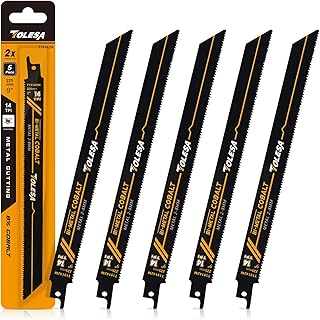
This 5-pack emphasizes heavy-metal cutting with a cobalt edge, featuring 14TPI teeth and 0.9 inch thin wall blade design. Best for cutting sheet metal, pipes, and profiles with improved heat resistance and longer life compared to standard bi-metal blades. Choose this if you frequently cut metal and require clean, speed-efficient results. Note that the set targets metal work; for mixed wood tasks, you may want a companion wood-specific blade.
6-Inch Thick Metal Cutting Reciprocating Blades (18 TPI) – 8 Pack
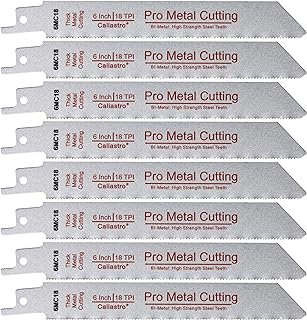
An 8-pack designed for cutting metals up to a quarter-inch thick. Built with HSS teeth bonded to a durable HCS body, these blades resist bending and breakage for tough metal work like black pipe, conduit, and rebar. Best for professional metal fabrication tasks or frequent heavy-metal cuts. Better for metal-focused work than for mixed wood-and-metal tasks; coordinate blade selection for best efficiency.
DARTOTEK 9-Inch 14TPI Bi-Metal Blades

Featuring curved-edge M42 teeth with cobalt, these blades address a broad cutting range including steel pipes, solid steel, and metal plates. Best for projects requiring strong, long-lasting performance with high heat resistance. Choose this if you need versatile metal cutting that also handles profiles and thick materials. Limitation: the blade assumes substantial metal cutting workload; for frequent wood-only tasks, a wood-specific blade is preferable.
10 Pack 6 Inch 14/18 TPI Bi-Metal Auto Dismantling Blades

This 10-pack combines 14/18TPI blades with a portable storage box, compatible with most 1/2-inch tool handles. Best for dismantling tasks and metal cutting in a portable kit, especially on professional job sites. Limitation: not all blades may fit every tool handle—verify compatibility with your tool before use.
Buying Guide: Key Purchase Considerations
What blade tooth pitch should you choose? For fast wood cutting and nails, select lower TPI blades (6TPI). For metal cutting, higher TPI blades (14TPI) provide smoother cuts with less burr. Bi-metal construction combines a flexible steel body with hard teeth, offering durability and versatility.
blade length matters. Short blades excel in tight spaces; longer blades reach deeper into demolition or thicker materials. Check compatibility with your reciprocating saw’s arbor size and the blade length your project requires.
Coating and maintenance impact life. Perma-coating or anti-rust finishes can reduce corrosion and extend blade life when used with lubricants or coolants. Regularly inspect blades for dull teeth or cracks and replace promptly to maintain cutting efficiency.
Applications by material. For wood and nailed wood, use blades with wood-oriented teeth. For metal, prioritize cobalt-enhanced or M42 bi-metal blades designed for heat resistance and high-strength metals such as steel pipes and rebar.
Kit considerations. Multi-pack sets offer value and convenience for mixed projects. Ensure the kit includes the blade lengths and pitches you expect to use most and confirm compatibility with your saw model.
FAQ
- What is a bi-metal saw blade?
Bi-metal blades combine a flexible steel body with a hardened steel tooth, balancing durability for metal cutting with flexibility for wood work. - Which blade should I use for metal pipes?
Choose high-TPI (14TPI) bi-metal blades with cobalt or M42 teeth for clean, fast cuts in metal pipes and profiles. - Can these blades cut wood and nails?
Yes, blades with 6TPI are designed for wood and nailed wood, providing quicker feed and chip removal. - How do I know if a blade fits my saw?
Check blade length, thickness, and arbor size compatibility with your reciprocating saw model. - Are coated blades worth it?
Coated blades resist rust and reduce friction, improving longevity in mixed projects when maintained properly. - When should I replace a blade?
Replace if teeth are dull, chipped, or if performance drops significantly during use.