Best Belt and Disc Sander for Woodworking: Top 5 Picks
Direct answer: For versatile benchtop sanding, these five belt-and-disc combos offer solid two-in-one performance, stable bases, and adjustable tables. Best for hobbyists and small shop projects, the WEN 6502T and SKIL BB9504-00 provide strong value with dual orientations, while Bucktool models offer direct-drive power and durable builds. Woodskil options add adjustable speeds and dual dust exhaust for cleaner work. This guide helps buyers compare configurations, supported speeds, and tilt ranges to pick the right sander for edge work, bevels, or curved pieces.
| Product | Brand | Key Benefit |
|---|---|---|
| WEN 6502T | WEN | Sturdy cast iron base; belt tilts 0–90° |
| SKIL BB9504-00 | Skil | Two-in-one with miter gauge for crosscuts |
| BUCKTOOL BD4603 Upgraded | Bucktool | Direct-drive, 3/4HP, quick belt tracking |
| Woodskil 4.3A | Woodskil | Double dust exhaust; adjustable table |
| Woodskil Variable Speed | Woodskil | Variable belt and disc speeds for control |
WEN Benchtop Belt and Disc Sander 6502T
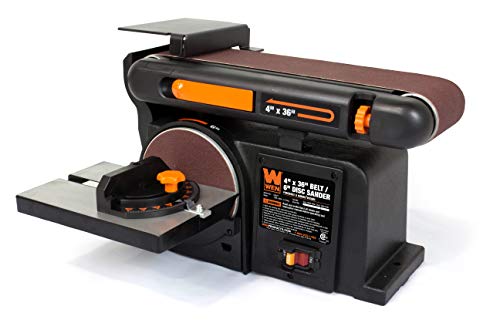
The WEN 6502T combines a 4-by-36 inch belt with a 6-by-6 inch disc, offering a two-in-one sanding solution. The belt can tilt from 0 to 90 degrees and the cast iron base minimizes vibrations. This model suits small-shop users who need flexible orientation for both edge and surface work, along with sturdy stability for longer jobs.
Best for: hobbyists and woodworkers who require a robust, vibration-resistant sander with easy belt and disc access. Limitations: belt and disc alignment can require periodic checking, especially under heavy continuous use.
SKIL 4.5 Amp Belt And Disc Sander BB9504-00
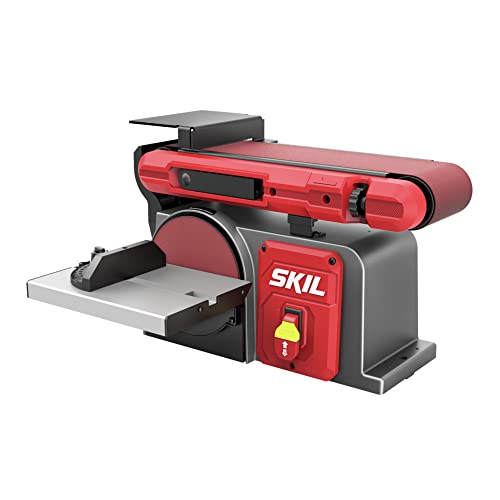
SKIL’s BB9504-00 provides a two-in-one sanding station with a built-in miter gauge to guide crosscuts. The belt angle adjustment allows sanding from 0 to 90 degrees, supporting bevels and edge work. The design emphasizes versatility for varying task lengths and angles, making it a fit for projects requiring multiple setup positions.
Best for: users needing an affordable all-in-one unit with a guided miter for crosscuts. Caution: some users may find the belt tensioning less intuitive compared to direct-drive models.
BUCKTOOL Direct Drive 4×36 Belt And 8 Disc BD4603
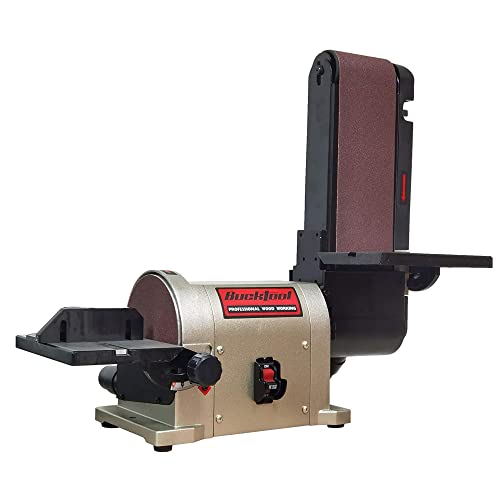
This model uses a direct-drive motor for stable output, with a 4×36 inch belt and an 8 inch disc. The cast aluminum worktable tilts 0–45 degrees, and a miter gauge helps with angle accuracy. The unit can function in both horizontal and vertical modes to suit curved or flat workpieces.
Best for: woodworkers needing strong motor power and a compact, portable base. Caution: some setups may require careful belt alignment when switching orientations.
Bucktool BD4603 5.0A Belt Disc Sander (Upgraded)
The BD4603 Upgraded Model features a 3/4HP motor with direct-drive, delivering higher efficiency and quieter operation. The belt tilts from 0 to 90 degrees, and the track control supports quick belt changes. A portable aluminum base enhances maneuverability for small workshops.
Best for: users who want a direct-drive setup with improved belt change speed and a lightweight base. Limitation: some users may prefer a larger disc for expansive stock sanding tasks.
Woodskil 4.3A Belt Sander, 4×36 In. Belt & 6 In. Disc

Woodskil’s 4.3A model uses a 3/4HP motor delivering up to 3570 rpm on the belt and 1732 fpm for the disc. The belt and disc are mounted on a double-dust-exhaust platform, with a tilting table and a miter gauge to improve accuracy. This configuration is designed for both horizontal and vertical sanding and handles bevels and edge work well.
Best for: builders who want robust dust control and adjustable angles for diverse pieces. Caution: heavier units may require more stable bench mounting for optimal operation.
Woodskil Variable Speed Belt Disc Sander

This model features a variable speed setup with adjustable disc speed from 2000 to 4000 RPM and belt speed from 1060 to 2110 FPM. The 4×36 inch belt and 6 inch disc provide a compact, versatile sanding station. It supports horizontal and vertical operation and aims to balance control with throughput for varied woodworking tasks.
Best for: users who need precise speed control for different materials and finishes. Limitation: variable speed units can be more complex to calibrate for beginners.
Buying Guide: How To Choose The Right Belt And Disc Sander
- Two-in-one versatility: Look for machines with both belt and disc sanding surfaces and a stable base to reduce vibration during heavy use.
- Power and speed: A direct-drive motor can improve efficiency and belt tracking. Consider belt speed (FPM) and disc RPM to match project needs, such as aggressive material removal or fine finishing.
- Table adjustability: Favor models with tilting or adjustable work tables (0–45° or 0–90°) for bevels and complex shapes. A miter gauge helps with consistent angles.
- Adjustability and orientation: A unit that supports horizontal and vertical operation enables sanding of edges, faces, and curved parts. Check tilt ranges and any hardware aids like miter gauges.
- Dust control: Double-dust exhaust or robust dust collection compatibility helps maintain a cleaner work environment and prolongs belt life.
- Footprint and weight: If space is limited, choose a compact model with a solid base. Heavier bases reduce wobble; lighter bases are easier to reposition.
Frequently Asked Questions
- What is the benefit of a belt and disc sander combo?
– It provides one compact station for shaping edges and flattening surfaces, reducing the need to switch machines for different tasks. - Is a direct-drive motor better than a belt-driven setup?
– Direct-drive designs can offer smoother power transfer and simpler maintenance, but belt-driven units may be lighter or cheaper. - Can I use these sanders for curved wood pieces?
– Yes, most models support disc sanding with a rotating disc and belt sanding for edges and contours, including some curved work when used with appropriate jigs. - What safety features should I expect?
– Look for sturdy bases, dust collection, and double safety switches or guards to prevent accidental starts during belt changes. - Do I need extra accessories?
– Optional accessories include extra belts, discs, miter gauges, and dust collection adapters to improve workflow and finish quality.