Best Battery Adapters for Power Tools: Convert Batteries to Power Your Tools
When selecting battery adapters for power tools, the goal is to extend tool use, cut downtime, and adapt existing batteries to different tool families. This article highlights five reliable adapters that let you run 18V or 20V tools with batteries from DeWalt, Milwaukee, Ryobi, and more. These options suit DIY enthusiasts, hobbyists, and small workshop setups looking to maximize battery reuse and flexibility.
| Product | Best For | Notes |
|---|---|---|
| Biswaye DM18RL Adapter | Ryobi 18V tools with DeWalt 20V or Milwaukee 18V batteries | Multi-brand compatibility; watch for fit with certain Ryobi models |
| Crivon 2-Pack DM18D Adapter | Power wheels and DIY toy projects using DeWalt/Milwaukee batteries | Built for toy/DIY applications; safety features included |
| aikeec Milwaukee/DeWalt Adapter | Milwaukee 18V tools with DeWalt 18V/20V batteries | Clear usage notes; not for charging tools |
| Azocek DM18D USB Adapter | DeWalt 20V to Milwaukee 18V with USB power options | Includes USB/Type-C outputs; battery not included |
| Tulepowceeng DM18D Adapter (2-Pack) | DeWalt 20V/18V to run 18V tools and Milwaukees | Solid for multi-tool conversions; installation simple |
Biswaye DM18RL Battery Adapter for Ryobi And More
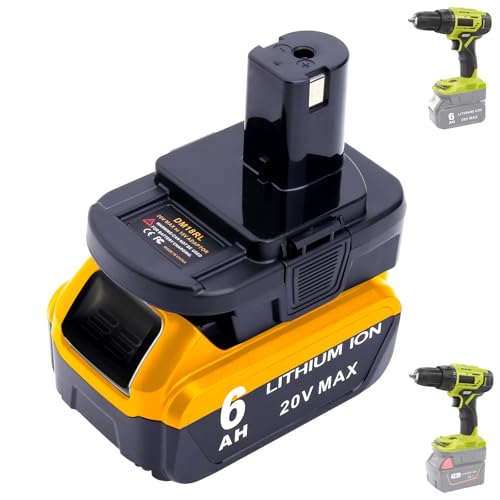
The Biswaye DM18RL adapter converts DeWalt 20V Max and Milwaukee 18V batteries to power Ryobi One+ 18V tools. It also supports Ryobi P102/P189/P107 and similar models, widening battery compatibility for a busy workshop. This option is best for owners who already have DeWalt or Milwaukee batteries but want to run Ryobi tools without buying new packs.
Best for: A user with DeWalt or Milwaukee batteries who frequently uses Ryobi 18V tools. This adapter offers broad cross-brand use, reducing the number of separate batteries you need to carry.
Limitations: Fit and performance can vary by Ryobi model; verify compatibility with your exact tool and battery family before purchase.
Crivon 2-Pack DM18D For Power Wheels And More

Crivon’s 2-pack DM18D adapters fully support DeWalt 20V/18V batteries and Milwaukee 18V batteries, converting them to power a range of DIY projects, including Power Wheels and small RC devices. They’re designed to securely lock into place and resist heat with durable wiring and enhanced fuse protection.
Best for: DIY enthusiasts who want to repurpose drill batteries for toy cars or small robotics projects. The ABs plastic body and heavy-duty wiring help ensure stable power delivery for extended playtime.
Limitations: Not intended for use with high-output power tools or heavy industrial equipment; intended for light-to-moderate toy and hobby applications.
aikeec 18V/20V Adapter for Milwaukee Tools

The aikeec adapter enables DeWalt 18V/20V batteries to run Milwaukee 18V tools. It provides a straightforward, no-frustration conversion and emphasizes safe operation by advising users to remove the battery after use to minimize discharge and circuit resistance.
Best for: Users who need a simple, on-the-go solution to power Milwaukee 18V tools with DeWalt or similar batteries. It’s ideal for quick exchanges in the field or workshop.
Limitations: Not a charging solution; do not force fit or attempt to power high-output tools beyond the adapter’s design.
Azocek DM18D With USB Port For DeWalt And Milwaukees

This DM18D adapter converts DeWalt 20V batteries to work with Milwaukee 18V tools and adds a USB port for auxiliary charging. It’s particularly useful for field work where extra USB-powered devices may be needed alongside the main tool.
Best for: Individuals who want a multi-functional adapter that adds USB charging while enabling cross-brand tool operation. Battery not included.
Limitations: Not compatible with charging tools; ensure your power tool is within the 18V range and not high-output equipment.
Tulepowceeng 2 Pack DM18D For Dewalt And Milwaukees

The Tulepowceeng 2-pack DM18D adapters convert 20V DeWalt or Milwaukee 18V batteries to run 18V tools. They’re designed for easy installation—slide the battery into the adapter, then lock to power 18V tools. Great for users who need a quick swap in a workshop or on a job site.
Best for: Buyers needing a cost-effective, easy-to-use option for converting common batteries to 18V tool compatibility. It suits home workshops and light professional use alike.
Limitations: Verify exact model compatibility; some older tools may require different adapters or wiring configurations.
Buying Guide: Key Considerations And Comparisons
What should you check before buying a battery adapter for power tools?
- Tool and battery compatibility: Confirm the exact model numbers (DeWalt 20V, Milwaukee 18V, Ryobi 18V, etc.) and whether the adapter supports those batteries across multiple brands.
- Voltage range and power output: Ensure the adapter maintains the intended voltage range and can supply stable current for your tools, especially for high-demand tasks.
- Safety features: Look for fuses, robust housings, and high-quality wiring to prevent overheating, short circuits, or damaged batteries.
- Intended use: Distinguish between adapters for powering tools and those with added USB or charging capabilities. Some options are not charging devices.
- Ease of installation: Consider models that slide and lock securely, with clear release mechanisms and minimal risk of misalignment.
- Durability and environment: Pick ABS-plastic bodies and weather-resistant designs for outdoor or shop use.
FAQ
- Can I use any battery adapter with any tool?
– No. Compatibility depends on brand, voltage, and the adapter’s intended tool family. Always verify model numbers and voltage before use. - Will these adapters charge batteries?
– Most adapters convert battery power and do not charge. Do not rely on them as chargers. - Are USB ports on adapters safe for devices?
– USB-enabled adapters provide charging options, but check current limits and ensure devices are compatible with the adapter’s outputs. - What safety features should I expect?
– Look for fuses, heat-resistant materials, and secure locking mechanisms to protect both the tool and the battery. - Can I power high-output tools with these adapters?
– Most adapters are not designed for high-output tools. Use only within the specified tool classes and power ratings. - Do adapters affect warranty?
– Using third-party adapters may affect warranties. Check with the tool and battery manufacturers for policy details.