Best Aluminum Skill Saw Blades for Clean, Fast Cuts
When cutting aluminum or other non-ferrous metals, choosing the right blade boosts precision, reduces burrs, and extends blade life. This guide highlights five top options, explaining who each blade is best for and why. This selection spans budget-friendly choices and higher-durability blades for demanding jobs, helping DIYers, professionals, and builders find a reliable match fast.
Top picks at a glance:
- TOMAX 7-1/4-Inch 60 Tooth TCG Aluminum and Non-Ferrous Metal Saw Blade
- Diablo 7-1/4″ 56T TCG Aluminum Blade
- EXFEIN 7-1/4″ Aluminum and Non-Ferrous Metal Cutting Blade
- KURSTOL 7-1/4″ TCG 60T For Aluminum and Non-Ferrous Metals
- Corner 7-1/4″ Aluminum Cutting Blade 60T
TOMAX 7-1/4-Inch 60 Tooth TCG Blade for Aluminum

Brand: TOMAX Store
Features: Ideal for cutting Plastic, Aluminum and Non-Ferrous Metals; Construction grade carbide teeth provide maximum resistance for longer life; Electrophoretic Coating reduces rusting and corrosion.
Best for: General aluminum and non-ferrous metal projects with budget considerations. This blade emphasizes durability and corrosion resistance, making it a solid all-around choice for frequent cutters who need reliable performance at a reasonable price.
Why selected: Its 60-tooth configuration delivers smooth surface finishes on thin-aluminum stock and non-ferrous materials, while the electrophoretic coating helps extend blade life in moderate environments. Best for home workshops and light-to-mid volume work where rust protection matters.
Caution: For very thick or hard metals, consider a blade with more aggressive tooth geometry to maintain cutting speed.
Diablo 7-1/4″ 56T Aluminum Blade with TiCo Carbide

Brand: Diablo Store
Features: Long-lasting performance via TiCo Super-Density Micro-Grain Carbide; Tri-Metal Shock Resistant Brazing for durability; Triple Chip Grind (TCG) tooth geometry delivers balanced speed, durability, and cut quality for flooring, remodeling, demolition, electrical, and plumbing projects.
Best for: Projects that require consistent, burr-free cuts through thicker aluminum and similar materials. The blade’s durability makes it suitable for frequent use in renovation and construction settings.
Why selected: The cutting geometry and high-grade carbide provide clean edges and reduced chatter. It’s a strong choice when you need reliability in tougher cut environments.
Caution: The 56-tooth count may be slightly slower on very thin aluminum sheets compared with higher-tooth blades; choose this for sturdier cuts rather than ultra-thin sheet work.
EXFEIN 7-1/4 Inch Aluminum and Non-Ferrous Metal Blade

Brand: EXFEIN Store
Features: 1 blade included; Diameter 7-1/4″ (184mm); 1.5mm blade thickness; 2.3mm tooth thickness; 5/8″ arbor; Tungsten carbide teeth (45° trapezoidal) for precise cutting, burr-free surfaces; suitable for non-ferrous metals, aluminum, and plastic.
Best for: Users who want precise, smooth cuts with minimal burrs on aluminum and non-ferrous metals in compact workshop settings. The carbide tooth design supports stable cutting performance on a range of materials.
Why selected: Specialized for aluminum and non-ferrous metals with a tooth geometry that reduces tearing and improves cut quality on brittle materials.
Caution: As with many carbide blades, avoid overheating by maintaining steady feed rates and using adequate dust/chip clearance during long cuts.
KURSTOL 7-1/4 Inch TCG 60T Aluminum Blade

Brand: KURSTOL Store
Features: 60T Tungsten Carbide Tipped (TCG) teeth; 7-1/4″ diameter; suitable for aluminum, non-ferrous metals, and plastics; Laser Cut Keyholes reduce noise and vibration for stable cutting; 8000 RPM max.
Best for: Professionals or hobbyists who frequently cut aluminum or non-ferrous materials and require dependable edge quality with reduced vibration.
Why selected: The laser-cut keyholes and TCG tooth design contribute to smoother operation and lower chatter, helping achieve straighter cuts in metal workflows.
Caution: The specified RPM limit should be observed to avoid excessive wear or tooth damage during aggressive use.
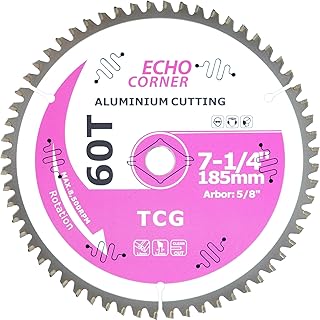
Corner 7-1/4 Inch Aluminum Cutting Blade, 60T
Brand: Corner
Features: 60-Tooth, TCG tooth style for smooth cutting; 7-1/4″ diameter; 5/8″ arbor; designed for aluminum, copper, polycarbonate, plastics, and non-ferrous metals; 60-tooth configuration minimizes chipping and tearout.
Best for: Users prioritizing a gentle cut on delicate metals and plastics, with a focus on minimizing surface imperfections and burrs in lightweight aluminum work.
Why selected: The blade provides a reliable balance of speed and precision for common home and shop projects, particularly where finish quality matters.
Caution: For very hard metals or thick stock, consider a blade with more aggressive geometry to maintain cutting speed.
Buying Guide
- Tooth count and cut quality: Higher tooth counts (like 60T) yield smoother finishes on aluminum but may cut more slowly on thicker stock. For thin aluminum sheets or non-ferrous plastics, a 60T blade often provides the best balance of speed and edge quality.
- Tooth geometry: Triple Chip Grind (TCG) teeth are common for non-ferrous metals and plastics; they reduce chipping and tearout compared with standard carbide teeth. Carbide tips extend blade life under metal cutting conditions.
- Arbor size compatibility: Most 7-1/4″ blades use a 5/8″ arbor. Verify your saw’s arbor type and ensure the blade’s arbor matches for safe operation.
- Coatings and corrosion resistance: Electrophoretic coatings help resist rust and corrosion in damp environments, extending blade life when cutting in basements, garages, or outdoor sites.
- Durability vs. price: Blades with advanced brazing or TiCo carbide tend to last longer under heavy use. For occasional home projects, budget blades offer solid performance with acceptable longevity.
- Material targets: If your primary work is aluminum or other non-ferrous metals, prioritize blades explicitly designed for aluminum and non-ferrous metals to minimize burrs and heat buildup.
FAQ
- What blade is best for aluminum cutting?
Blades with 60T or similar tooth counts and TCG tooth geometry are generally well-suited for aluminum, offering clean edges and smooth finishes.
- Can I use a general woodworking blade for aluminum?
Yes, but specialized aluminum blades reduce burrs and heat buildup, providing better edge quality and longer blade life for non-ferrous metals.
- What RPM should I use with these blades?
Follow the blade’s maximum RPM specification and your saw’s recommended operating range to avoid excessive wear and vibration.
- Is corrosion resistance important for blades?
Electrophoretic coatings help prevent rust when stored or used in humid environments, extending blade life in those conditions.
- How do I avoid burrs when cutting aluminum?
Use a blade designed for aluminum, maintain steady feed pressure, and ensure proper blade alignment and cutting speed to minimize burr formation.