Best 9-Inch Circular Saw Blades for Woodworking and More
Looking for a reliable 9-inch circular saw blade that delivers clean cuts and long life? This guide highlights top 9″ blades chosen for woodworkers and DIYers. Each blade is described with who it’s best for, why it stands out, and a clear caution. The top picks balance speed, finish quality, and durability across common materials. Ideal buyers include cabinet makers, hobbyists, and professionals replacing worn blades or upgrading for specific tasks.
| Product | Best For | Arbor | Teeth | Material Notes |
|---|---|---|---|---|
| KuangBBBTools 9″ 40 Teeth Carbide Tip Wood Cutting Circular Saw Blade | General wood cuts, crosscuts and rips | 5/8″ (16 mm) | 40 | ATB carbide for fast, smooth wood cutting |
| 9″ Table Saw Blades, 40T Carbide Tipped for Workshop Wood Cutting Tasks | Versatile wood cutting and finishing | 5/8″ | 40 | ATB design, long service life |
| ATIE 9″ 40 Tooth Carbide Tip General Purpose Blade (2 Pack) | All-purpose ripping and crosscutting | 5/8″ | 40 | ATB carbide tips for precision and durability |
| Freud LU88R009: 9″ Thin Kerf Fine Finish Crosscut | Fine finish crosscuts | 5/8″ | 54 | Thin kerf for fast feed; ATB grind for smooth cuts |
| Evolution Power Tools 230BLADEST 9-Inch 48-Tooth Mild Steel Blade | Cutting mild steel and ferrous metals | Not stated (fits 5/8″ arbors) | 48 | Cuts ferrous metal with minimal sparks |
KuangBBBTools 9″ 40 Teeth Carbide Tip Wood Cutting Circular Saw Blade

The KuangBBBTools blade is a 9″ wood-cutting blade with 40 carbide-tipped teeth, designed for fast, smooth cuts in soft and hardwoods, plywood, and laminate. It features a 0.06″ plate thickness and a 5/8″ arbor, with a 6600 max RPM and a 10–15 degree hook angle. Best for general purpose ripping and crosscutting where clean wood cuts are needed without excessive tear-out. Avoid for metal cutting. This blade is suited for DIYers and professionals seeking an economical, versatile option for mixed wood projects.
Best for: DIY woodworkers and small-shop builders needing a single blade for various woods.
Limitation: Not suitable for metal or non-wood materials; designed specifically for wood cutting.
9″ Table Saw Blades, 40T Carbide Tipped for Workshop Wood Cutting Tasks
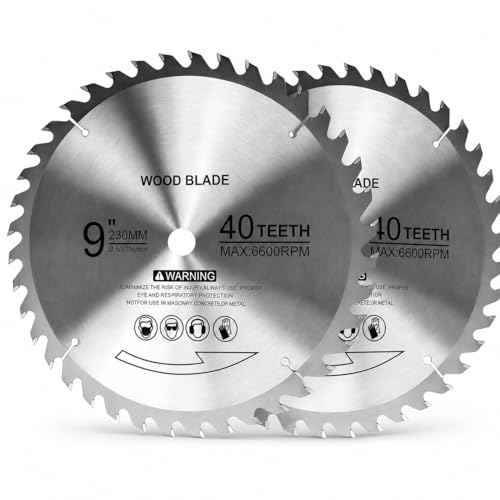
This 9″ 40T carbide-tipped blade features an ATB tooth design for smooth, clean cuts suitable for ripping, crosscutting, and detailed woodworking. It’s designed for universal fit with a 5/8″ arbor, making it a versatile replacement blade for many table saws, miter saws, and circular saws. Best for users who want reliable performance across a range of light to mid-duty wood projects. Limitation: may not be optimized for ultra-fine finish work compared to premium crosscut blades.
Best for: General woodworking and replacement blade for mixed tasks.
Limitation: May not deliver premium finish on highly delicate joinery compared to premium crosscut blades.
ATIE 9″ 40 Tooth Carbide Tip General Purpose Blade (2 Pack)

The ATIE blade is an all-purpose 9″ combination blade with 40 ATB teeth and a 5/8″ arbor. It handles ripping and crosscutting on soft and hardwoods, plywood, and laminates. It’s designed for precision and durability with a max RPM of 8000 and a 0.1″ kerf. Best for: budget-conscious woodworkers needing a versatile blade for varied tasks. Caution: as a general-purpose blade, it may not excel in extreme finish quality on very delicate projects.
Best for: Budget-friendly, all-around blade for multiple wood tasks.
Limitation: Not specialized for premium finish work on fine cabinetry.
Freud LU88R009: 9″ Thin Kerf Fine Finish Crosscut Blade

The Freud LU88R009 is a 9″ thin-kerf crosscut blade with 54 teeth and a 5/8″ arbor. Its ATB grind and 15° hook angle support fast, smooth finishes with reduced waste. The thicker plate and larger tooth count favor fine crosscuts and high-precision work. Best for: woodworkers prioritizing a high-quality finish in panel and trim work. Caution: thin kerf blades require careful setup to avoid deflection on hard materials.
Best for: Fine finish crosscuts and premium cabinetry tasks.
Limitation: Thinner kerf can demand precise setup and can be more sensitive to feed rate on tough stock.
Evolution 230BLADEST 9-Inch 48-Tooth Mild Steel Blade
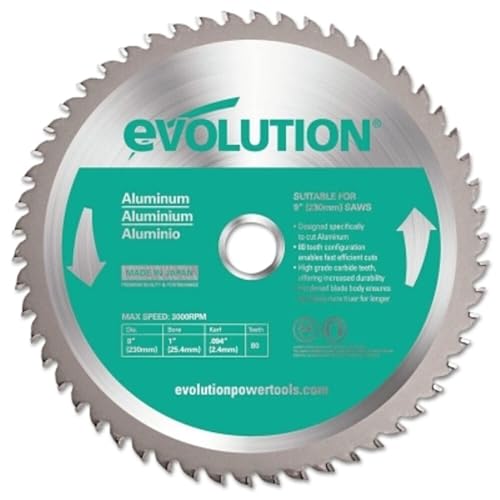
The Evolution 230BLADEST is a 9″ blade with 48 teeth designed for cutting mild steel and ferrous metals. It is intended for metal cutting rather than wood, offering reduced heat and minimal sparks with carbide tips. Best for: metalworkers needing a dedicated 9″ blade for mild steel. Caution: not suitable for wood or non-ferrous materials and should not be used for cutting wood.
Best for: Mild steel and ferrous metal cutting in metalworking shops or specialized projects.
Limitation: Not appropriate for wood cutting or general woodworking tasks.
Buying Guide: 9-Inch Blade Buyer’s Checklist
- Material and tooth design: ATB teeth are common for wood with a balance of ripping and crosscutting. If you need fine finishes, consider a blade with more teeth and a refined grind (e.g., Freud crosscut blades).
- Arbor size: Most 9″ blades use a 5/8″ arbor. Ensure your saw accepts this size; some blades may fit other arbors with adapters.
- Kerf width: Thin kerf blades reduce waste and require less power, but can be less forgiving on older saws. Regular kerf blades offer sturdier performance on tough stock.
- Material compatibility: Use dedicated blades for wood, plywood, laminates, and metals. Mixing blades can lead to poor cuts or tool wear.
- RPM rating: Match max RPM to your saw’s rating. Using a blade beyond its RPM spec can be unsafe and reduce blade life.
- Cut quality vs. lifespan: Higher tooth counts yield cleaner finishes but may wear faster on tough stock. For roughing cuts, a lower tooth count blade can be faster.
- Special considerations: For metal cutting, select blades explicitly designed for ferrous metals to minimize heat, burrs, and sparks.
Frequently Asked Questions
- What is a 9-inch blade best used for? It is commonly used for general woodworking tasks, including ripping and crosscutting on table saws and miter saws, as well as small-format circular saw work.
- How many teeth should a wood-cutting blade have? For general purpose cutting, 40–60 teeth provide a balance between speed and a decent finish; finer finishes use 54–80 teeth, while rough cuts use 20–40 teeth.
- Is a thin kerf blade better? Thin kerf blades remove less material and require less power, leading to faster feed rates, but they can be more prone to deflection in hard stock.
- Can I use a metal blade on wood? No. Metal-cutting blades are optimized for ferrous metals and may overheat, wear quickly, and cause dangerous kickback when used on wood.
- Do I need a specific arbor for each 9-inch blade? Most 9″ blades use a 5/8″ arbor. Check your saw’s arbor size and compatibility before purchasing a blade.
- How do I choose between 40T and 54T blades? 40T blades are faster for rough work, 54T blades provide cleaner finishes. For cabinetry or finish work, higher tooth counts are preferable.