Best 3×24 Belt Sanders for Woodworking and Finishing
Looking for a reliable 3×24 belt sander to tackle wood shaping, flush-wall work, or metal and plastic projects? This guide highlights five well-suited options and explains who each is best for, plus practical trade-offs. Whether you’re a hobbyist, a professional contractor, or a shop setup owner, you’ll find a model that fits your needs for material removal, control, and ease of use. The following table summarizes the key picks and their ideal use cases to help you compare at a glance.
| Product | Best For |
|---|---|
| MAKITA 3″X24″ Dustless Belt Sander (Model 9924DB) | Flush sanding, walls, tight corners, general woodworking |
| Makita 9920 3″ x 24″ Belt Sander | Precision speed control, constant speed under load |
| WEN HB424V 4-by-24-Inch Variable Speed | Benchtop or handheld versatility, larger projects |
| 3×24 Inch Sanding Belts – 18 Pcs | Budget belt replacement kit with varied grits |
| Tonmp 15 PCS 3″ x 24″ Premium Belts | Grind selection for mixed materials |
Makita 3″ x 24″ Dustless Belt Sander (9924DB)

- Features: 7.8 amp motor for fast material removal; extended base for flush sanding; nose-and-side design for sanding close to walls.
The 9924DB is best for woodworkers who need aggressive removal while maintaining the ability to reach tight corners and flush against surfaces. It suits hobbyists and professionals focusing on finish-ready edges and wall-adjacent work. A potential limitation is that it is bulkier than compact handheld models, which may affect maneuverability in restricted spaces.
Makita 9920 3″ x 24″ Belt Sander

- Features: Variable speed control dial (690-1,440 ft/min), electronic speed control maintains constant speed under load, auto-tracking belt system.
Ideal for users who need precise speed customization to match materials and applications. The constant speed under load helps keep finish consistent on wood or soft metals. Choose this if you prioritize adjustable speed and belt tracking accuracy; avoid if you require a heavier emphasis on flush-wall sanding without extra width adjustments.
WEN HB424V 4-by-24-Inch Belt Sander
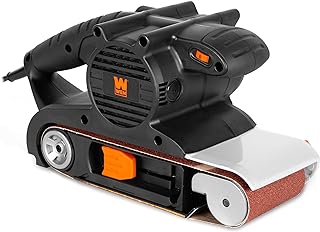
- Features: 10-amp variable-speed motor; converts to benchtop upward-facing sander; lock-on switch for continuous sanding.
Best for versatile setups where you need both handheld and benchtop capabilities for larger projects. The 4-inch width offers more aggressive material removal than narrower belts. A caution: stability on a portable bench can depend on your mounting setup, and the extra width may be less ideal for ultra-tight corners compared to narrower 3″ models.
3×24 Inch Sanding Belts (18 Pcs)

- Features: 6 grit sizes (60/80/120/150/240/400), zirconia belts for sharpness and longevity, durable seams with diagonal lap splice.
Best for budget-conscious buyers who want a complete belt assortment for various materials. The zirconia belts deliver longer life than standard aluminum oxide belts in many applications. Limitation: an 18-pack is a consumables kit, not a single replacement belt, so ongoing belt purchases may be frequent if you use belts heavily.
Tonmp 15 PCS 3″ x 24″ Premium Belts

- Features: 5 each of 40/80/120 Grit; open-coat aluminum oxide; anti-static and anti-clogging; suitable for wood, aluminum, non-ferrous metals, plastic, and stone.
Choose this set for a balanced range of grits suitable for initial material shaping, intermediate smoothing, and final finishing. Best for projects involving mixed materials or when you want a ready-to-use belt assortment. A potential limitation is that the set doesn’t include metal-specific grinding options beyond aluminum oxide grains, so extreme metal work may require alternative belts.
Buying Guide
What should I look for in a 3×24 belt sander?
Key factors include motor power and speed range, belt tracking reliability, dust management, and ergonomics. For flush-wall work, consider models with a low-profile nose or side contact areas. If you need versatility between handheld and benchtop use, prioritize tools that offer stable mounting and a larger working width.
Which features impact finish and speed?
- Speed range and constant-speed control improve consistency when removing material and finishing surfaces.
- Extended bases and flush-sanding designs help reach corners and edges near walls.
- Variable speed and electronic control reduce heat buildup and prolong belt life.
Should I buy belts separately or as a kit?
Belt kits deliver versatility for different materials and finishes, but they may require ongoing replacement if you use belts frequently. Purchasing a few high-quality belts tailored to your primary material (wood, metal, or plastic) can be more economical over time.
Maintenance and safety tips
- Inspect belts for fraying or glazing; replace when performance drops.
- Keep the area clean and ensure proper dust collection to extend tool life and improve visibility.
- Always wear eye and respiratory protection when sanding dust-prone materials.
Suggested usage scenarios
- DIY woodworkers focusing on trim, doors, and furniture edges: Makita 9924DB or Makita 9920 for precise control.
- Garage shop with mixed projects including metal and plastic: Tonmp belts paired with a belt sander offering broad grit coverage.
- Projects requiring heavy material removal and bench mounting: WEN HB424V for switchable handheld/benchtop use.
FAQ
- What is a 3×24 belt sander best used for? — It’s ideal for woodworking edges, flush-wall sanding, and finishing work that benefits from a narrow belt width.
- Do I need a variable-speed sander? — Variable speed helps tailor performance to different materials and finishes, improving results and belt life.
- Is a dustless or bagged dust system necessary? — Dust management improves visibility and health; many models pair with dust collection accessories.
- Can I use 3×24 belts for metal? — Some belts are rated for metal; review belt material (e.g., zirconia) and consult manufacturer guidelines for metal work.
- Should I buy a kit or single belts? — Kits provide variety; singles let you tailor belts to your main material. Consider your typical projects.