Best 17 Mm Allen Wrenches for Tight Spaces and Heavy-Duty Jobs
For projects requiring a precise 17 mm hex key, choosing the right L-shaped or ball-end wrench can improve leverage, reach, and accuracy. This guide highlights five well-rounded options, each suited to different tasks—from furniture assembly to automotive maintenance. The top picks balance strength, reach, and ease of use for American buyers who value consistent fit and durable construction. Below, you’ll find quick comparisons and practical buying considerations to help you select the best 17 mm Allen wrench for your toolkit.
| Product | Best For | Key Benefit |
|---|---|---|
| HARFINGTON Hex Key Wrench 17mm | Deep-reach fasteners | Long and short arms for leverage and reach |
| EKLIND 15534 17 MM Short Series | General assembly | Made in USA, balanced size for frequent use |
| TEKTON 17 mm Flat End L-Key | High leverage tasks | Longer largest sizes for extra torque |
| Capri Tools 3-0545 17 mm Socket | Heavy-duty bolt jobs | Chrome vanadium steel with robust build |
| Winfox 17mm Ball End L-Wrench | Constrained spaces | 25° ball end for awkward angles |
HARFINGTON Hex Key Wrench 17mm – Long & Short Arm
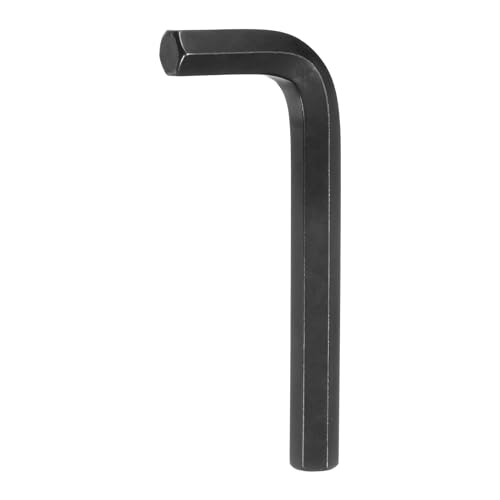
The HARFINGTON 17 mm hex key features a long arm of 167 mm and a short arm of 70 mm, designed to tackle deep fasteners while offering leverage for tighter torque on the other end. Constructed from quenched and heat-treated chrome vanadium steel (48-52 HRC) with a rust-resistant finish, it suits heavy-duty mechanical work and furniture assembly alike. Best for professionals who need a versatile tool that reaches recessed bolts without sacrificing strength. A potential limitation is the overall size, which may feel bulky for very small projects.
EKLIND 15534 17 MM Short Series Hex-L Key

The EKLIND 15534 is a 17 mm short-series hex key made in the USA, offering a compact design ideal for routine assembly and maintenance. With a 6.14-inch long arm and a 2.42-inch short arm, it provides dependable internal hex engagement for common fasteners. Best for professionals who value domestic manufacturing and predictable performance in shop settings. Choose this if you prioritize familiarity and tight tolerances for regular use; avoid if you need extended reach for stubborn hardware.
TEKTON 17 mm Flat End Hex L-Key

TEKTON’s 17 mm L-key emphasizes high leverage through a longer largest size, enhancing torque for stubborn fasteners. It is crafted from 6150 chromium vanadium steel and heat-treated to 44-50 HRC to balance hardness with resilience. Best for users who frequently face tight or resistant fasteners in automotive or industrial contexts. A consideration is that the longer largest end can require more clearance in tight spaces, so verify workspace before use.
Capri Tools 3-0545 17 mm Socket Bit

The Capri Tools 3-0545 is a 17 mm hex bit socket designed for 1/2-inch drive applications. Forged from Chrome Vanadium steel and precision-machined for balanced strength, it excels in demanding professional settings where large hex drive fasteners require robust performance and smooth engagement. Best for heavy-duty assemblies; use with compatible impact or ratchet setups. Limitations include socket compatibility with non-standard drives or adapters.
Winfox 17mm Ball End L-Wrench

The Winfox 17 mm ball-end hex key adds a 25° entry angle, enabling access to screws in tight or awkward locations. Made from ML40Cr steel with heat treatment for improved hardness and torque resistance, it suits furniture, bike, and industrial maintenance. Best for confined spaces where straight-end keys struggle. Limitation: ball-end keys can be slightly less precise in straight-line tightening compared to standard ends in some applications.
Buying Guide
What to consider when selecting a 17 mm Allen wrench:
- Arm length and leverage: Long arms increase leverage, but require more clearance. Short arms fit tighter spaces but offer less torque.
- Material and hardness: Chrome vanadium steels with proper heat treatment balance strength and wear resistance for repeated use.
- Tip type: Ball-end wrenches enhance access in angled positions; flat-end L-keys often provide better straight-line engagement.
- Manufacturing and origin: USA-made options like EKLIND may appeal for domestic manufacturing preferences and consistency.
- Compatibility: Bit sockets and drive compatibility (1/2-inch vs other drives) affect applicability in power tools and impact wrenches.
- Size accuracy: Tight tolerances improve grip on fasteners and reduce rounding; verify that the tool matches the fastener standard you encounter most.
Practical Comparisons
- Best for reach and versatility: HARFINGTON Hex Key Wrench 17mm, due to dual-arm design.
- Best for frequent use and domestic builds: EKLIND 15534 17 MM Short Series.
- Best for high torque tasks: TEKTON 17 mm Flat End L-Key with its longer large end and hardened steel.
- Best for heavy-duty sockets: Capri Tools 3-0545 17 mm Socket Bit for 1/2-inch drives.
- Best for tight spaces: Winfox Ball End 17 mm L-Wrench with a 25-degree ball end.
Frequently Asked Questions
- What is the advantage of a ball-end over a standard hex key?
A ball-end allows entry at angles up to about 25 degrees, helping reach recessed screws. - Should I buy a long-arm or short-arm 17 mm hex key?
Long arms provide more leverage for tough fasteners; short arms fit in tight spaces. - Are USA-made hex keys better than imported ones?
Domestic production is often preferred for perceived consistency and availability of parts, but quality varies by brand. - Can these wrenches fit 17 mm sockets?
Some are designed to pair with sockets or drives; verify drive size and compatibility before use. - What alloy is typically used for heavy-duty hex keys?
Chrome vanadium steel is common, offering good strength and wear resistance when heat-treated. - Do I need both metric and imperial keys?
Yes, many fasteners use metric sizes like 17 mm; having a matching imperial range helps cover more jobs.