Best 10 Inch Metal Cutting Blade for Miter Saw for Precision Aluminum and Non-Ferrous Cutting
Find the right 10-inch metal cutting blade for your miter saw by balancing tooth count, durability, and material compatibility. This guide highlights five top blades designed to cut aluminum, non-ferrous metals, and similar materials with clean, accurate finishes. Best for frequent aluminum work, fine finishing projects, and shop setups that demand low vibration and long blade life.
| Product | Key Strength | Best For |
|---|---|---|
| OA-BRES 10 Inch 80T Aluminum Non-Ferrous Blade | Upgraded TCG teeth, 5/8″ arbour, rust-resistant coating, stabilizer vents | Harder non-ferrous metals and aluminum with long life |
| TOYAKI 10-Inch Miter Saw Blade, 120-Tooth | Fine finish, balanced 10″ blade, 5/8″ arbor | Ultra-fine finishes on aluminum and non-ferrous parts |
| FOXBC 100-Tooth TCG 10-Inch Blade | High-density tungsten carbide, thin kerf, 5/8″ arbor | Very fine finishes on aluminum, thin work |
| TOMAX 80-Tooth TCG 10-Inch Blade | Carbide teeth, corrosion-resistant coating, 5/8″ arbor | General non-ferrous metal and plastic cutting |
| FOXBC 80-Tooth TCG 10-Inch Blade | Low kerf, stabilizer vents, 5/8″ arbor | Balanced cuts in aluminum and non-ferrous metals |
OA-BRES 10 Inch 80T Aluminum Non-Ferrous Blade

The OA-BRES blade uses upgraded 80-tooth TCG grind designed for aluminum and non-ferrous metals. It features a 5/8-inch arbor and a rugged tungsten carbide tooth set for durability and precise cuts. An electrophoretic coating helps prevent rust and corrosion, while laser-cut stabilizer vents trap noise and reduce vibration, keeping the blade cool and minimizing warping. Best for pro shops and DIYers who frequently cut aluminum profiles or small non-ferrous parts. Caution: ensure compatibility with your miter saw guard clearance and verify arbor fitment before use.
TOYAKI 10-Inch Miter Saw Blade, 120-Tooth Ultra-Fine Finish

This TOYAKI blade is optimized for aluminum and non-ferrous metal finishing with 120 teeth for ultra-fine cuts. The 10-inch diameter and 5/8-inch arbor are standard, and the blade is designed to maintain consistent cut quality across its lifespan. Best for precision work where a smooth edge is critical, such as decorative aluminum fabrication or delicate sheet metal work. Choose this if you need a superior finish on non-ferrous materials; avoid if you are cutting thick steel or ferrous metals where a different tooth design is required.
FOXBC 100-Tooth TCG Aluminum Blade
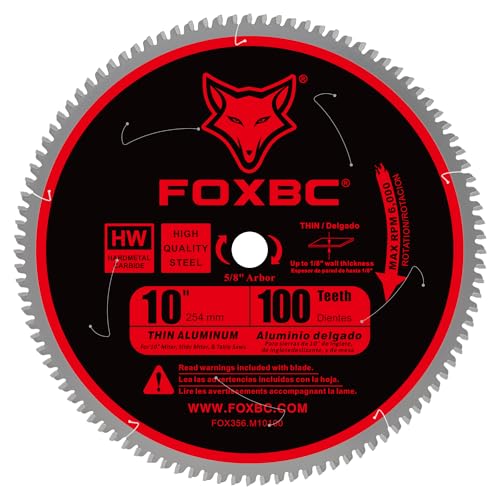
The FOXBC 100-Tooth blade uses a thin kerf and a 5/8-inch arbor, tailored for aluminum and non-ferrous metal cutting. Its high-density tungsten carbide teeth deliver wear resistance for longer life, with a kerf around 0.095 inches. This blade is best for achieving very fine finishes on thin to medium aluminum sections or sheet metal. A limitation is that it is optimized for aluminum and non-ferrous materials; it may not perform as well on harder ferrous metals.
TOMAX 80-Tooth TCG Aluminum Blade

The TOMAX 80-Tooth blade features a 5/8-inch arbor and carbide teeth designed for aluminum, plastic, and non-ferrous metals. Its electrophoretic coating reduces rust and corrosion, enabling a longer blade life in typical shop environments. Best for general aluminum and non-ferrous metal cutting tasks where a balance of speed and finish is desired. Use caution with ferrous metals as tooth design may not be optimal for harder materials.
FOXBC 80-Tooth TCG Aluminum & Non-Ferrous Blade

This 80-Tooth FOXBC blade combines a light kerf with a stabilizer-vent design to trap noise and reduce vibration, improving accuracy and durability. The 5/8-inch arbor and tungsten carbide teeth are suitable for aluminum and non-ferrous metal cutting. Best for users who want a smoother finish and lower vibration in shallow to mid-thickness aluminum profiles. Limitation: may wear faster on thick or highly abrasive non-ferrous composites compared to higher-tooth-count or specialized blades.
Buying Guide
What should I look for in a 10-inch blade for aluminum and non-ferrous metals?
Look for a blade with a carbide tooth design (such as TCG), a compatible arbor size (commonly 5/8 inch), and a balanced kerf. Stabilizer vents or laser-cut vents help minimize heat and vibration, improving accuracy. A corrosion-resistant coating can extend blade life in exposed shop environments.
How important is tooth count?
Higher tooth counts (e.g., 100 or 120) yield cleaner finishes on aluminum and non-ferrous metals, especially for thin sections. Lower tooth counts cut faster but may leave rougher edges. Choose based on whether you prioritize finish quality (higher tooth count) or cutting speed (lower tooth count).
Is a 5/8″ arbor standard enough for most miter saws?
Yes. A 5/8-inch arbor is the most common size for consumer and professional miter saws. Always verify arbor compatibility with your saw model and ensure the blade is properly secured to prevent vibration or wobble during use.
Should I avoid blades for ferrous metals?
Yes. Blades designed for aluminum and non-ferrous metals may underperform on ferrous metals like steel. If you frequently cut steel, seek blades specifically designed for ferrous materials with appropriate tooth geometry and carbide composition.
What about blade life and maintenance?
Electrophoretic coatings and high-density carbide teeth improve life by reducing rust and wear. Regularly clean off metal chips, avoid overheating, and ensure proper alignment in the cut to prevent fast edge dulling or blade warp.
Which blade is best for a fine finish?
The TOYAKI 120-Tooth blade is designed for ultra-fine finishes on aluminum and non-ferrous metals, making it a top choice when surface quality is critical. If you need a balance of finish and durability, consider the FOXBC 100-Tooth blade.
Summary of key factors
- Tooth count: higher for fine finishes, lower for speed
- Arbor size: ensure 5/8″ fits your saw
- Coatings and stabilizers: reduce rust, vibration, and warping
- Material compatibility: aluminum and non-ferrous metals as primary target
Frequently Asked Questions
- What blade should I use for cutting aluminum with a miter saw?
Choose a blade designed for aluminum and non-ferrous metals with a 5/8″ arbor and a higher tooth count for a smoother finish, such as 100–120 teeth.
- Can I cut steel with these 10-inch blades?
These blades are optimized for aluminum and non-ferrous metals. For steel or ferrous metals, select a blade specifically designed for ferrous materials.
- Is higher tooth count always better for finish quality?
Generally yes for thin sections, but very high tooth counts may reduce cutting speed. Balance finish quality with project timeline.
- Do these blades require special mounting or safety considerations?
Mount blades with the saw turned off and unplugged. Use proper guards, ensure correct arbor fit, and follow all tool safety instructions.
- How do I extend blade life when cutting non-ferrous metals?
Use proper feed rates, avoid overheating, clean chips frequently, and keep blades sharp and properly lubricated according to manufacturer guidance.